
The three freemium models illustrate differing assumptions about the critical point at which user friction shifts from promoting conversion to inhibiting growth.

Spotify: Friction as Feature Tax
Spotify makes free painful enough to convert power users while keeping casual listeners hooked. Ads interrupt flow, you can’t skip more than 6 times per hour, and mobile forces shuffle-only. The friction targets heavy users—those hitting skip limits daily—while casual listeners tolerate ads because core value (music access) stays intact.
Specifically, premium users generate about $132 annually ($10.99 × 12), while free users contribute roughly $7 through ads but accumulate playlist dependency over time. Spotify accepts that ~60% will remain free, viewing them as essential to social sharing and discovery that sustain the premium conversion pipeline.
High friction risks defection to YouTube Music’s less restrictive free tier, but Spotify wagers that user lock-in outweighs churn.
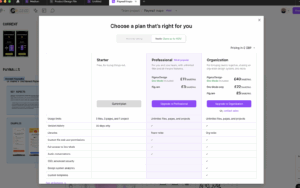
Figma: Expansion, Not Conversion
Figma’s freemium model focuses on teams: unlimited personal use, but collaboration limited to 3 files and 2 editors—friction appears only in teamwork, not solo use.
One designer’s invite triggers team adoption; hitting feature limits converts 8–12 users at $15/editor/month ($1,440–2,160 annually). The trade-off: a generous free tier (vs. Adobe’s 7-day trial) lowers individual conversion (~5%) but multiplies team value and viral expansion.

NYTimes: Metered Urgency
NYTimes restricts free access to very few articles monthly, employing scarcity-based friction instead of feature constraints.
Generating $300 annually at 68% retention, subscribers provide stable revenue, while free users enhance SEO visibility. Compared to the Washington Post’s 10-article limit, the New York Times’ stricter metering strategy deliberately prioritizes engagement depth over audience breadth.
____________________________________________________________________________________________________________________________
“The pattern: Spotify taxes power users, Figma taxes teams, NYTimes taxes access. Each friction point targets different behaviors—and different lifetime values.”



