
Spotify
Spotify optimizes for freemium conversions by not initially highlighting that the free version includes ads. This lowers signup friction and encourages users to install the app. Once users are engaged, Spotify uses frequent in-app ads and banners to push upgrades, even allowing one-tap upgrades directly from ads. They maximize lifetime value by offering personalized playlists like “Discover Weekly” and “Spotify Wrapped,” which build emotional attachment, and by creating sticky pricing tiers such as family and student plans that hook users early. Spotify withholds some features of the app in the free version to encourage friction, which may cause some users to leave the app, but will result in far higher conversions to the Premium plan.
Figma
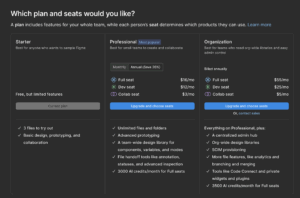
Figma optimizes for freemium conversions by offering a free tier for individuals with limited seats and editing history, so that once a team grows past a few users, they are forced to get the premium version. They maximize lifetime value through bottom-up adoption, meaning they enter through individuals, which convert to enterprise contracts, so they grow through usage expansion. Also, they offer some sticky integrations. Figma is free forever for most users, which delays monetization, but ensures that the product is sticky once the users pay for it.
New York Times
New York Times offers free article views with visible paywalls. Because readers don’t want to be interrupted while reading, they will usually convert to the paid version and forget to cancel their subscription. They maximize LTV by cross selling other products like recipes and puzzles to reduce churn. The high friction limits the top-of-funnel growth, but this offers predictable, high-margin recurring revenue.
