
Product Onboarding Comparisons across Verticals
We compared onboarding for three apps across various verticals: social (Instagram), productivity (Notion), finance (Venmo), identifying what information each app prioritizes from the user during onboarding and how their differences lead to different friction points.
1) Instagram (Social)
Instagram’s product goals are to keep its users engaged, informed, and connected to their community, and so their focus during onboarding will be on immediately showing its ability to quickly connect the user with their community. When users first join the app, they are asked to fill in demographic and contact information for account creation (age, username, email/phone number, profile picture) and to allow Instagram access to contacts to jumpstart their following. Even if the user skips these steps, Instagram will show trending content on the Explore page and auto-suggest accounts to follow in the users’ feed and bio based on their existing contacts and selected preferences, allowing users to quickly identify and join their community with just one click since Instagram does the discovery for them.

2) Notion (Productivity)
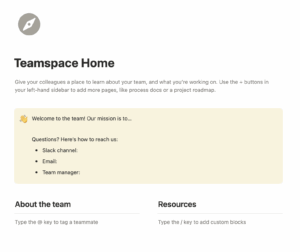
Notion must optimize for immediate usability so that their users can create the content they want from the templates/editing abilities the platform provides – another case of immediate value delivery. The information they seek from the user during onboarding will be role-based, asking for personal or team workplaces and preferred templates to best understand how to provide for their specific use cases. The onboarding goal, then, would be for the user to immediately start typing/populating content with their templates and tools. Setting the user up to automatically create a catered system/workflow is a common theme for onboarding on productivity platforms.
3) Venmo (Finance)
Despite being a finance platform with a social emphasis, Venmo focuses more on information gathering rather than immediate value delivery like the first two due to the necessity of correct identity and financial verification. Unless users can provide the necessary information, they are unable to get value from the app and send/receive money.
Comparing Cost of Key Friction Points
Instagram’s key friction point in their onboarding flow is their contacts permission prompt, with users refusing due to privacy concerns. Because profile setup is optional, the friction is minimal there and generally to be expected due to it being a social app. Since Instagram must build a meaningful social network for their user quickly, the cost manifests in a less personalized feed for their users due to them following less familiar accounts, with engagement drops expected within the first 48 hours.
For Notion, we see higher friction and higher cost due to having to both fulfill a users’ specific use case from the template options they provide to ensuring the workflow the user can test is to their liking (ie. if Notion is too hard to set up, the user may go back to Google Docs). The drop off is predicted to happen early during workspace selection, directly impacting revenue due to a loss of users who could’ve been converted to paid.
Venmo’s key friction point lies in the amount of verification/connections needed when a user sets up their bank account or two-factor authentication, but this friction is to be expected for any finance platform. However, since Venmo wants users to be able to complete their first transaction, this friction, although unavoidable, is linked to revenue since users without a bank account connected will not generate revenue.
