
The behavior I wanted to change was sleeping in too late. During winter break, I was able to wake up relatively early because my family encouraged a consistent routine. However, once I returned to school, my sleep schedule often shifted significantly later. I often went to bed at 2 AM or later. My goal was to move toward a more sustainable routine, ideally sleeping around 11 PM and waking up at 7AM.
I arrived at Stanford on Thursday, about two days before I began measuring my behavior, so I was still experiencing some jet lag during this period.
Self-Measurement
Day 1
-
7:00 AM: woke up
-
3:00 PM: nap
-
5:00 PM: woke up
-
11:00 PM: went to bed
-
6:00 AM: woke up feeling slightly tired
-
3:00 PM: nap (very tired)
-
6:00 PM: woke up
-
12:00 AM: tried to sleep but used my phone
Day 2
-
1:00 AM: fell asleep
-
4:00 AM: woke up due to jet lag
-
3:00 PM: woke up again (slept ~14 hours because my alarm didn’t go off), had a headache
-
12:00 AM: tried to sleep but wasn’t tired and went on my phone
Day 3
-
2:00 AM: got up because I didn’t feel tired and cleaned my room
-
4:00 AM: tried sleeping again
-
6:30 AM: fell asleep
-
11:00 AM: woke up
Although external factors such as jet lag played a role, several of my own behaviors clearly contributed to my increasingly unstable sleep schedule. Sleeping for extremely long periods, napping whenever I felt tired, and using my phone before bed all made it harder to fall asleep at night. These factors reinforced each other and gradually pushed my schedule later each day.
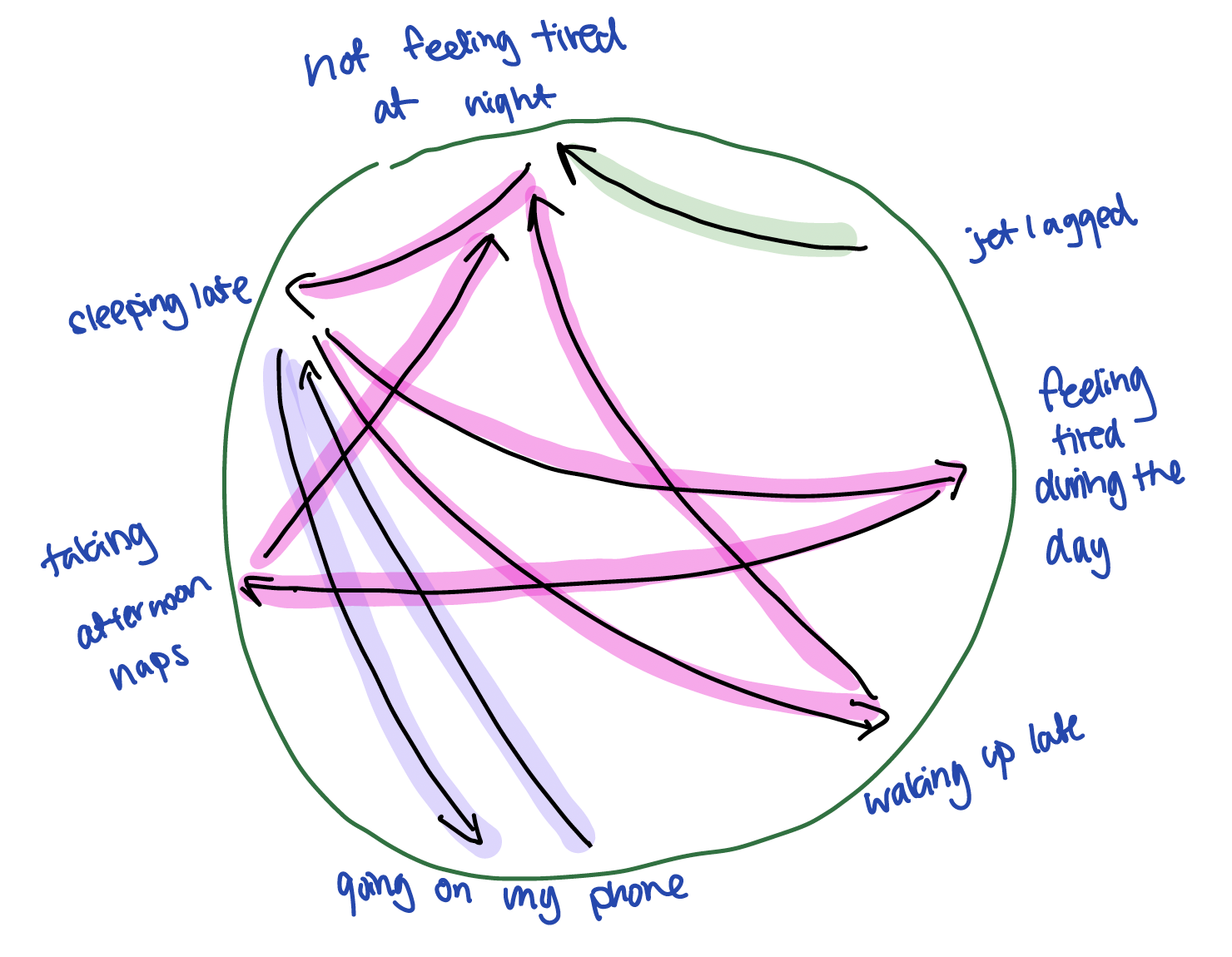
The Connection Circle makes this reinforcing loop especially clear:
sleeping late -> waking up late or napping -> not feeling tired at night -> sleeping even later.
Once this cycle began, it was difficult to break without intentionally changing multiple parts of the system. Another factor was my phone addiction. I need to restrict phone usage before bed time.
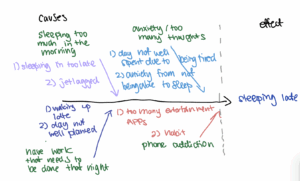
Furthermore, sleeping late also effects my mood as visible in the fishbone diagram, often leading to me not doing anything in the morning so I have a lot of work to do at night leading to sleeping even later. Hence even when I wake up late, I should try to keep my day organized and still start doing things instead of lying on my sofa.
What I Would Do Differently Next Time
Rather than aiming for an ideal but unrealistic goal (sleeping at 11 PM immediately), I think a more consistent and achievable schedule would work better. For example, aiming to sleep at 12 AM and wake up at 8 AM, avoiding long or late naps, and setting alarms that are neither too early nor too late. I would also reduce phone usage before bed and limit naps to short, scheduled intervals.
Overall, this exercise helped me see how my sleep behavior is not driven by a single decision but by an interconnected habit ecosystem, where small choices throughout the day significantly affect long-term outcomes.



