
The behavior I chose to track is procrastinating on work. I chose this because procrastination does no good to me in the long run even though it might feel good in that moment. I’ve realized that I spend time procrastinating because I feel overwhelmed about the amount of work I have and feel worse after because I feel anxious and unproductive. I wanted to see if there is a noticeable predecessor as to what triggers my tendency to procrastinate and how it affects my behaviors afterwards.
I measured this behavior for 4 consecutive days (Tuesday through Friday). I kept a small notebook in my pencil case which I bring all the time for easy access and reference so that it’s easier for me to log whenever I procrastinate. I logged following data points:
- Date/time in which I started procrastinating
- How long the procrastination was for
- What i did for procrastinating (doomscrolling, talking to friends, etc)
- How much workload i had (on a scale of 10)
- How I felt during procrastinating
- How I felt after procrastinating
- Result of procrastination (emotional state, making up for the work)
Data in charts:
Day 1: Tuesday
| Start Time | Duration | Procrastination Activity | Workload (1–10) | Feeling During | Feeling After | Result |
| 8:30 AM | 25 min | Doomscrolling (Instagram reels) | 4 | Relaxed, fun | Rushed | 5 mins late to 9am class |
| 3:45 PM | 40 min | Talking to friends | 7 | Avoidant, relaxed | Stressed | Worked till late |
| 10:15 PM | 30 min | Watching YouTube | 1 | Tired, numb | Regretful | Delayed bedtime |
Day 2: Wednesday
| Start Time | Duration | Procrastination Activity | Workload (1–10) | Feeling During | Feeling After | Result |
| 11:10 AM | 20 min | Doomscrolling | 9 | Overwhelmed | Frustrated | Reduced focus |
| 1:05 PM | 25 min | Doomscrolling/texting friends | 7 | Fun | Overwhelmed | Had to focus more and rush finishing up |
| 5:15 PM | 15 min | Cleaning room | 6 | Productive-but-avoidant | Neutral | Slight relief |
| 7:30 PM | 45 min | Went on a walk | 8 | Practicing mindfulness | Anxious but refreshed | Increased focus and productivity |
| 11:45 PM | 50 min | Talking to a friend | 9 | Fun, relaxed | Overwhelmed | Worked till late |
Day 3: Thursday
| Start Time | Duration | Procrastination Activity | Workload (1–10) | Feeling During | Feeling After | Result |
| 9:30 AM | 10 min | Texting friends | 5 | Fun | Tired | Rushed getting ready for class |
| 11:45 AM | 10 min | Checking messages | 5 | Restless | Fine | Minimal impact |
| 4:20 PM | 15 min | Social media | 7 | Avoidant | Guilty | Had to multitask |
| 8:50 PM | 20 min | Lying in bed | 6 | Drained | Unmotivated | Pushed work to next day |
Day 4: Friday
| Start Time | Duration | Procrastination Activity | Workload (1–10) | Feeling During | Feeling After | Result |
| 12:30 PM | 15 min | Talking to friends | 4 | Relaxed | Fine | No major consequence |
| 3:40 PM | 30 min | Doomscrolling | 6 | Distracted | Slightly stressed | Minor delay |
| 5:20PM | 10 min | Doomscrolling | 5 | Relaxed, fun | Justified (“it was only 10 mins”) | No major consequence |
| 7:00 PM | 20 min | Watching videos | 5 | Justified
(“it’s Friday”) |
Neutral | Work postponed |
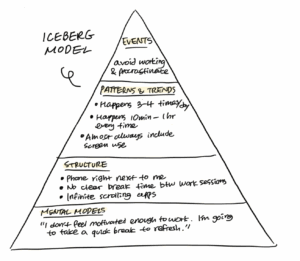
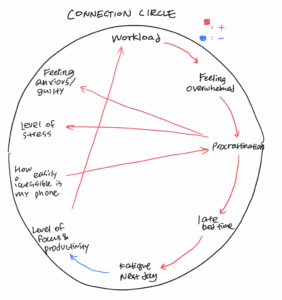
While logging procrastination in a notebook was convenient, it sometimes led to delayed entries. This may have affected the accuracy of timestamps, duration, and during/after emotional states. Next time, I would log entries immediately using a digital tool or a structured template so that data are more accurate. I would also incorporate an already established set of emotion labels and activity types so that data points aren’t redundant and analysis is easier.



