
What we learned:
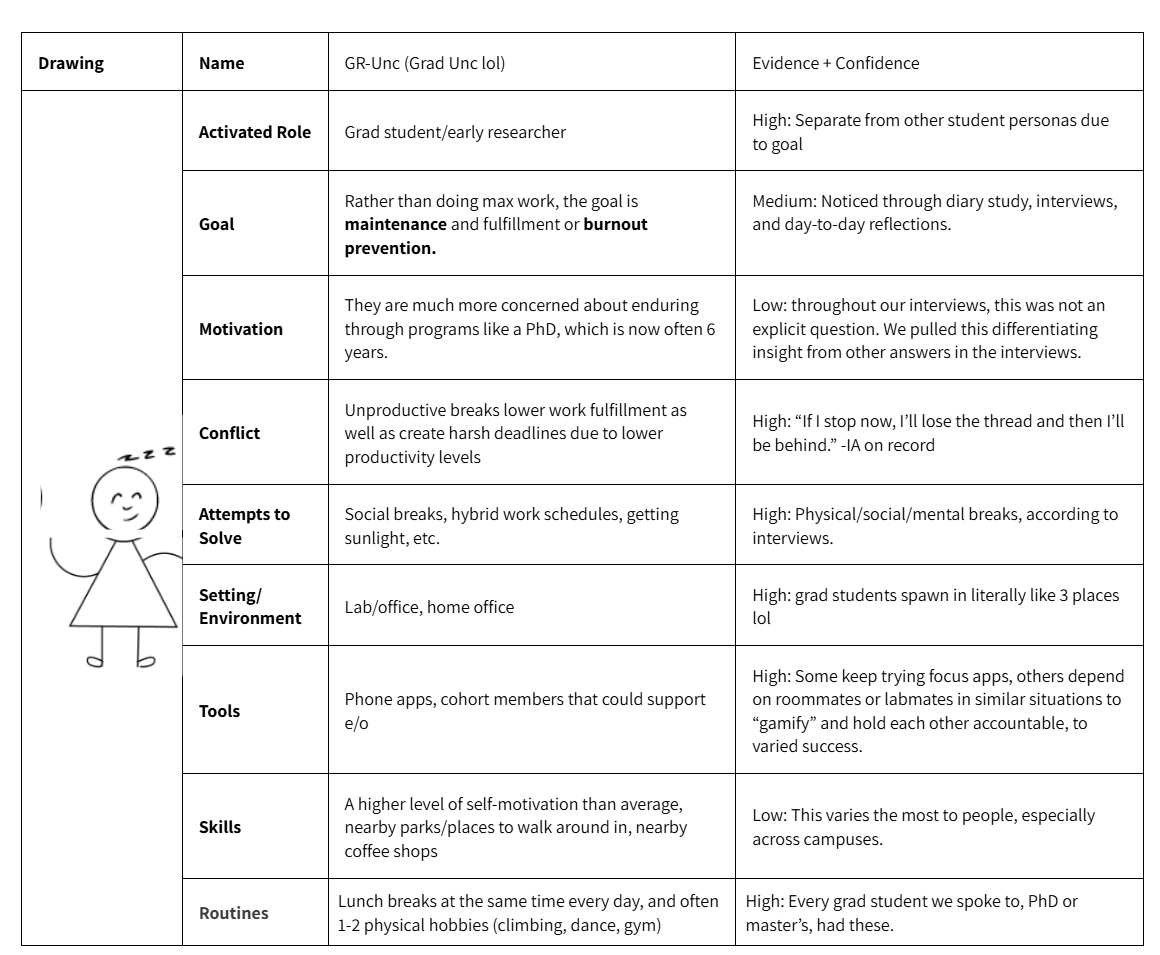
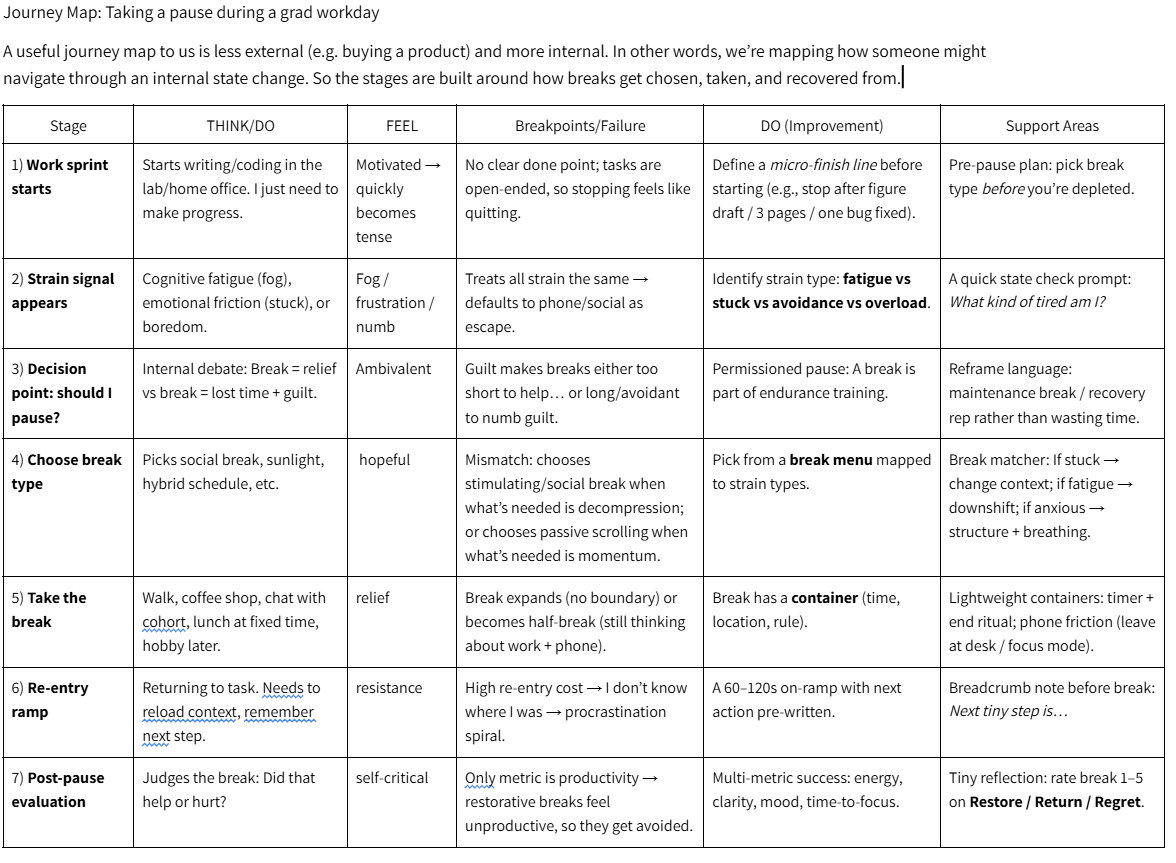
- Breaks are mostly about guilt management.
When a break feels “earned,” it restores energy. When it feels “undeserved,” it adds pressure and makes the next break harder. - Open-ended work makes stopping feel risky.
With research tasks, there’s rarely a clean finish line, so pausing can feel like losing momentum rather than taking care of yourself. - Re-entry cost is the hidden dealbreaker.
The hardest part often isn’t taking the break—it’s getting back into the work. If re-entry is messy, the break gets labeled “bad.” - Break type matters more than break length.
A short walk can reset focus, while a short scroll can keep the brain noisy. The key is matching the break to the state you’re in. - Social support works best with a clear container.
Quick check-ins can lift motivation and belonging. A simple boundary (time, purpose, end cue) keeps it restorative. - Lunch is a reliable anchor you can build around.
Since it already happens daily, it can serve as a dependable reset point and shape the afternoon into smaller, easier-to-manage blocks. - Physical hobbies protect identity beyond productivity.
Regular movement-based hobbies create a second “win condition” for the day, which supports endurance through long programs.
The environment is already rich in options.
With parks, coffee shops, and cohort access nearby, the main challenge becomes choosing well and returning smoothly—not finding ideas.



