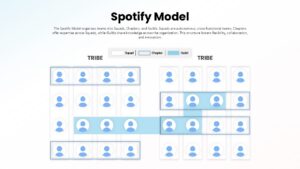
Observing these three organizational structures revealed key ways companies distinguish themselves in the competitive tech market. Firstly, Spotify follows a model organized by Squads, Chapters, Guilds, and Tribes. These units allow greater alignment: Tribes are cross-functional units made up of several Squads (autonomous units that own their features throughout the product life cycle) and Chapters (specialist groups from different teams that work in a shared skill/discipline). Guilds are slightly different: optional community groups that cut across the organization, centered on specific topics where teams typically share knowledge in workshops.
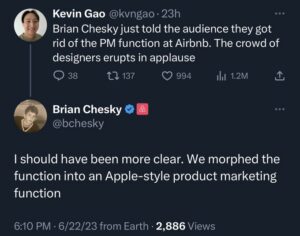
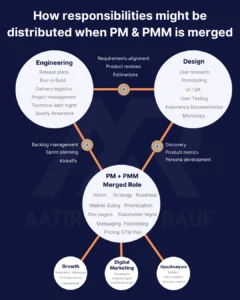
Then, we see a very different organizational hierarchy at Airbnb. Brian Chesky chose to center design at Airbnb, and the PM takes on a role more akin to a Product Marketing Manager, rather than the traditional PM role. As he put it, they “morphed the function into an Apple-style product marketing function,” which focuses more on the commercial outcomes of products than on managing engineering and design teams cross-functionally. Accordingly, product priorities and specifications follow a more traditional leadership hierarchy, and ‘PMs’ collaborate with designers and leads for go-to-market strategy.
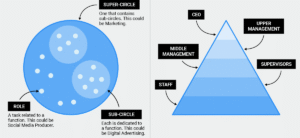
Zappos uses an entirely distinct system known as Holacracy. Here, traditional managerial hierarchies are largely dissolved; Zappos is organized into somewhat autonomous ‘circles’ and individuals are assigned roles/functions. These circles ultimately serve specific functions/products within the broader ecosystem. I find this structure the most unique/interesting, though I can see several pitfalls as well, since it would be difficult to develop a deep understanding of your role, and it complicates administration across the organization. Realistically, I find Spotify more strategically positioned, with lateral connections and distributed authority without losing structural clarity. While I can see how Airbnb’s system would also work well, I would prefer a more cross-functional role rather than focusing mainly on product marketing.