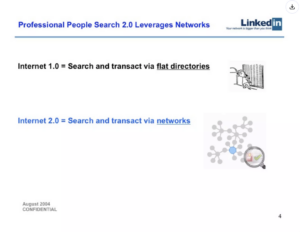
I chose to analyze the pitch deck Reid Hoffman used to raise LinkedIn’s Series B in 2004. I focused on how it shows the problem and traction, and how it makes the case for strong market demand.
The problem slide is short and clear. Flat directories don’t work well when professionals need to find and work with people they trust, so a trusted network is needed. The deck then compares well-known companies with and without a network. The ones with a network, like eBay, PayPal, and Google, became the leaders. LinkedIn is put in that 2.0 (next-generation) category, which makes investors picture it growing into a company like those three. I thought this was a smart psychological move, and it gets the network idea across well.
For traction, my favorite part was the slide comparing what LinkedIn projected at Series A with what it actually did. LinkedIn clearly beat its goals, which would make investors trust the team to execute. In the market opportunity section, Reid uses the same trick as in the problem section. He compares LinkedIn’s products to Google’s AdWords to show how much they could be worth. This makes LinkedIn’s offerings easy to understand and gives investors confidence.
If I were an investor, I’d ask what could go wrong with LinkedIn, because no slide in the deck covers risks. For my Sanity Check pitch, I plan to borrow the idea of comparing our startup to leading companies that beat their competitors. It’s a quick way to help people understand the idea and perceive how big it could get.