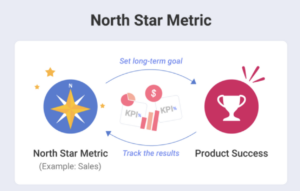

Airbnb chose nights booked as their north star because it created “a virtuous cycle where more bookings led to more satisfied customers, which in turn attracted more hosts and guests” (Teknicks). This metric is a proxy for a successful transaction between both parties involved in choosing a place to stay. A team could game this metric by offering significant discounts to incentivize more nights booked without actually improving the user experience, and this may result in dissatisfied customers despite longer stays.

When Facebook’s early growth team realized that “users who added 7 friends within their first 10 days on the platform were more likely to become long-term, active users,” this became their north star (Gary Claven). This metric is a proxy for regular engagement as a user scrolls through their friends’ posts on their feed. A team could game this metric by recommending random accounts for users to request to reach seven friends faster, but this may result in disengagement if users aren’t engaged with accounts they don’t know personally.

Slack discovered that “once a team exchanged 2,000 messages, the odds of them becoming long-term paying customers shot up to 93%” (Startup Shortcut). This metric is a proxy for a team regularly using Slack to communicate and collaborate on tasks. A team could game this metric by decreasing their character count per message, allowing them to hit the 2,000 metric mark faster. However, this may actually lead to less activity on Slack if numerous shorter messages are perceived as spam which could result in less activity or teams switching to another platform altogether.
Sources:
https://www.teknicks.com/blog/airbnb-north-star-metric/
https://garyclaven.com/7-friends-in-10-days-your-saas-success-strategy/