
Quibi, the Humane AI Pin, and Juicero all take on rather risky assumptions.
For Quibi, their risky assumption was the fact that people would want to pay for high quality short-form content designed for mobile phones.
- We believe… customers are willing to pay a $5/month subscription for premium short-form episodic content. [1]
- To verify, we will… give 1,000 users the first episodes of short-form content, and lock later episodes behind a paywall
- And measure… the percentage of users who attempt to pay for later episodes
- We are right if… 100 users begin the payment process
And for the Humane AI pin, the team wanted to revolutionize AI interaction modalities via convenient hardware. The team took a risk betting on people finding use in an AI-powered wearable pin, and the idea that people would pay $699 for the pin, and a $24/month subscription fee [2].
- We believe… there are customers who prefer wearable AI pins to the AI tools in their phones [2]
- To verify, we will… build an MVP AI pin with wizard of oz features to give to 50 active AI users
- And measure… the number of times people use the pins compared to their phones
- We are right if… the AI pin is still worn by the majority of users over a week
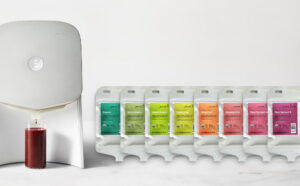
For Juicero, the big bet was the idea that there was a need for a premium-tier juicer product that relies on the company’s proprietary juice pouches.
- We believe… a sizable amount of customers will pay $400 for a juicer.
- To verify, we will… conduct a trial with 50 high-income participants to sample manually squeezed juices and machine-squeezed juices.
- And measure… the premium they are willing to pay for machine-squeezed juice.
- We are right if… at least 20% of participants named a $400 or higher premium.
[1] https://www.theguardian.com/tv-and-radio/2020/jun/28/quibi-netflix-jeffrey-katzenberg-crash
[2] https://www.theverge.com/2023/11/8/23953022/humane-ai-pin-price-specs-leak
