With most apps, it costs the company almost nothing each time you use them. AI is different. Every answer takes computing power, which costs real money, and some answers are wrong. So every AI company has to decide two things: who pays when the AI is expensive to run, and who pays when it makes a mistake? Their pricing tells you the answer.
ChatGPT charges for access, like a gym membership. Free is $0 with ads, Go is $8/month, Plus is $20/month, and the Pro tiers are $100 and $200/month. You pay the same no matter how much you use it, so OpenAI takes on the cost of heavy users (and limits how much you can use to protect itself). But if ChatGPT gives you a wrong answer, you still paid for it. The mistake is your problem.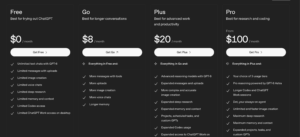
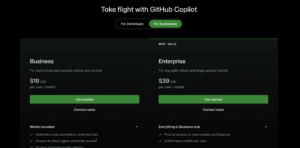
GitHub Copilot, an AI that helps programmers write code, charges per person. Businesses pay $19 for each employee who has access each month, even employees who barely use it. If Copilot suggests buggy code, the programmer has to catch it, so the mistake risk falls on the customer.
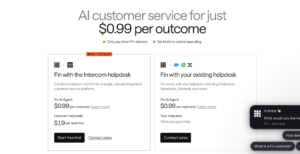
Intercom Fin, an AI customer-support chatbot, charges only when it actually solves a problem: $0.99 per resolved conversation. If Fin can’t help and passes the customer to a human, the business doesn’t pay. That puts the risk on Intercom. The catch is that the bot decides what counts as “solved.”
Our team’s product helps product managers gather reliable information before making decisions. Charging per “good decision” sounds nice, but that’s almost impossible to measure. I’d charge per person, with a monthly usage limit so a few heavy users don’t drive up our costs. Later, if we can measure real results, we could charge partly for those.