
Behavior I want to change : glancing at my phone / checking my phone in the middle of an activity
I tracked my habit of checking my phone for notifications or glancing at it in the middle of an activity (even when nothing is there), which often ends up distracting me. This is different from intentional scrolling. Most of the time, it starts as a quick glance or unlock that I don’t really think about.
I’m not usually a person who “doomscroll” for hours. Most of these checks last no more than 5–10 minutes, but even short interruptions have a noticeable impact. After checking my phone, I often lose my place in the lecture or task I was working on, or I find that my motivation to return to it is just completely gone. Instead of picking up where I left off, I end up switching to something else entirely.
I tracked this behavior over two days, tracking when I checked my phone in the middle of other ongoing activities (not counting when I had nothing to do). I used the habit itself as a way to track it by keeping a notes page open on my phone. Each time I picked up my phone to check it, I wrote down what I had been doing, how far I was into the activity, why I started to check my phone, and whether the check stayed brief or turned into a longer distraction. I usually logged the behavior shortly after it happened so I could remember the context without constantly interrupting myself.
Sunday
Sun 11:45 AM — Studying
~30 min into work
motivation dropping
glanced at phone → unlock
no notifications
~5 min checking
struggled to refocus
Sun 3:10 PM — In the Gym
3rd exercise, in between sets
waiting for the next set
checked phone “just to kill time”
didn’t return for ~4 min
Sun 8:40 PM — Watching a show
45 minutes into the show
phone on bed
multiple glances → unlock
short check (~6 min)
Monday
Mon 11:00 AM — Lecture
halfway through lecture
focus fading
quick glance → unlock
~ 2 min checking
missed explanation
Mon 4:45 PM — Homework
~1 hr into assignment
stuck / unsure
“quick check”
turned into ~25 min
harder to re-engage
Logging the behavior made the pattern very clear. I almost never checked my phone at the beginning of a task, when I still felt engaged. I also didn’t check it much once I was completely done. The urge showed up most often halfway through things, when the work started to feel harder and less interesting.
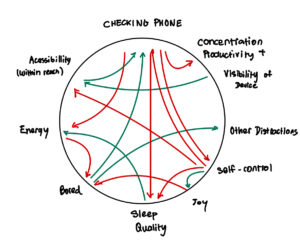
What surprised me most was how automatic it felt. Many times, there were no notifications at all. I wasn’t responding to anything, I was just checking. It felt like a way to escape the discomfort of staying focused when my energy dipped. Even when I meant to check for just a second, it often pulled me away longer than I planned.
Another interesting thing I noticed while tracking this habit was that simply measuring it made me more aware of it. I intentionally didn’t change my environment or phone setup (for example, I didn’t put my phone away in my bag more often) because I wanted to capture my usual behavior as accurately as possible. Even so, paying attention to the habit itself made me check my phone less than I normally would. Before tracking, the behavior was mostly automatic and thoughtless, but once I started logging it, I became much more aware of when and why I was reaching for my phone. This may suggest that being actively conscious and aware of this bad habit may already be enough to help reduce the habit.
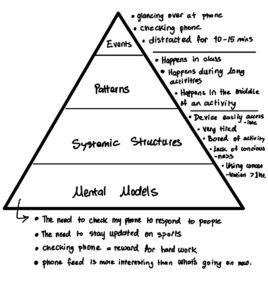
My biggest takeaway is that this habit isn’t really about my phone. It’s about how I deal with losing momentum in the middle of a task. Checking my phone gives a quick break, but it usually makes it harder to get back into what I was doing, which then makes the habit more likely to repeat.
If I were to repeat the experiment, I would try to notice the urge itself rather than the phone check that follows it. Since the habit often appears halfway through tasks when my motivation drops, being aware of that feeling might be enough to stop the behavior before it happens.
Overall, this exercise helped me see this habit in a new way. Instead of feeling like a lack of discipline, it feels more like a response to how my days and tasks are structured. That makes it feel less frustrating and more possible to change.



