
Coming into the Class
Coming into the class, I had no idea how hard behavior change was. In my past experiences, I felt like I had been pretty good at changing my habits (except for the hours I spend watching TikTok… still working on that one!). Because of my personal experiences (going to the gym, eating better, etc), I thought changing habits was simply a matter of “putting your mind to it”. Oh, boy was I wrong.
What I Loved + Surprised me
I must say, I enjoyed sketchnoting much more than I imagined. Coming into the class this was definitely a big challenge. I had done some sketchnoting in 247G but it’s been a while, and I consider myself very not artistic and was very scared to sketch and doodle. I was worried that my experience from the past had faded and that each sketchnote would just be words and visually non-aesthetic. Once again, the biggest turning point for me was when we spent an entire class lesson practicing and drawing little doodles on pieces of paper. From the funny faces made with three lines to stickmen running around in hats, this exercise resurfaced the tools I had learned in the past. While I still think my notes aren’t that aesthetic, I now see that this is not what really matters. It is more about the process of associating small images/sketches with core concepts.
I think I’ve come a long way and I’m really proud of some of the sketchnotes I produced! Here is an example of one I really liked:
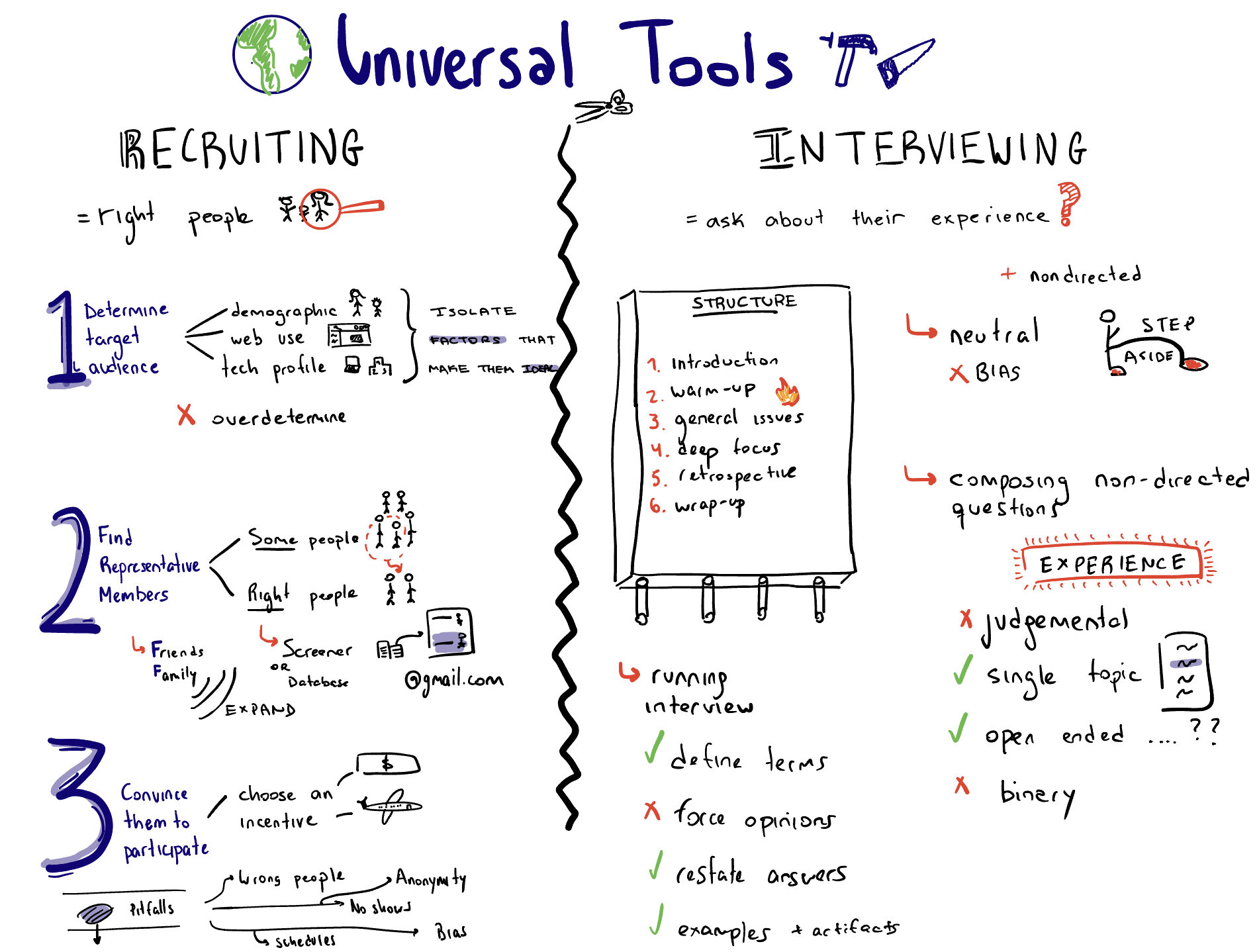
Screeners and Recruiting Sketchnote
While I recognize it definitely has lots of words, I think I was able to add several small icons that related to the text. It was one of the first sketches I did this quarter, and it helped me ease into the habit of associating pictures with ideas.
Something else I loved about this class was my team (go BeMeal!). I had been in past classes where random teams are assigned, so I was worried about how the dynamic would play out. Thankfully, just like in 247G, Christina placed great emphasis on forming the right teams and I think she did an amazing job! I learned so much from them this quarter and if it weren’t for our in-class breakfast sessions, going to class would’ve been tough.

Our weekly class breakfast. Shoutout to Andrea and Annie for always supplying the food 🙂
For the last class (poster session) we even decided the color match our outfits to our app! I’m proud of the work we did and working with them made the class very enjoyable. I learned that classes like these (247 series, or even 347) really depend on the team dynamics. Because so much of it is interacting with your team, having a good one completely alters the experience you have.
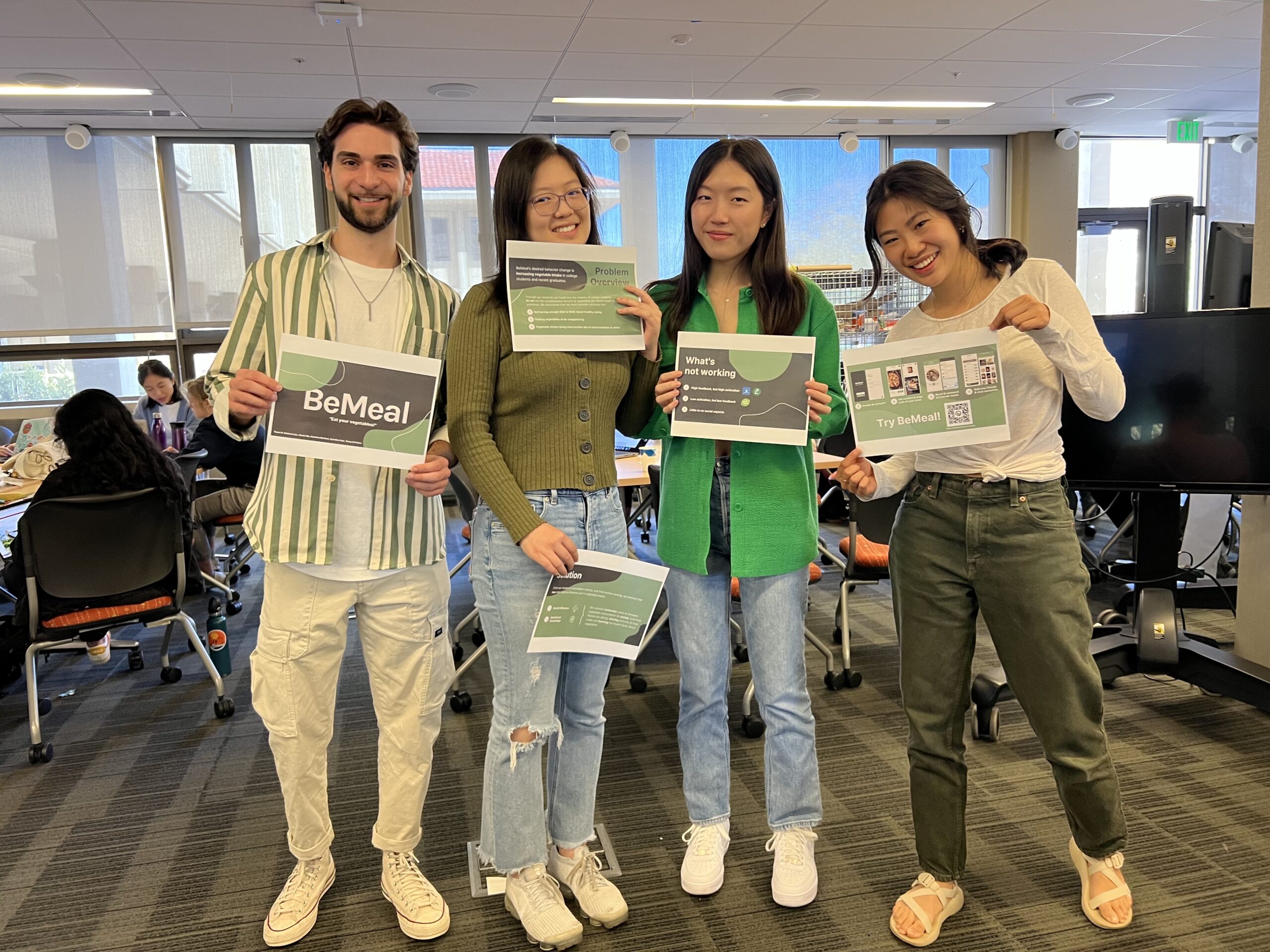
Color matching our outfits to our app design for the last class 🙂
Ethical Considerations
Nudging and manipulation
For our group write-up, we talked about how manipulation can be tricky to point out. Our challenge, therefore, became: how can we avoid our solution being manipulative, while still prompting the behavior change? For our goal of getting users to increase vegetable intake, manipulation could look like telling the user to eat vegetables in the following ways: eat a specific kind, or a specific amount, or vegetables prepared in a specific way. I feel like I’m someone who tries to eat “healthy” and would say I’m pretty good at incorporating vegetables into my meals. When discussing topics like these with my team, I tried to take a step back, and not let my own experiences, which might not be universal, shift the vision of our project. As a team, we worked on a solution that leaves a lot of room for autonomy in decision-making. At first, it was hard for me, because I wanted to apply my experience with eating vegetables with the group, and how it could help motivate change. However, through class discussion and reading, I learned that my personal experiences don’t necessarily encompass the needs of others, and so for discussions like these I took a backseat and really tried to listen and learn from my teammates. Overall I think we did a good job of steering away from manipulation, and the experience really taught me how to work on solutions that might not apply to me personally (which will be the case in the future!).
Now and in the Future
As mentioned in the previous sections, this class really changed my mindset on what it means to change behavior. Through building our product BeMeal, I learned that designing for behavior change is much harder than it seems. Change is complicated, and as we explored in our write-up, effective solutions must not only provide meaningful incentives for users to change but also recognize the line between ethical and unethical ways of doing so.
I think that given all I earned this quarter, I’ll definitely have a more informed approach to future behavior change projects. Especially, focusing on real users, and real needs, while constantly incorporating ethics into the design process.



