Before this class, I thought this…
Before this class, I thought behavior change would be much, much easier. As someone from a psychology background, I think I was a little arrogant in assuming I would already understand more of the nuances. I had also taken HCI classes before, like CS 377U, CS 177, CS 147, and CS 147L, so I thought I had a pretty solid sense of the process already. But I did not realize there was still so much more to learn. Readings like BJ Fogg and a lot of the frameworks from this class made me realize how subtle behavior change design actually is.
What did I love? What did I hate?
I really liked the iteration we got through the intervention study. That was probably the most helpful part of the class for me. It felt like the part where the project became real, because we could actually see what worked, what didn’t, and how people responded.
I disliked a lot of the busy work. For example, things like the moodboard and wireflows make sense in a full-scale product demo or a longer project, but for a 10-week class, they felt rushed and kind of insignificant. I understand why they were assigned, but sometimes it felt like we were doing process for the sake of process.
What worked and didn’t work about the approach?
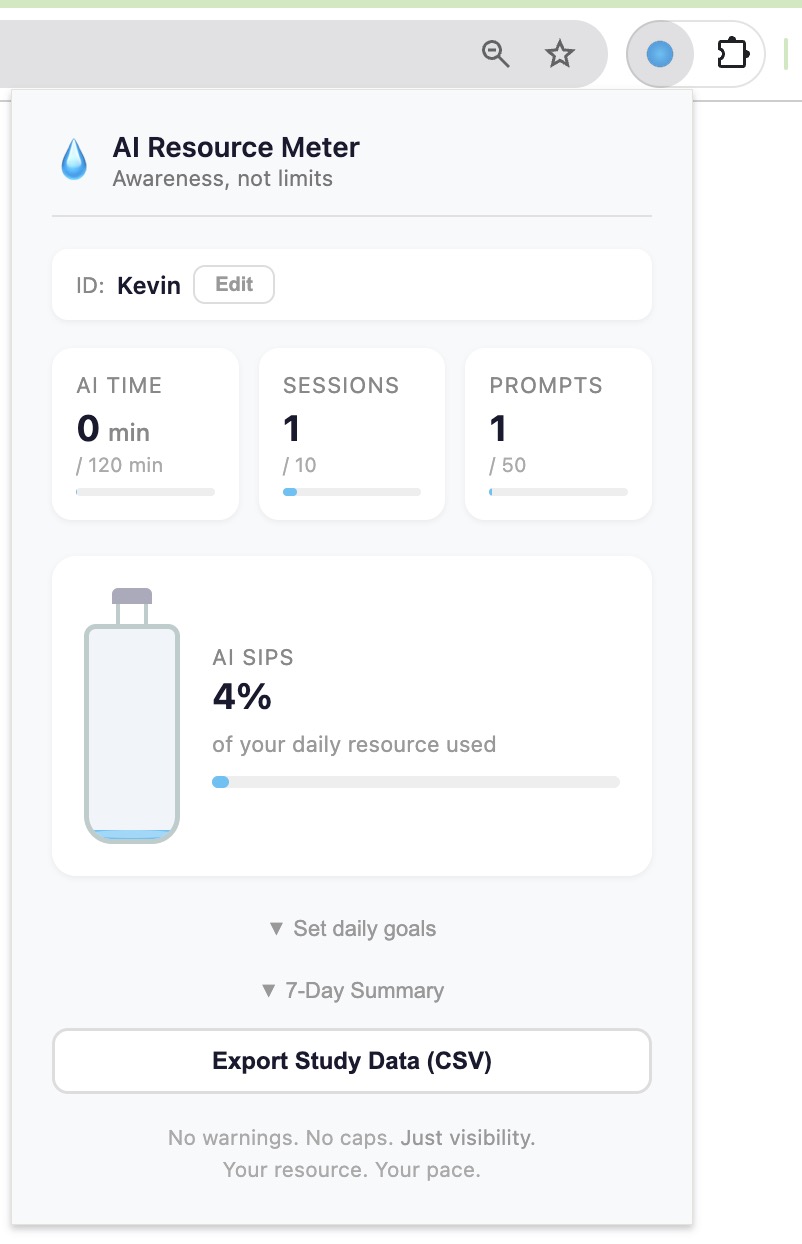
What worked most for me was the amount of iteration. I thought the intervention study was super helpful, and I liked that we got chances to revise our ideas instead of just sticking with the first version. Going from the Chrome Extension to the final product was really cool!
What did not work as well for me were some of the more specific design activities, like the action cards. I could see their purpose, but for me they felt a bit overinundated and too granular compared to the parts of the class where we were actually testing and building.
What tools and methods would I use again?
The most helpful method for me was definitely the in-class user testing. That was the point where things became most clear. You can speculate about whether an interaction is annoying or useful, but when you actually watch people use it, you find out very quickly.
I think I would use that again for sure. On the other hand, some of the more rigid activities and worksheets did not feel like the right fit for me personally.
What surprised me?
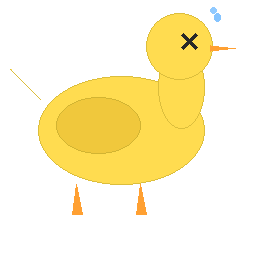
People really liked the duck.
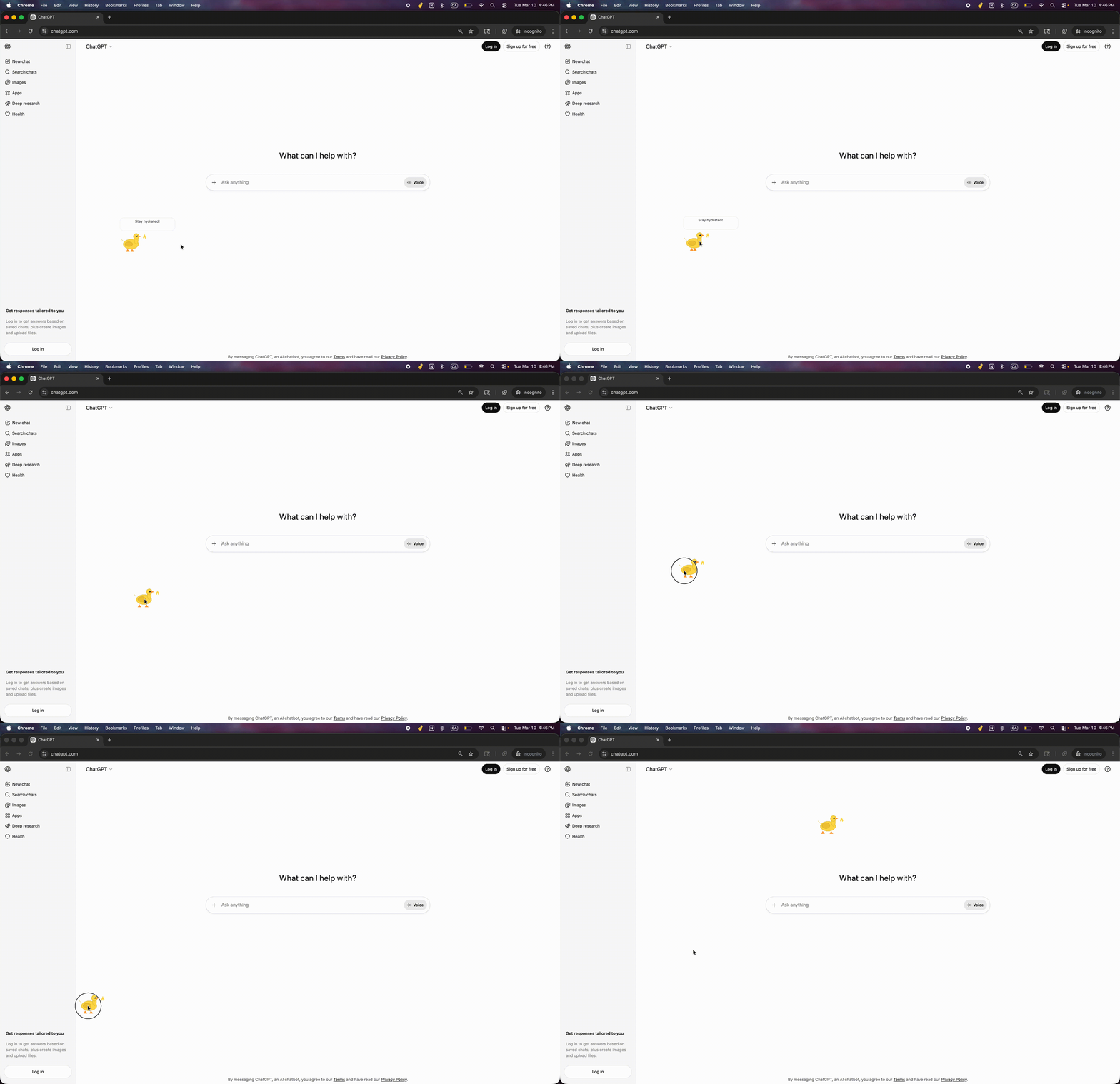
That honestly made me really happy. I felt very proud of the final product, and people genuinely seemed to enjoy throwing the duck around and interacting with it. I think that surprise mattered to me because it showed that a product like this can still feel playful and light, even when it is about something serious like AI use and self-awareness.
A specific problem I encountered
One of the biggest challenges was figuring out how to make the duck not bother the user. That ended up being both a design problem and a technical problem. Initially, it was really difficult to create the script for the duck walking around in a way that felt natural instead of annoying. It was not until I did some research on Shimeji that I was able to make it work.
That was a big turning point for the project, especially because I was the only programmer in the group.

What is still unresolved?
Cloud integration and actually launching the app are still unresolved for me. I genuinely think that after some bug fixes, the app is deployable. There are also probably still some performance issues when there are too many ducks, which is funny but also real.
What underlying issues surfaced?
One of the biggest underlying issues was just how much AI use itself has become a problem. That is something I also want to improve on personally. Working on this project made that feel even more obvious.
How does this relate to my other work at Stanford?
This project relates a lot to my honors thesis. In both cases, I am interested in how digital tools affect people’s attention, behavior, and choices. So this class actually felt very connected to the kinds of questions I already care about.
What will I remember ten years from now?
Honestly, I hope I am still using the duck.
One of my goals with this project was to make something that I would actually want to use even after Stanford, and I think that is what makes this project feel especially meaningful to me.
What do I wish went differently?
I know this should probably go more in the peer/team review, but I was really frustrated by how much heavy lifting I had to do in this class. In a team of three, both of my group partners were honestly pretty unmotivated, and I more or less had to come up with the whole idea and the entire codebase myself. That was definitely difficult.
If anything, a future redesign of group projects could maybe focus more on how to make teammates more aligned from the start. I will save the rest for the team review.
Suggestions for redesign
Nothing major in particular. I thought the project was a really nice experience overall. But like all classes, you get what you put into it.
Ethical considerations
Our project was intentionally designed to be a nudge, not a restriction. That is why I think it is acceptable. It is similar to apps that limit phone or social media use, except ours does not block the user or force them to do anything. It is just there to bring awareness.
Privacy was also a huge consideration. Tracking AI use is sensitive, so we made sure that everything was done locally. All data is stored locally, and we make the user aware of that during onboarding. Of course, if in the future we wanted to make more tailored adjustments for users, then some cloud elements might be needed, but that would also introduce new privacy concerns.
For the interface, it was really important that the app be customizable. Hours, sessions, minutes, prompts, and other settings could all be adjusted. We wanted it to feel intuitive, simple, and very plug-and-play. I think that balance of simplicity and customization was important.
As for well-being, I think the app is very much about promoting it. To me, it is mostly a positive tool. At the same time, like any tool about behavior change, it depends on how the user engages with it. It is what you make of it.
Now I think this…
I definitely think my intuition for design has improved a lot. I have a much better sense now of what works, what doesn’t, and what makes these kinds of apps succeed or fail.
Next time, I will…
Next time I am in a similar situation, I think I will be much better at speeding through the process and iterating faster. I also think I grew a lot more independent through this group experience. At the same time, I definitely work best in a team environment, so I think I came away with a clearer sense of both what I can do on my own and what I want in a team.
Thank you for the quarter!