
The Experience
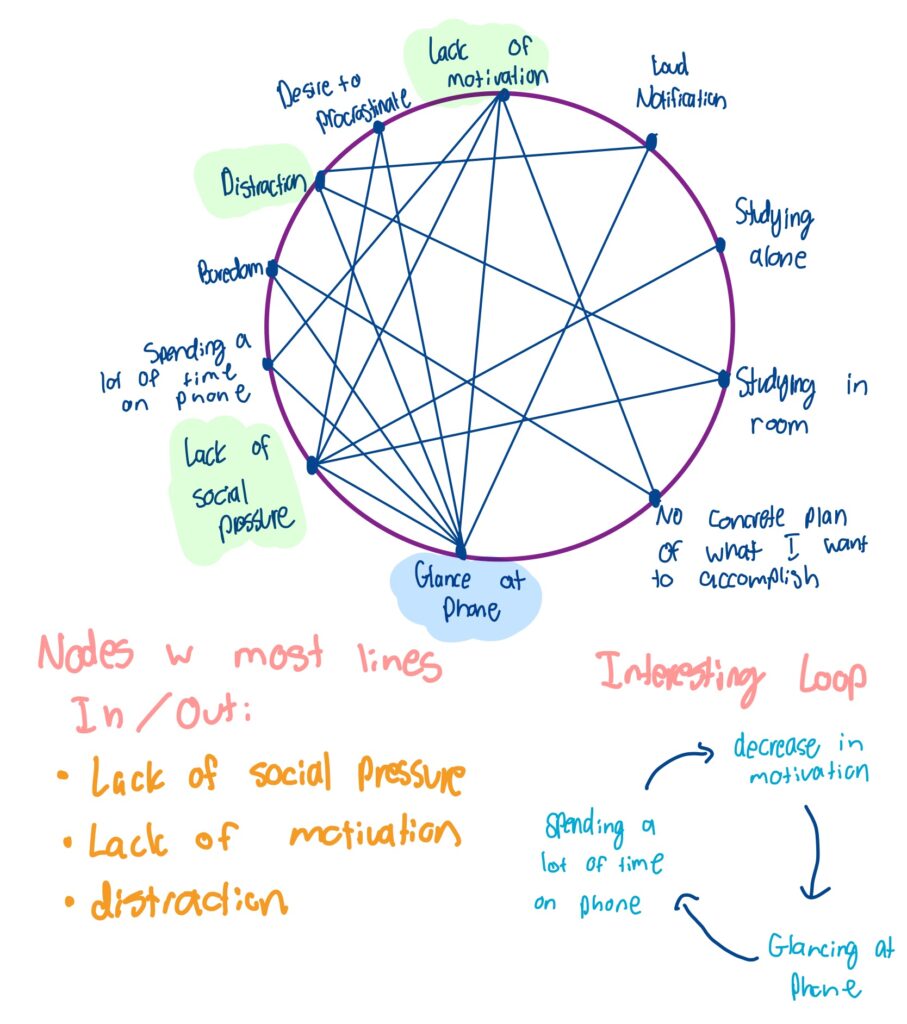
The habit I decided to measure was glancing at my phone while studying/in meetings. I do this a lot, sometimes without even noticing! This habit is bad on its own, since it disrupts the flow of studying and serves as a distraction–but even worse it often leads to going on my phone for extended periods and wasting time.
To measure and track this habit, I kept an hourly diary of everything I did in the day. During periods of studying/meetings, I tracked more detailed information like how often I went on my phone. Additionally, after a period of studying/a meeting, I would look at the tracked information and reflect on what contributed to it.
Model 1 (Connection Circle)
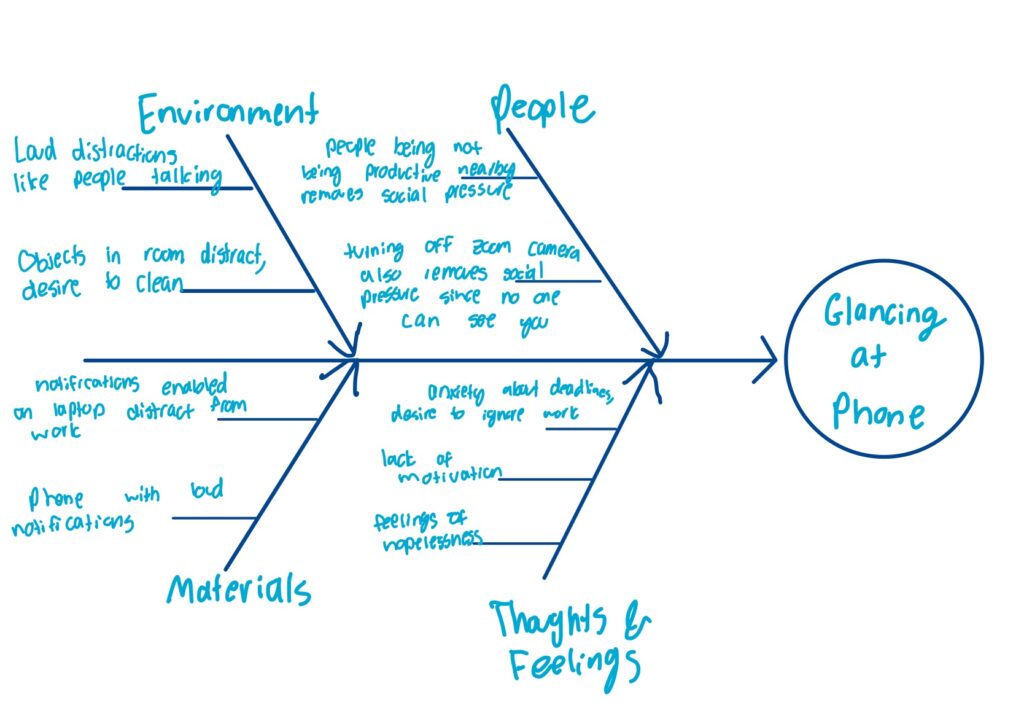
Model 2 (Fishbone)
Learnings and Insights
I really enjoyed this project! My insights and learnings include primary causes for glancing at my phone, things that discourage me from looking at my phone, and possible prevention strategies
Causes for Looking at Phone
- Mindset: The primary cause of my desire to look at my phone was not being in a good mindset. Not having a structured plan of how to approach work, anxiety from approaching deadlines, and feelings of hopelessness all led to a lack of motivation. This lack of motivation made me want to look at my phone. I also had a restlessness towards working, and I would want to look at my phone to avoid doing work.
- Distractions: Aside from mindset, which is a more internal battle, external factors, distractions, also led me to look at my phone. Notifications, both on my phone and my laptop, served as a distraction. When I was distracted, even while on my laptop, I was more likely to end up looking at my phone.
Factors that Discourage Looking at Phone
- Social Pressure: Social pressure was a large factor in my desire to not look at my phone. For example, I was much less likely to look at my phone during in-person meetings then during Zoom ones. Furthermore, I was much less likely to look at my phone during virtual meetings when my camera was on versus when it was off.
- Flow State: During periods of productivity where I was in a “flow state” I was much less likely to look at my phone. It felt as if I had a good “streak” that I didn’t want to ruin.
Prevention Strategies
I tried several prevention strategies to decrease how many times I glanced at my phone:
- Pomodoro Technique The Pomodoro technique, where you study for a period of time and then take a break, was quite helpful. It helped to give that “structured plan” that I desired–and there was an end goal in sight, so I was less likely to get restless.
- Studying with Friends: Studying with friends helps to add that “social pressure,” since someone else can see how often you check your phone. What was even more helpful was asking your friend to be an accountability partner–I gave my friend my phone and asked them not to give it back to me until I finished an assignment.
- Studying at a Cafe: This helped me mitigate the many distractions I had at home. When I studied in my room, I’d end up spending time cleaning or moving stuff around. Then, since I was already not studying I would go on my phone. Studying at a cafe helped provide a consistent environment. Also, since I biked 15 minutes to get to the cafe, I felt guilty to go on my phone–I was more motivated to study.



