Slack
Slack errors usually show up as “message failed to send” or “connection lost.” The business cost is a loss of productivity for its users. If Slack feels unreliable during work hours, companies suffer, which is a costly result that Slack obviously does not want. That’s why their recovery is super smooth, they offer auto-retry and save all your message drafts in case something like this happens. They also have clear banners.
Uber
Uber errors are more costly because the errors prevent drivers from making money and prevent users from getting transportation reliably. For them, the amount of completed rides translates to revenue. If the app glitches during matching, routing, or payment, the cost is immediate. You literally lose the fare. Uber does a lot of silent auto-recovery by refreshing driver ETAs, reassigning a new driver without making you start over, and holding your route even if the app crashes. This all makes sure the driver gets into the car.
Capital One/Discover
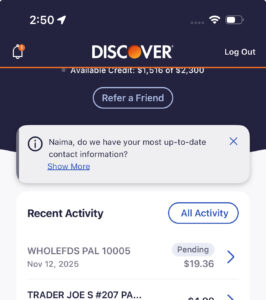
I use Capital One and Discover credit cards. In the apps, the risk here is that the errors risk credibility. Seeing a failed transaction or an “account unavailable” message scares people instantly. That’s why these apps over-explain everything using timestamps, confirmation IDs, and pending messages. The recovery flow is usually informative with locks, verifications, and then cleanly restoring. Trust is more important than speed. If I see any errors in my app I immediately call them.