– Avey –
1) Following Through on Good Intentions: The Power of Planning Prompts
(https://dash.harvard.edu/server/api/core/bitstreams/7312037c-a255-6bd4-e053-0100007fdf3b/content)
Study Purpose
This study investigates why people often fail to act on their good intentions and evaluates whether implementation intentions, specific if-then plans, can help close the gap between intention and behavior. The researchers aim to understand how structured planning prompts can increase follow-through by making goal-directed actions more automatic.
Target Demographic / Participant
The study primarily examines adults engaged in goal-directed behaviors across everyday contexts (like health behaviors, task completion). Participants are typically individuals who already intend to complete an action but struggle with execution, making them highly relevant to studies of procrastination and flakiness.
Key Findings
The key finding is that forming implementation intentions significantly increases the likelihood that people will act on their goals. By specifying when, where, and how a behavior will occur, individuals are better able to recognize situational cues and initiate action automatically. These if-then plans reduce the cognitive effort required at the moment of action and help people overcome common obstacles such as forgetfulness, competing demands, or hesitation.
Why This Article Was Chosen
This article was chosen because it directly addresses the intention action gap, which is central to flakiness. Many productivity tools assume that once a task is scheduled, it will be completed. This research challenges that assumption and shows that how plans are formed matters as much as what is planned.
Contribution to Our Project
This study informs our project by grounding accountability in behavioral science rather than enforcement. It suggests that tools addressing flakiness should support users in creating concrete, context-aware plans instead of simply rescheduling missed tasks. Incorporating implementation-intention prompts into scheduling systems could help users anticipate breakdowns and improve follow-through without increasing pressure or rigidity.
2) The Importance of Routines for Long-Term Behavior Adherence
(https://pmc.ncbi.nlm.nih.gov/articles/PMC6378489/)
Study Purpose
This article examines how routines contribute to sustained behavior change over time, particularly in health-related behaviors such as diet and exercise. The authors argue that long-term adherence depends less on motivation and more on embedding behaviors into stable, repeatable routines.
Target Demographic / Participants
The study draws from research on adults engaging in long-term behavior change, particularly those attempting to maintain healthy habits. While the focus is health-oriented, the findings generalize to anyone attempting consistent follow-through in daily life, including students and professionals managing recurring tasks.
Key Findings
The article finds that routines reduce reliance on conscious decision-making and motivation, making behaviors more resilient to stress, fatigue, and disruptions. Once behaviors become habitual, they require less effort to initiate and are more likely to persist even when motivation is low. Routines serve as a stabilizing mechanism that supports consistency over time.
Why This Article Was Chosen
This article was selected because flakiness is often framed as a motivation problem, when it is frequently a structure problem. The research reframes adherence as a function of routine formation rather than willpower, aligning closely with our project’s critique of existing productivity tools.
Contribution to Our Project
The work reinforces the idea that reducing flakiness requires designing for repeatability, not just flexibility. It supports our focus on helping users establish stable patterns rather than endlessly replanning failed tasks. By emphasizing routines, our project can move beyond reactive scheduling and toward systems that help behaviors stick over time.
– Bryant –
3) A Meta-Analysis of the Effects of Mental Contrasting With Implementation Intentions on Goal Attainment
(https://www.frontiersin.org/articles/10.3389/fpsyg.2021.565202/full)
Study purpose
To evaluate the effectiveness of MCII (Mental Contrasting with Implementation Intentions) on goal attainment across different contexts and identify moderating factors that influence its success.
Target demographic/participants
21 studies with nearly 16,000 participants across all ages (children, college students, adults) pursuing goals in academic, health, relationship, and personal domains.
Key findings
MCII shows a small-to-medium effect on goal attainment (g = 0.336), with face-to-face interventions significantly more effective (g = 0.465) than document-based interventions (g = 0.277). The reduced effectiveness of self-directed written interventions stems from participants creating low-quality plans without guidance, having lower commitment to the strategy, and lacking real-time feedback on their plan quality.
Why you picked that article
MCII is essentially a structured approach to intention-setting and obstacle planning. This is exactly what we’re studying in our research on the intention-action gap. The finding that self-directed plan quality matters directly informs how we should design our diary study prompts.
How it contributes to our project
This suggests we need structured, high-quality prompts in our diary study to help participants create better intentions and implementation plans. It also validates our focus on the mechanics of intention-setting versus execution, and provides evidence that simply having people write down intentions (like in a calendar) isn’t sufficient without proper scaffolding.
4) The effects of fragmented and sticky smartphone use on distraction and task delay
(https://journals.sagepub.com/doi/10.1177/20501579231193941)
Study purpose
To investigate how two distinct smartphone usage patterns, fragmented use (frequent, scattered sessions) and sticky use (long, uninterrupted sessions), affect self-regulation failures, specifically distraction and task delay.
Target demographic/participants
160 adolescents (average age 14.6, 47% girls) tracked for 3 weeks with objective smartphone logging (733,359 app activities) and 6 daily experience sampling surveys (12,723 observations).
Key findings
Fragmented use more strongly affected distraction (77% of teens experienced increased distraction), while sticky use more strongly affected task delay (42% experienced increased task delay). Critically, most variance occurred within-person rather than between-person, meaning the same individual experiences different effects depending on context. The same usage pattern doesn’t consistently produce the same outcome even for the same person.
Why you picked that article
This directly addresses our core research question about the intention-action gap in a contemporary context. The finding that context determines whether phone use causes problems (rather than usage amount alone) aligns perfectly with our hypothesis that modern environmental factors affect traditional goal-setting frameworks differently depending on the situation.
How it contributes to our project
This validates our diary study methodology as the ideal approach for capturing moment-to-moment variation in how digital distractions affect follow-through. It provides empirical evidence that the “soft commitment problem” we’re studying likely varies by context (when and why phone use happens), not just by individual differences, which means we need to examine patterns across multiple time points rather than relying on between-person comparisons.
– Candy –
5) “I lie to myself that I have freedom in my own schedule”: productivity tools and experiences of busyness
(https://dl.acm.org/doi/epdf/10.1145/1978942.1979077)
Study Purpose
This paper investigates people’s view of busyness in relation to their productivity tool use. It explores the tension between wanting control over one’s schedule and the reality of conflicting demands, and examines how tools shape people’s identities as busy individuals and their coping strategies around tasks.
Target Demographic/Participants
The participants included a diverse set of adults across ages and occupations such as parents and students.
Key Findings
The participants of the study value being busy and believe that it makes them productive and brings fulfillment. The researchers also investigated how productivity tools play a role in managing tasks, and noted that despite their benefits, they also reinforce anxiety, guilt, and a sense of limited control over time. Specifically, tools facilitate daily activity but can make people feel less free and more driven by schedules.
Why I Chose this Article
I chose this study because it directly examines how people experience and manage everyday tasks and schedules with productivity tools. Our group is especially curious about what commitment and productivity look like for college students, so we were curious about the psychological insights explored by this article.
How it Contributes to Our Project
This article highlights that task commitment is tied to how individuals perceive busyness, control, and identity. For our user population of college students, this suggests that interventions should address scheduling and reminders as well as feelings of control, value in tasks, and coping with conflicting priorities. We are especially interested in creating a project that supports meaningful and reflective engagement with tasks.
6) Objectively-measured and self-reported smartphone use in relation to surface learning, procrastination, academic productivity, and psychopathology symptoms in college students
Study Purpose
The study investigates how smartphone use (measured through self-report and objectively) relates to college students’ procrastination, academic productivity, and mental health. The authors sought to understand whether everyday phone behaviors interfere with students’ ability to engage in academic work.
Target Demographic/Participants
103 undergraduate college students from a U.S. university participated in this study, which focused specifically on college-aged individuals.
Key Findings
The researchers found that higher objective smartphone use was associated with lower academic productivity. Additionally, greater procrastination and mental health symptoms were sometimes correlating with fewer phone pickups, which is quite surprising. This suggests that passive but longer use may be more harmful to productivity than frequent brief checks.
Why I Chose this Article
This article directly examines college students and the impact of phone use on productivity. Since our project is geared towards college students, this article was able to help us determine whether phone use is a significant blocker towards productivity.
How it Contributes to Our Project
Cellphone use has been frequently mentioned as a factor for procrastination, particularly in our target population of college students. We wanted to examine the truthfulness of this claim and determine the direction of our intervention, specifically deciding on how much we want to prioritize good planning habits rather than minimize the factors that interfere with productivity.
– Justin –
7) The Effect of Goal Visualization on Goal Pursuit: Implications for Individuals and Managers
(https://papers.ssrn.com/sol3/papers.cfm?abstract_id=1732748)
Study Purpose
People want to achieve their own goals or help others achieve theirs. Businesses are always looking for ways to increase productivity and help people complete tasks, and these 5 studies test whether helping individual to visualize how close they are to achieving their goal helps them get there.
Target Demographic/Participants
Study 1: 1500m freestyle Olympic and Sectional swimming competitors from competitions between 2004 and 2008. This study compared lap times when swimming toward the finish line with those when swimming away from it.
Study 2: Seventy-nine undergraduates participated in a lab study for course credit. Some were shown a progressively-filling horizontal bar meant to indicate progress.
Study 3: 183 undergraduates were given scenarios involving saving for vacation, where some started closer to their goal savings than others.
Study 4: 140 undergraduates had to wait in a queue for a chat representative, but some where told how much time was left while others were shown a visual progress bar.
Study 5: One hundred fifty-four undergraduates had to perform clicks on a computer, but some saw a numerical representation of their progress while others saw a visualization of a progress bar.
Key Findings
- When an individual is near their goal, the ease with which they can visualize their goal enhances their pursuit of that goal.
- The process by which this happens: When it’s easy to visualize the goal, this enhances the person’s perception of their progress and proximity to achieving the goal.
- There are implications for goal visualization in marketing contexts
- Consumer Savings
- Service Settings
- Sales Tasks
- Study 5 found that the benefits did show for “consolidated” goals but not subgoals.
Why did you pick that article?
Although scheduling and time management fall under productivity, there is a higher-order aspect of goal-setting involved in planning. People prioritize and schedule tasks for a purpose, often as a part of a broader goal or effort. Helping people enhance their goal pursuit could have a downstream effect, helping them complete the tasks involved in achieving the goals they are scheduling.
How it contributes to our project?
If we are to apply the findings of these studies, we might consider ways to help people visualize how close they are to completing their tasks, thereby motivating them to actually complete them.
8) What Is Time Blindness? And Why Does It Happen?
(https://health.clevelandclinic.org/time-blindness)
“Time Blindness” refers to a skewed perception of time in which time passes without your noticing, faster than you realize. It is caused by hyperfocus: when we are so engrossed in a conversation or activity that it takes all our attention, we don’t notice the passage of time.
Everybody experiences time blindness from time-to-time. It is caused when our brains are in “automatic attention” mode (focusing on something interesting that makes us happy) rather than “directed attention” mode (focusing on something because we have to).
People with ADHD have a very strong automatic attention mode, and so time blindness is much more prevalent for them. This is why ADHD is often associated with time blindness, even though time blindness isn’t a disorder or diagnosis in and of itself.
I picked this article because time blindness is often a reason my friends and I cite for being late or not getting something done. We were just having so much fun that we didn’t realize it was time to go, and we had to rush to class or another event.
Since time blindness is caused by hyperfocus, I see two ways to apply what this article talks about:
- Can we encourage hyperfocus on productive tasks by activating automatic attention mode?
- Can we discourage time-blindness by pulling people out of automatic attention mode when they need to get things done?
9) How to Help Your Loved Ones Stick to Their Goals
(https://greatergood.berkeley.edu/article/item/how_to_help_your_loved_ones_stick_to_their_goals)
“…supporters often accidentally (and unknowingly) hinder their loved one’s efforts to change instead of helping.”
Motivation is a big factor in change, and it depends on 3 factors:
- Our perception of our own competence
- Our sense of autonomy
- Our relatedness
The last one, relatedness, refers to whether we feel supported and accepted by others. When we feel connected and feel that we belong, we are more motivated.
When supporting your loved ones, you cannot disrupt any of these three pillars of motivation. So, here are some tips:
- Support their autonomy
- Encourage their competence; tell them you are confident in their ability
- Foster relatedness; form a relationship with them in the context of their goal; ask them how you can support instead of assuming
- Promote mindful self-awareness through daily check-ins
- Offer compassion
- Don’t offer solutions
- Cheerlead your heart out
We chose this article because accountability is a common goal-setting strategy. The term “accountability buddy” refers to a friend or loved one who will help you stay disciplined and motivated to keep working towards your goal. As this article describes, these accountability buddies can often disrupt a person’s goal pursuit by not supporting them effectively.
If accountability from peers or loved ones is part of our intervention, we need to teach those accountability buddies how to be more effective accountability buddies! We should try to instruct them on ways to avoid disrupting the pillars of motivation outlined above.
– Merve –
10) A model of students’ daily activity patterns
https://journals.sagepub.com/doi/epdf/10.1068/a050231
Study Purpose
To develop and test a computational model that predicts students’ daily activity and location patterns based on time budgets, spatial layout of campus, and institutional constraints, in order to support better university planning and facility design.
Target Demographic / Participants
University students (hall and non-hall residents) from two UK universities, using time-budget diary surveys that recorded hourly activities and locations throughout the day.
Key Findings
The model accurately predicts overall activity and location distributions, but overestimates time spent at home during the day, likely because it does not account for informal social and spontaneous campus activities, experiments show that changes in travel time, dining hours, and class scheduling significantly reshape student movement patterns.
Why We Picked This Article
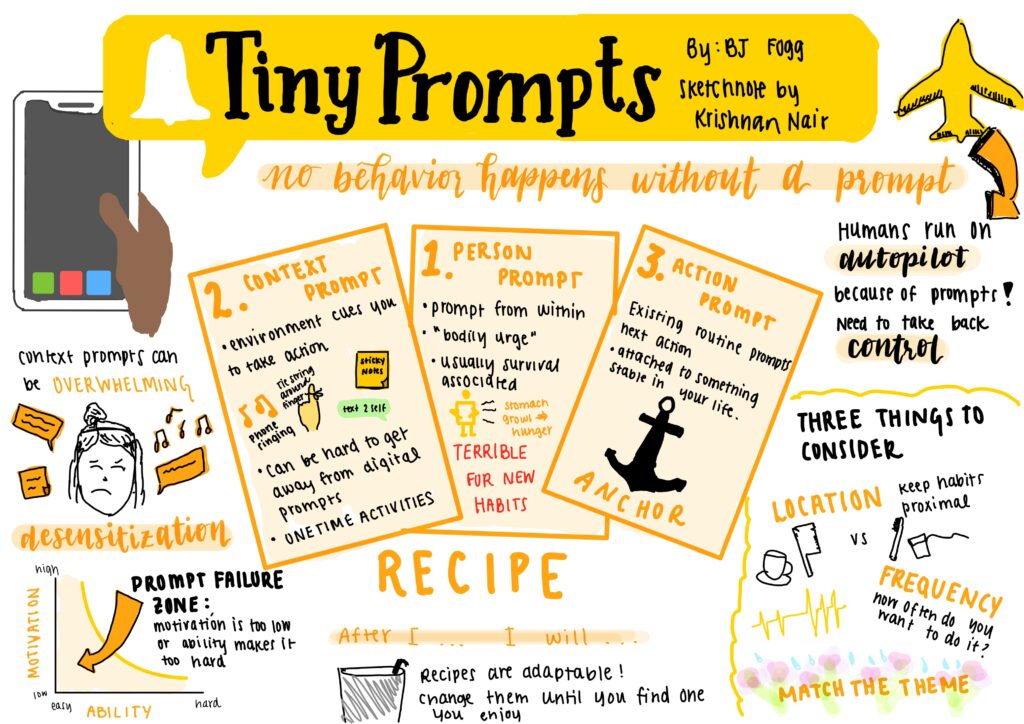
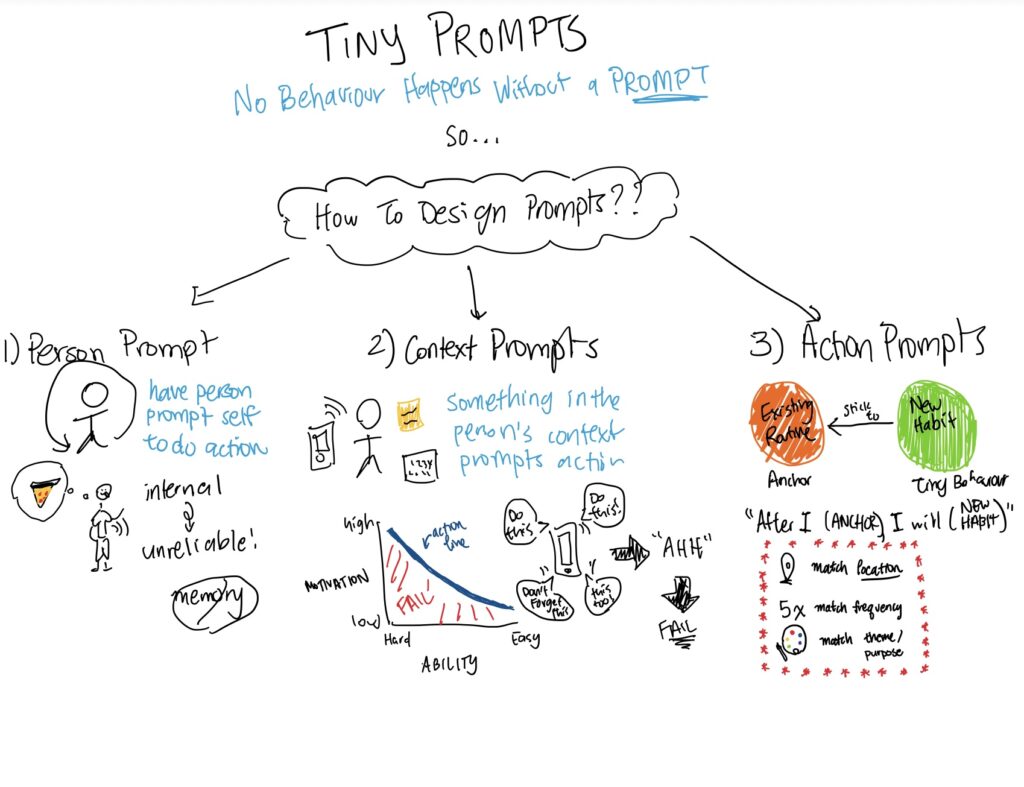
This paper provides a foundational view of how daily routines, spatial layout, and institutional rules shape student behavior, making it directly relevant for understanding habit formation, prompts, and environmental cues.
How It Contributes to Our Project
It offers empirical evidence that context and environment strongly structure daily behavior, supporting our project’s focus on designing prompts, routines, and interventions that fit naturally into existing activity patterns rather than relying on memory or willpower.
11) Daily Activity Patterns of University Students
https://ascelibrary.org/doi/full/10.1061/%28ASCE%29UP.1943-5444.0000015
Study Purpose
To analyze students’ daily activity schedules and travel behavior using detailed time-diary data, with the goal of informing activity-based travel demand models specifically designed for university environments.
Target Demographic / Participants
843 undergraduate and graduate students at North Carolina State University, including both on-campus and off-campus residents, who completed one-day activity and travel diaries.
Key Findings
Undergraduates and on-campus students engage in more daily activities and trips than graduate and off-campus students, largely due to greater exposure to campus-based opportunities. While hourly participation patterns are broadly similar across student groups, the types of activities and their timing differ significantly, with clear daily peaks shaped by class schedules, meals, and social routines. This highlights the strong role of time structure and environment in shaping student behavior.
Why We Picked This Article
This paper provides empirical evidence of how students structure their daily routines, making it highly relevant for understanding how habits, prompts, and environmental cues influence behavior in real-world contexts.
How It Contributes to Our Project
This study supports our focus on designing effective prompts and behavioral interventions by demonstrating that behavior is strongly shaped by time, routine, and spatial context rather than individual intention alone. It reinforces our approach of embedding prompts into existing daily routines and environments, showing that sustainable behavior change depends more on smart design of context and timing than on motivation or willpower.