
Before this class, most of my experiences in a group project have been just ok. We get the project done but other than that we don’t really seem like a team. This project was the first time where I truly felt like I was part of a team rather than an individual doing a part of a larger project. I really enjoyed this class as a result.
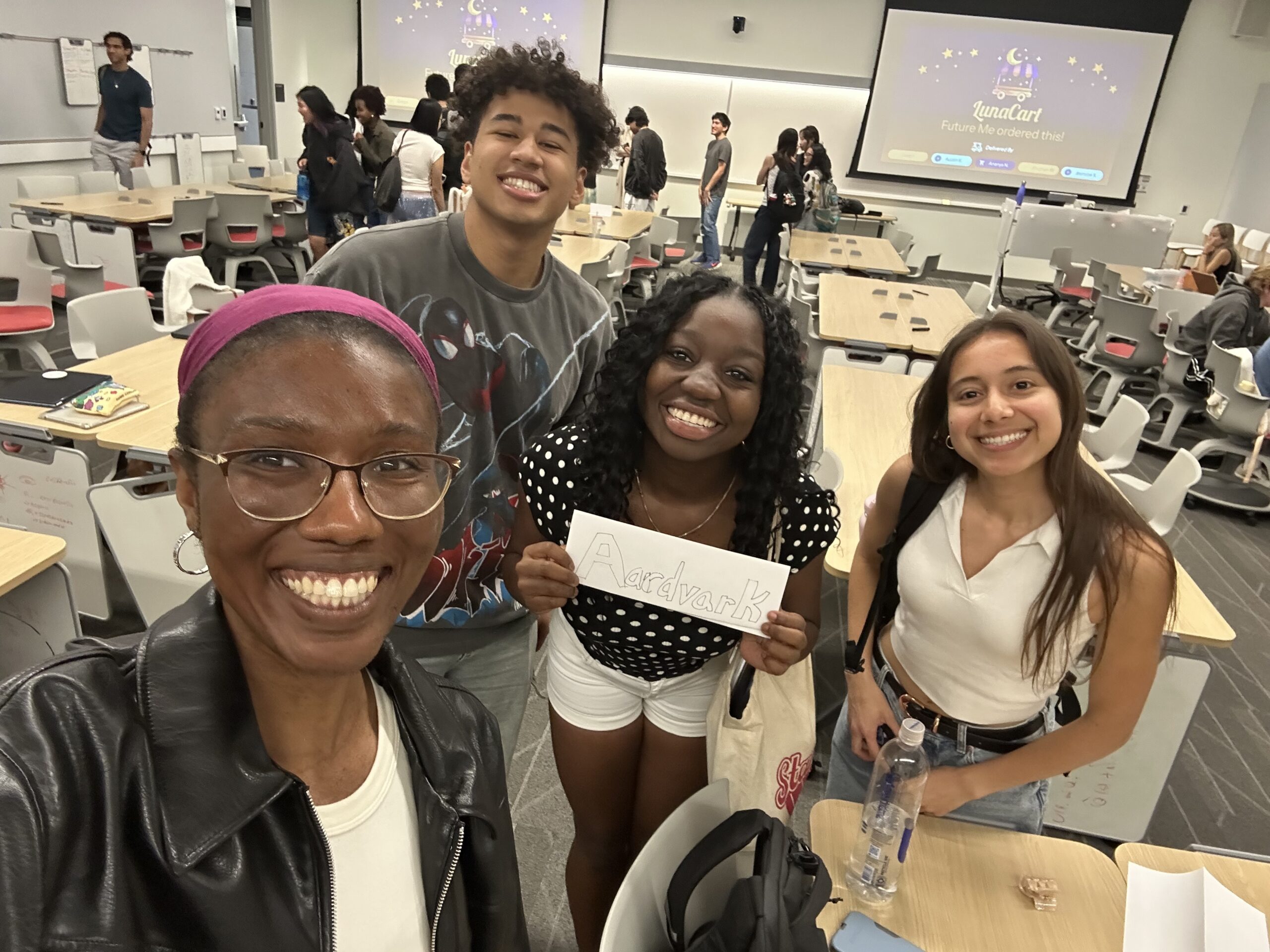
Here is a pic of us!
One of the biggest takeaways from this class was learning various ways of development that an app goes through. The diary studies were really interesting to me because it adds more verification to what a person might say. For example, Anna told me she makes 2-3 purchases a day, but during the study she only made about 3. People overestimate and underestimate their behavior. The diary study served as a way to verify and make sure that a user is really who they say. From this we were able to learn that she might not be the best type of user to design for, but if we had only interviewed, we wouldn’t be able to be as sure about this fact.
I also found it pretty fun to try to figure out how to solve an issue that we see. We can think about its solution in a lot of different ways, but it’s important to be well intentioned in how we design these solutions. We had to be really careful while designing our app to make it clearly distinct from banking apps. We needed to figure out how to make the solution we were creating clear. I enjoyed the creativity that doing this provided. It’s sort of like a puzzle and I really liked that aspect.
In the future, I think I’ll remember most about the sketch notes we did. I found them to be really fun. I remember anchoring and the need to set a time to create a habit. The principles of behavior change will stay with me. I feel like apps are hard to create that sort of behavior change because at the end of the day the app exists on a phone. It is a lot different than saying I will do 10 pushups because when you do 10 pushups you can’t really be doing anything else. Relying on a phone for behavior change can make things more difficult in some respects because phones are so distracting. There are tons of notifications and so many things to do. You have to be really intentional about how you use it. Willpower is important when it comes to phone use, but one of the readings pointed out how this fails. One of my take aways is that the best way to start a habit is to have it be a physical habit. Reading a book is so much easier than telling yourself to read an eBook on your phone. A book only can be a book. Creating habits are hard and it’s important to find the easiest ways to start.
Now, in terms of ethical considerations, I think privacy has been something that I’ve been thinking about a lot lately. In our app, we try to be really careful to let the user know we are using their data responsibly, but in reality, the data we could be selling would be really valuable. If we had a bad actor within the company, they could really exploit the data from users. Knowing what will make a user make an impulse purchase can make them extremely susceptible to being exploited if their data is being sold. For example, if a user says they make online purchases when its Saturday and they feel lonely. We could sell that to companies, and they could bombard them with ads on Saturdays. Furthermore, we have people’s bank data, so we know when they are most likely to purchase. Data can be used in so many evil ways and it’s important that we think about the different ways it can be used before we agree to a term of service. Our app would really need to rely on the goodwill of the people within to function. It would be helpful if there were more government regulation.
Lastly, I think that most apps don’t truly want you to improve. Duolingo and Hinge would go under if their users stopped coming back. They don’t truly ever want you to reach your goals. This goes back to how I think that the best way to change behavior is through something that only costs money once. One of the things apps thrive off of is the possibility that you will pay more money. If a product doesn’t have that possibility, it is only left to do its main function. It can’t do all of these other things. It has to do what it was made to do. The public should put more trust into physical items rather than apps or digital things.



