
The behavior I tracked was procrastination through coping behaviors, specifically the use of unproductive distractions like doom scrolling and watching television. These behaviors were defined as conscious decisions to take breaks or engage in distracting activities instead of working on impending tasks. The key characteristic of these behaviors was that they served as an avoidance mechanism rather than something fulfilling or an intentional leisure activity.
I tracked the behavior for 3 days, specifically Thursday, Sunday, and Monday. The frequency of procrastination behaviors was recorded on a daily basis, with time blocks logged for when these behaviors occurred. The tracking method involved recording time blocks of procrastination episodes, including detailed notes about specific activities and underlying motivations. Note that Friday and Saturday were intentionally excluded as break days, during which procrastination was considered less impactful.
Tracking
Thursday (7 hours total)
- Morning/Early Afternoon: 3.5 hours (10:00 AM – 1:30 PM)
- Primary Activity: Social media scrolling
- Context: Intermittent productive activities (showering, preparation)
- Motivation: Time-filling before 1:30 class
- Afternoon: 1.17 hours (3:20 PM – 4:30 PM)
- Primary Activity: TikTok and Instagram browsing
- Motivation: Perceived insufficient time between classes
- Evening: 1 hour (6:00 PM – 7:00 PM)
- Activities: Social media, repetitive email checking
- Motivation: Task aversion due to boredom
- Late Night: 1 hour (11:00 PM – 12:00 AM)
- Activity: Netflix viewing
- Rationalization: Too late for productive work
Sunday (5 hours total)
- Early Afternoon: 2 hours (12:00 PM – 2:00 PM)
- Activities: Bed-bound social media browsing, text responses
- Motivation: Physical fatigue and resistance to starting the day
- Late Afternoon: 1 hour (4:00 PM – 5:00 PM)
- Activity: TikTok scrolling
- Motivations: Pre-dinner time-filling, task aversion
- Evening: 2 hours (8:00 PM – 10:00 PM)
- Activity: Netflix in bed
- Motivations: Fatigue from previous late night, self-reported illness
Monday (5.5 hours total)
- Morning/Early Afternoon: 2.5 hours (11:00 AM – 1:30 PM)
- Pattern mirrors Thursday morning
- Mixed productivity with social media consumption
- Context: Pre-class time management
- Late Afternoon: 1.5 hours (4:30 PM – 6:00 PM)
- Activity: Social media browsing
- Motivation: Task overwhelm and fatigue
- Evening: 1.5 hours (8:30 PM – 10:00 PM)
- Activity: Netflix in bed
- Motivation: Fatigue and task deferral to next day
I found the behavior relatively easy to track because the procrastination decisions were conscious. The clear distinction between productive activities and procrastination made it straightforward to record time blocks. Excluding the weekend days helped me focus the tracking on times when procrastination had the most significant impact on my productivity.
Connection Circle Model
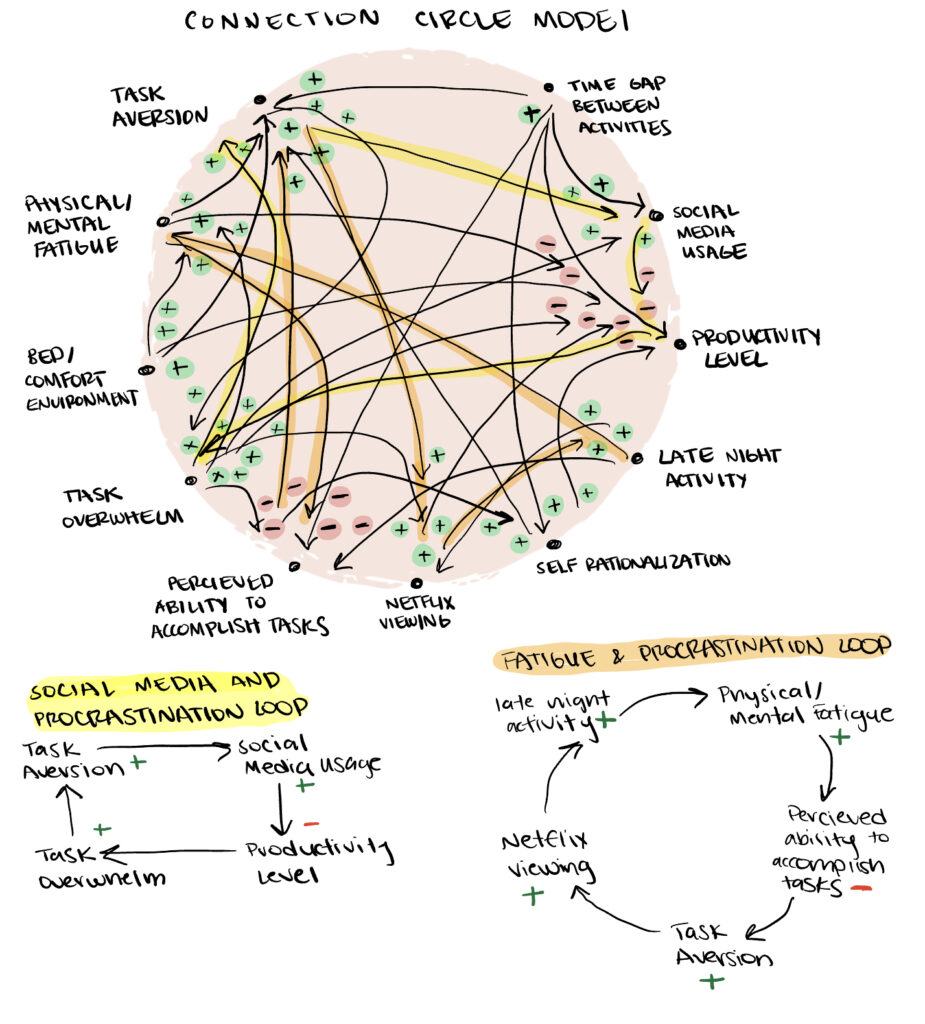
The connection circles model revealed two key self-reinforcing loops driving procrastination. The social media loop shows how task aversion triggers social media use, reducing productivity, which increases task overwhelm and further task aversion. The fatigue loop demonstrates how late night activities create physical/mental fatigue, lowering perceived task ability, which leads to more Netflix viewing and late nights.
Fishbone Model
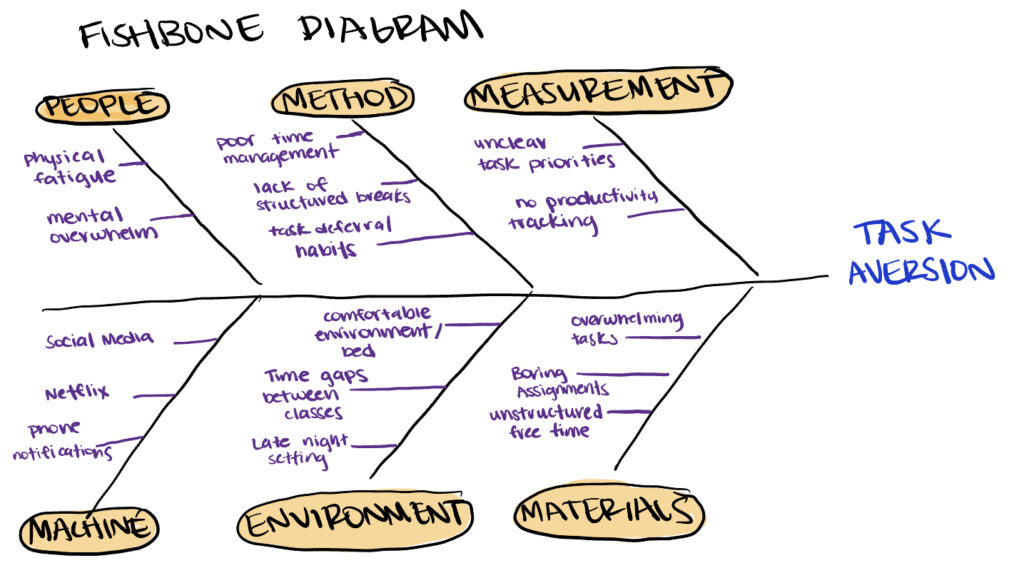
The fishbone analysis reveals that procrastination stems from six interrelated root causes rather than just poor willpower. The model demonstrates how technological enablers (like social media) combine with environmental triggers (comfortable bed), personal factors (fatigue), and structural issues (lack of metrics and planning) to create a perfect storm for procrastination.
Key Learnings
I noticed that my procrastination wasn’t just about avoiding tasks; it was also about justifying why I should put things off. For instance, I often rationalized that it was “too late to start work,” or that I was “too tired to be productive.” These excuses were consistent, especially in the evenings or after physically tiring activities, and they prevented me from making the most of my available time.
Time Gaps Are a Trigger: I found that my procrastination was especially prominent during time gaps between classes or activities. When there was a small window of free time, I would often fill it with social media or Netflix rather than using the time productively. These gaps felt too short to do anything meaningful, even though they might have been ideal for completing smaller tasks.
The Cycle of Procrastination and Fatigue: A key pattern I discovered is the procrastination-fatigue cycle. When I procrastinate in the evening by watching Netflix or scrolling through social media, I end up feeling more fatigued the next day. This, in turn, leads to more procrastination. The cycle seems self-reinforcing, with fatigue justifying my lack of productivity and procrastination leading to even more fatigue.
Environment Plays a Crucial Role: The environment, particularly where I am (e.g., in bed), seems to influence my tendency to procrastinate. On Sunday, I found myself more prone to procrastination while in bed, which might have been linked to a combination of fatigue and comfort. Similarly, time gaps between classes also acted as triggers for procrastination.
Task Avoidance is Rooted in Overwhelm: One of the main reasons I avoid tasks is a sense of overwhelm. When a task feels too big or unappealing, I’m more likely to procrastinate by engaging in distractions. This was especially true for tasks I anticipated would be boring or mentally taxing.
Next time, I would be more mindful of my environment and intentionally create spaces that encourage productivity. For example, I’d try to avoid using my bed for anything related to work or tasks that require focus. Instead, I could set up a dedicated workspace for productivity and reserve the bed area for rest or leisure. This physical distinction would help cue my brain to switch between work and relaxation modes more effectively. This tracking experience has highlighted several key areas where I can improve my approach to managing procrastination. By focusing on mindset shifts, addressing fatigue more proactively, making better use of time gaps, creating a productive environment, and setting clear boundaries with digital distractions, I believe I can significantly reduce procrastination in my daily life.



