
Spotify: Personalization That Extends Listening Time
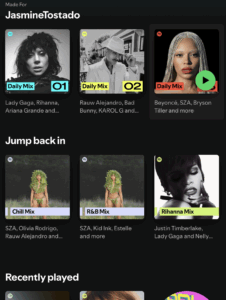
Spotify’s entire retention strategy hinges on keeping users listening. Features like “Made for You” playlists, playing recommended songs after a playlist ends, Jump Back In, and Recently Played create a seamless content loop that minimizes decision fatigue.
Business ROI: Every additional minute streamed increases ad impressions (for free users) or raises switching costs for premium users. Personalization investments directly correlate to higher listening time, which Spotify reports as a leading indicator for premium conversion.
LinkedIn: Personalization That Boosts Session Frequency
LinkedIn personalizes the feed with posts from connections, content your network has liked, and recommendations tied to your industry and career interests. The goal is a feed that always feels relevant enough to return to.
Business ROI: More personalized feeds means more sessions per day which results in more ad inventory served to recruiters, B2B marketers, and job advertisers. LinkedIn’s revenue engine depends on session frequency and profile engagement, making personalization a high-leverage investment.


TikTok: Personalization That Powers Ad Targeting
TikTok’s For You Page not only drives content engagement, it fuels commerce. Ads frequently appear as native-looking videos with a TikTok Shop tag layered in. Others link directly to external websites with a left-swipe. Hyper-targeted interests (beauty, tech, home, etc.) make ads feel like content.
Business ROI: TikTok’s ad revenue depends on precision targeting. Better personalization increases click-through rates, conversion rates, and ultimately more spending on TikTok Shop. The payoff is immediate and quantifiable, which is why TikTok invests heavily in behavioral prediction models.


Key Takeaway
All three platforms leverage personalization differently, but with a shared goal: elevate their core metric. Spotify optimizes for listening time, LinkedIn for session frequency, and TikTok for ad targeting accuracy. Across each model, personalization is not a “feature” but rather the revenue engine driving compounding ROI.
