
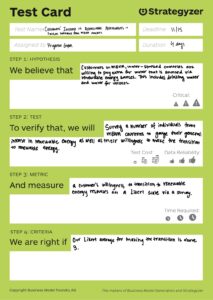
The assumption I tested regarded whether or not individuals from MENA (Middle East and North African) countries would pay a premium to transition their drinking and utilities-water to an alternate brand that came from a renewably-sourced company. To test this assumption, i approached five individuals from MENA or MENA-adjacent countries and asked them a few questions on a 5-point Likert scale. These questions included:
- On a scale from 1-5, how likely are you to pay extra for a resource if it was sourced renewably?
- How about if this resource was drinking water? How about water for household utilities?
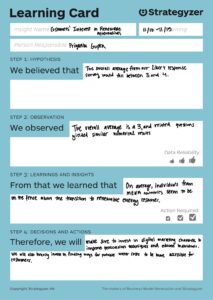
My interviewees were from a variety of geographical locations of interest, including Saudi Arabia and Morocco. Here are some of the key discussion points I found:
- They were more likely to pay extra for drinking water sourced renewably, not water for household utilities
- While they personally didn’t feel they had a stake in or care for climate- or renewable-technology products, they had relatives or neighbors who would.
The results I found gave me an average of 3.2 for drinking water and 3 for utilities water. With this in mind, I think our team will have to pay more attention to the ways in which we engage, persuade, and educate the end-users of our potable water. We will also need to invest in research regarding how to make the “premium” for renewably-sourced water less of a premium. Accessibility is one of our core values, and after this assumption testing, it seems that we need to take care to ensure that we are actually being inclusive as much as possible.
In case the quality is bad, here is an alternate link with these pictures: https://docs.google.com/document/d/1QEph2-TrKh7czmP95dQsoER0vDJ5rWdOSi-G9_ZgHuo/edit?usp=sharing
