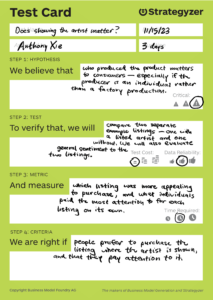
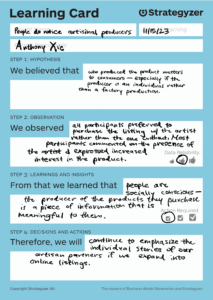
The key assumptions I was tasked with testing was that people notice and care about who produces their work. This is an incredibly important assumption as being able to guarantee artistic authenticity is one of our most essential value propositions. We wanted to see if this would carry over even for examples of online listings, as we hope to expand into online markets.
I tested this assumption in the following way: We sent out a Google Survey to a variety of individuals (generally students, though also some older adults) which asked participants to compare the following listings, then give their opinion on which they would buy and what things stood out to them on each listing. To also avoid a situation where the comparison made it obvious what was being tested for, I also sent the two images individually to a number of people and asked for their opinions on them. Then I compared the general sentiment between each listing.
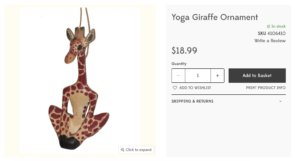
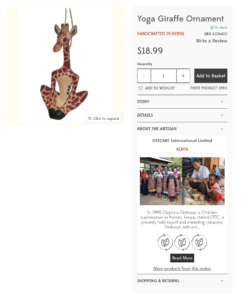
I found that our initial assumption definitely held true. People paid immediate attention to both the “Handcrafted in Kenya” and the “About the Artisan” section, and the overall sentiment was far more positive for the listing containing the artist info. One person who saw the second listing noted that “knowing that the product is handcrafted and not made in an assembly line is appealing to me”. One important realization is that some participants cared a lot that the claim being made about the artisan was true. One noted that “[they] would probably look into it just in case”, and another said “if I clicked through and see they are legit and seem to be thriving then that’s a good sign”.