
Proto-Persona
RF is a sweet treat seeker.

- Name: RF
- Activated Role: Sweet Treat Seeker
- Goal and motivation:
- Wants treats because they taste good
- Wants treats as a reward for doing something like studying
- Wants treats for the novelty (Ex: buying limited edition cupcakes from Sprinkles)
- Wants treats as a shared social experience
- Conflict:
- Wants to save money but can’t resist buying sweets, snacks, and drinks
- Attempts to solve (and results):
- No concrete attempts to resolve
- Avoids looking at credit card statement
- Setting(s) where do they try to solve problem:
- When walking by places that sell treats
- When out with friends
- When in room bored
- When in car driving
- Key Tools/skills:
- Friends who can stop them
- Phone / apple pay (ability to pay without wallet
- Credit cards
- Car (driving)
- Routines:
- Routine 1:
- Waking up early
- Going to pilates in downtown area
- Not having time for breakfast
- Buying a treat because RF is hungry and it is easily accessible downtown
- Routine 2:
- Walking to class after or before lunch
- Passing by the White Plaza Farmer’s Market
- Buying a treat because RF wants something sweet
- Routine 3:
- Hanging out with friends Sunday/Saturday night
- Going out to eat dinner
- Getting boba or dessert together afterwards because one person suggests it and RF doesn’t want to say no
- Routine 4:
- Working at a coffee shop to study
- Buying a drink plus pastry because “it feels wrong to just sit there”
- Staying longer than planned
- Getting a second treat because “I’ve been studying hard”
- Routine 5:
- Meeting friend for “quick catch-up coffee”
- Extending to lunch
- Then suggesting dessert because “we’re already out”
- Routine 6:
- Grocery shopping while hungry
- Buying bulk sweets/snacks “to save money”
- Still buying individual treats throughout week anyway
- Routine 7:
- Weekend morning errands
- Passing by farmer’s market
- Buying fresh pastries “for breakfast”
- Getting extra “for later”
- Routine 1:
- Habits:
- Pays with Apple Pay
- Doesn’t register cost of anything under $10
- Doesn’t regularly check credit card statement
- Checks out the farmers market
- Checks emails for promotions from bakeries
- Follows local bakeries and cafes on Instagram and gets tempted by their posts
- Justifies treats as “self-care”
- Signs up for multiple reward programs and email lists, then feels compelled to use expiring points or promotions
- Screenshots or saves social media posts of treats to try, building an aspirational treat bucket list that encourages more purchases
- Rationalizes treat purchases by comparing them to more expensive items (“it’s still cheaper than buying new shoes”)
- Keeps snacks at desk but still buys treats because “I want something fresh/special”
- Plans meetups at new cafes/bakeries to “support local businesses”
- Creates arbitrary rules about treats (“only fancy coffee on weekdays” or “only artisanal pastries”) that don’t actually limit spending
- Splits purchases across different payment methods to make spending seem less significant
- Buys treats as “gifts” for others but gets extras for self in the process
RF is a young, active individual who struggles with impulsive spending on sweet treats and snacks. Living in a vibrant area with easy access to bakeries, cafes, and food markets, RF frequently encounters opportunities to purchase treats throughout their daily routine. Whether it’s grabbing a pastry after morning pilates, stopping by the farmers market between classes, or joining friends for post-dinner dessert, RF’s environment is filled with temptations that align with their love of sweets.
What sets RF apart from a typical social spender is their tendency to purchase treats even when alone. The motivation isn’t primarily social – it’s driven by a genuine love of sweets, a desire for novelty (like limited edition items), and using treats as self-rewards for accomplishments. This pattern is particularly pronounced because RF doesn’t mentally register purchases under $10, making it easier to justify these small indulgences without feeling their financial impact in the moment.
Despite having access to tools that could help monitor spending (like digital credit card statements), RF actively avoids reviewing their financial records. They’ve seamlessly integrated modern payment methods like Apple Pay into their routine, further reducing the friction of making purchases. While RF has friends who could potentially help curb this behavior, they haven’t made any concrete attempts to address their spending habits.
RF’s daily patterns create multiple vulnerability points for unplanned purchases. Their busy schedule often leads to skipped meals, creating situations where hunger combines with convenience and desire for treats. The prevalence of food-centered social activities in their life adds another layer of spending opportunities, as RF finds it difficult to decline when friends suggest getting dessert or boba after meals.
This spending pattern is sustained by RF’s habit of checking promotional emails from bakeries and regular visits to local food markets, keeping them well-informed about available treats while potentially triggering more purchases. The combination of their genuine enjoyment of sweets, environmental access, and lack of small-purchase awareness creates a cycle that remains unaddressed due to their avoidance of financial self-reflection.
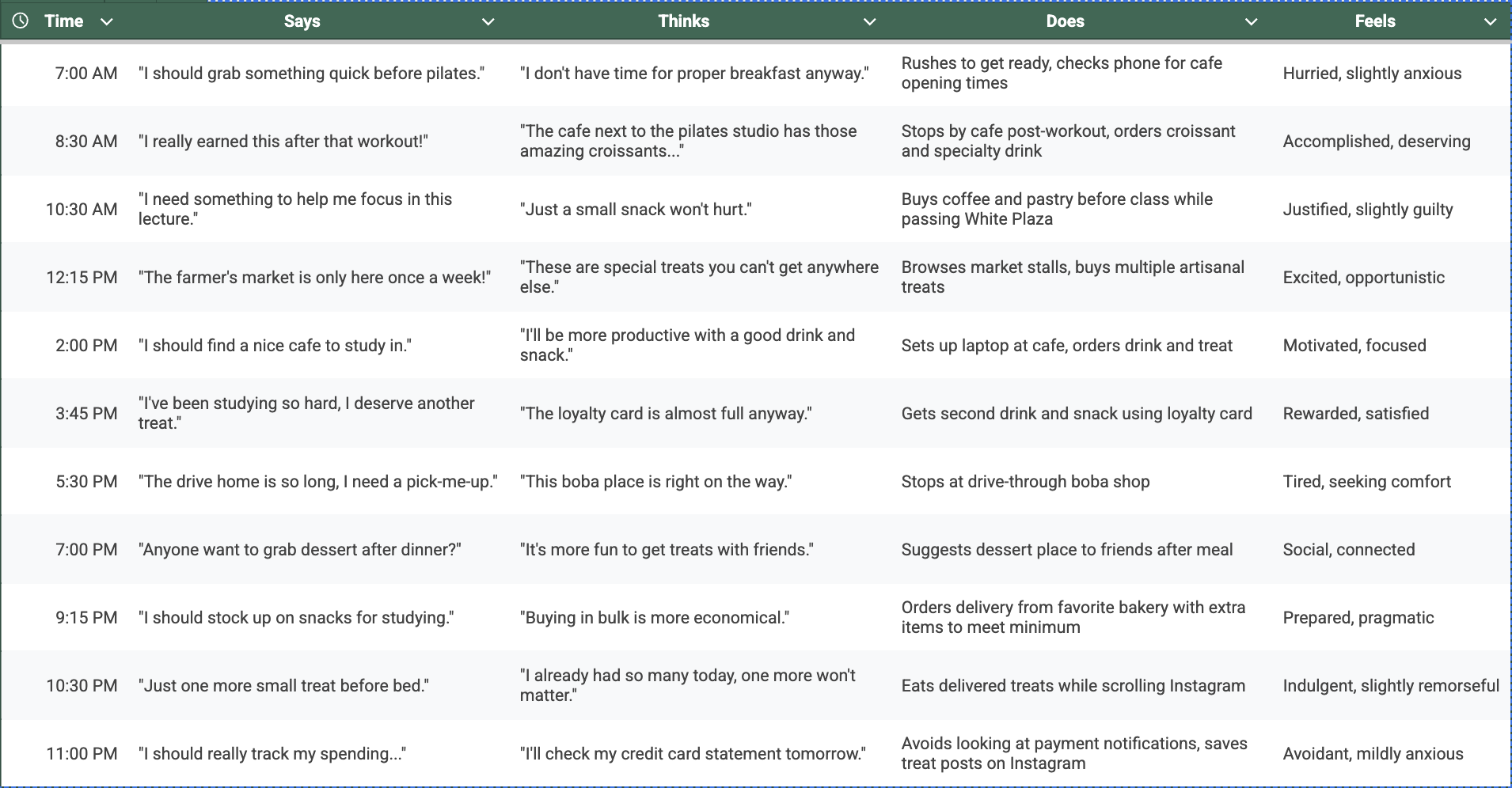
Journey Map




Comments
Comments are closed.