Assumption 1 – AI recommendations will not be harmful
We chose to test this assumption because our product heavily relies on the AI coaching being effective and before we have even developed the AI coach, we don’t know exactly how it will work. This assumption is critical because we don’t want people to get hurt. We want people to have a good relationship with our product. Well intentioned and trained AI can sometimes mess up and we don’t want our users’ safety to be put in jeopardy. We can’t anticipate the edge cases and biases our AI will have, specifically since AI is still a pretty new technology that is still going through some growing pains. Therefore this test is crucial!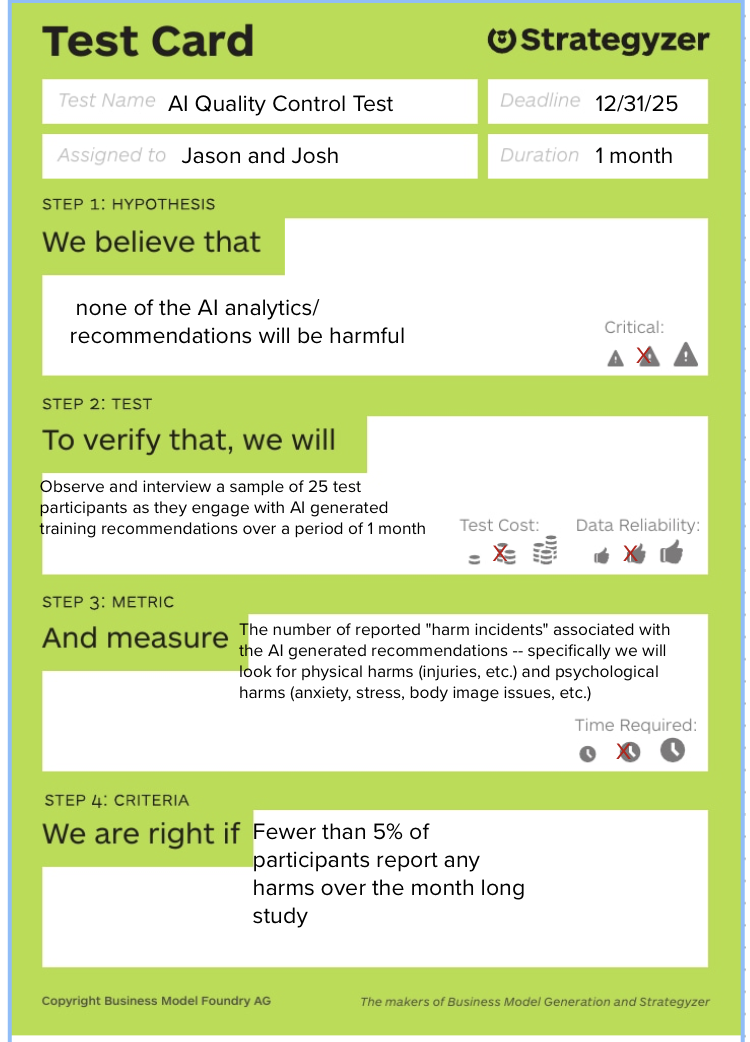
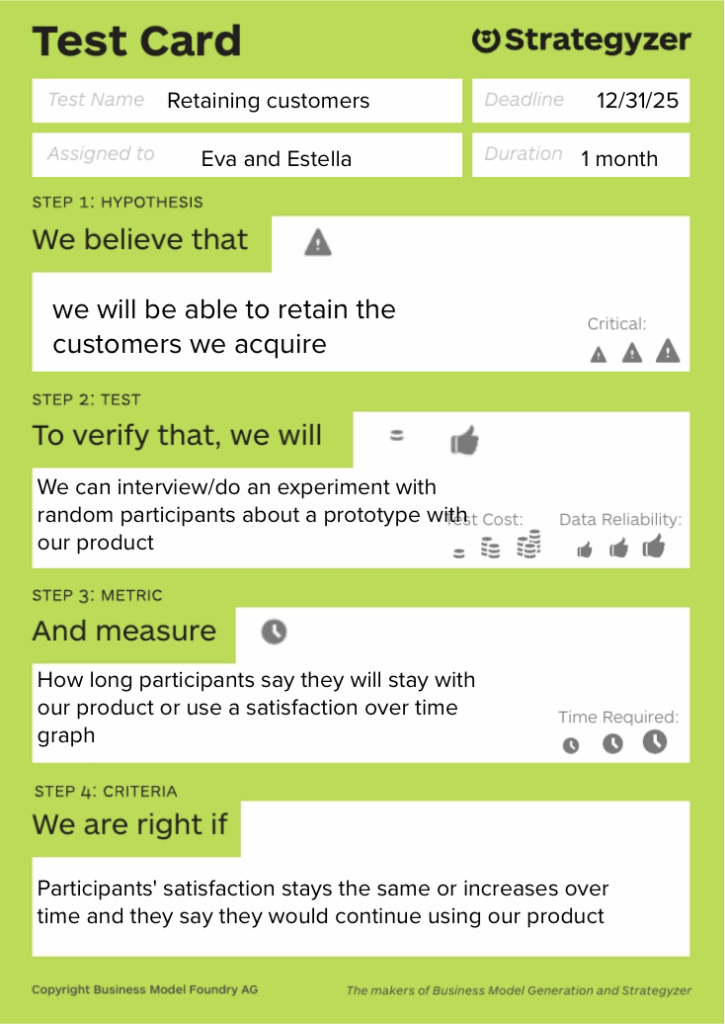
Assumption 2 – we can retain our costumers
We chose to test this assumption because our business model relies heavily on customers staying committed because of our low up front cost and our primary revenue coming from subscriptions. Furthermore, since there isn’t an endurance athlete based fitness wearable on the market yet, we have yet to see if this will be successful. The fitness wearables space in general is quite saturated, so we have yet to see whether our product will stand apart enough from the competition and will draw enough costumers for our success. For investors to have confidence in our product market fit, we must have a healthy number of costumers.
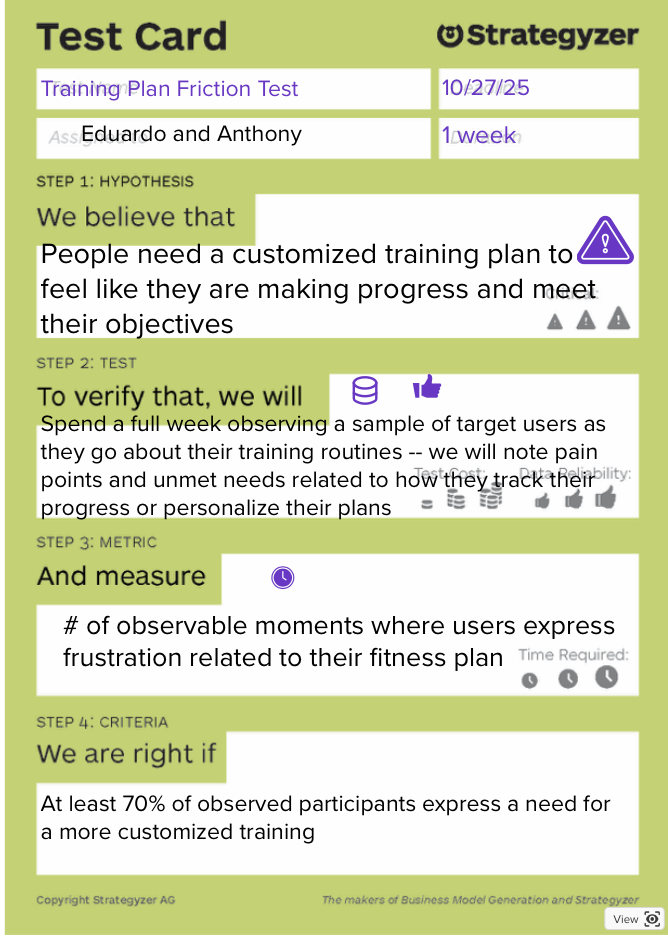
Assumption 3 — people need a customized plan to feel like they’re making progress
We chose to test this assumption because the success of our product hinges on people’s satisfaction with our AI generated training plans. None of our major competitors do this, so we don’t have any evidence on if this works or not. Before we invest heavy resources into training and implementing our AI technology, we need to be sure that our users will find value in the training plans because training it will be expensive and complex. Furthermore, if users don’t find value in our training plans, they don’t have a lot of incentive to use our product.