
Slack
Slack’s error handling balances user guidance and recovery, but with major gaps. The recovery flow is mainly limited to retry prompts and troubleshooting links which actually lack predictive resolution or stateful retry logic. The business cost can be significant as repeated failures and poor error transparency risk large enterprise churn, which directly hits ARR and contract renewal rates. Loss of trust in reliability also degrades team productivity, so the mix of compounding operational costs will slow deeper Slack adoption.


Uber
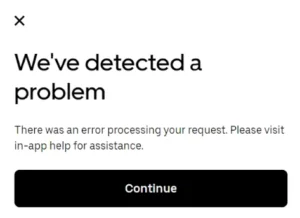
Uber’s approach to error states involves modal dialogs with actionable CTAs like “Continue”/ “OK” or “x” buttons, which can direct users to either move on or try to get in-app help for next steps. The recovery flow relies mostly on manual retry, missing automated fallback, rider compensation credits, or seamless fare persistence. The business cost here is directly seen in lost bookings and suppressed GMV, where each failed trip or payment error risks user abandonment. The potential effect of this is that it can lower conversion rates, which can drive both riders and drivers toward competitors like Lyft, Waymo, etc. This also translates into lost transaction revenue and decreased retention across the platform.

Bank of America
Bank of America’s prepaid app frequently issues availability error banners such as “unable to process your request,” with minimal guidance except “try again later.” The recovery flow lacks context-sensitive help, instant card freeze, or direct error-state support options, leaving anxious users with little recourse. The business cost is both short and long-term: frequent reliability failures drive costly support calls and operational overhead. Also, repeated loss of trust can definitely push account holders to migrate funds or switch banks, which will deeply cut into deposit and interchange revenue.

