by Greg Kalman, Austin Konig, Ananya Navale, Shuman Wang, Jasmine Xu
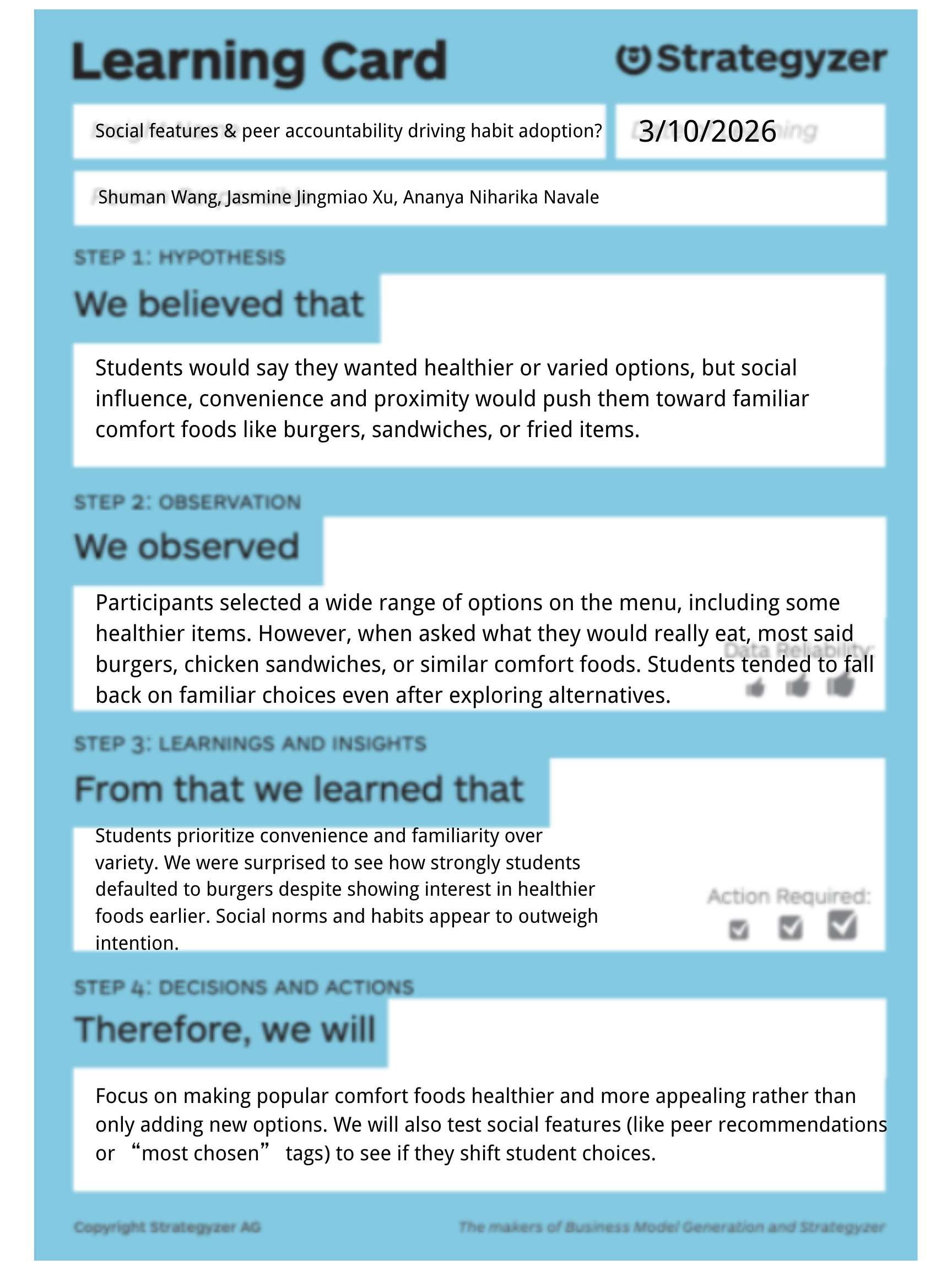
Assumption 1: Can social features and peer accountability drive student habit adoption?
Recruitment Criteria: We recruited students who regularly used task or habit-tracking tools and were willing to test a short sample task. We focused on participants open to social comparison features (e.g., leaderboards or peer progress updates).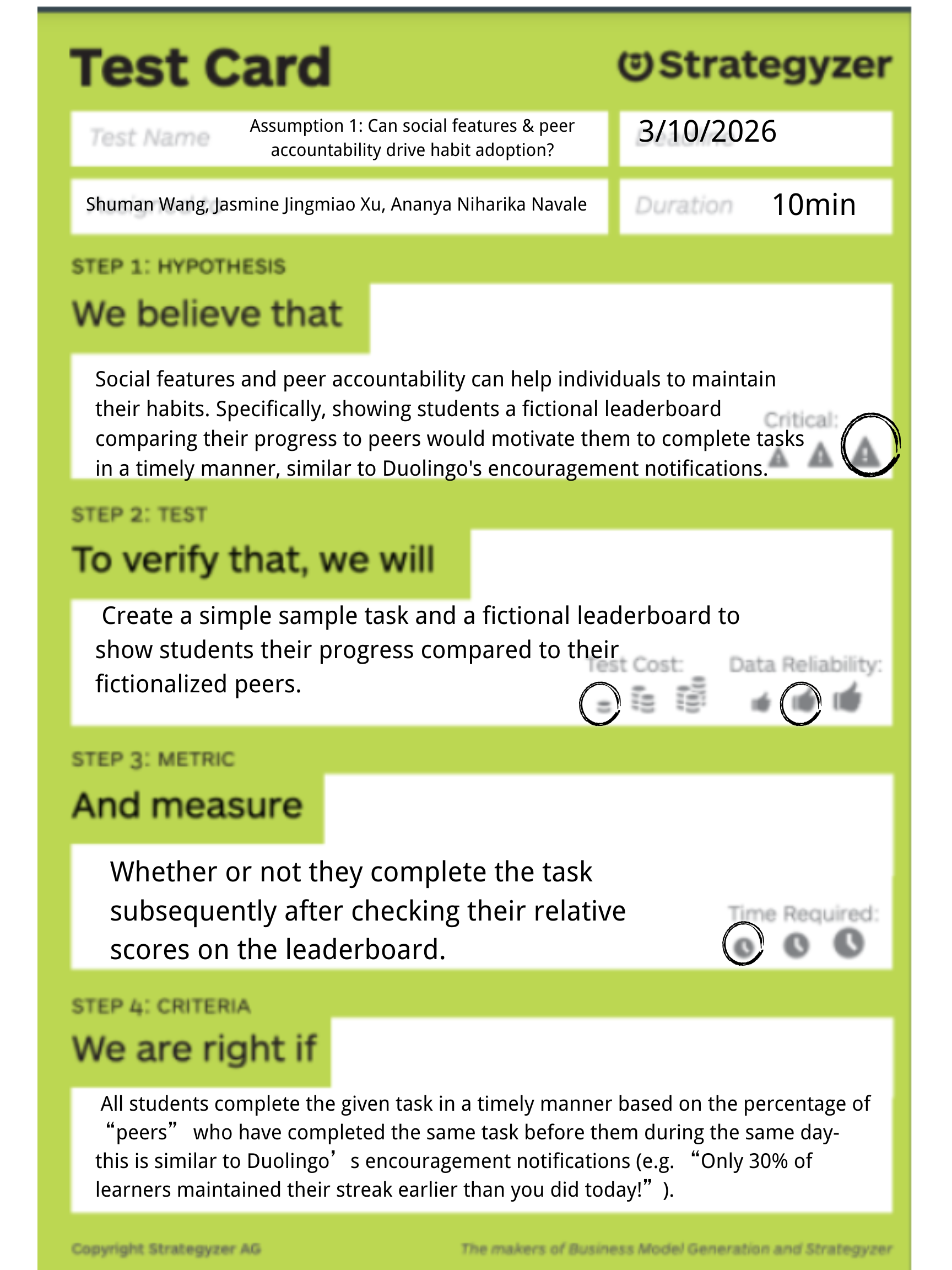
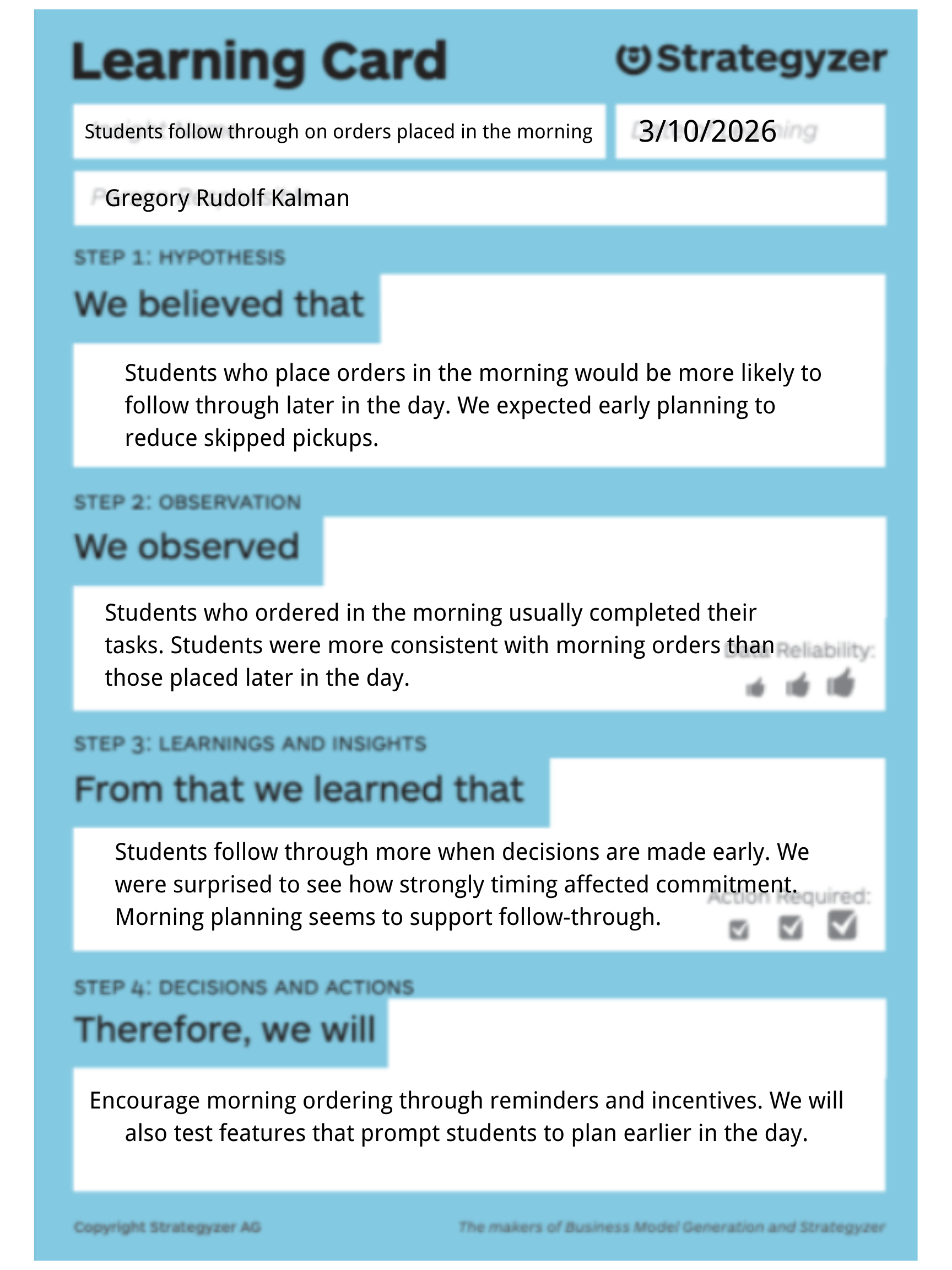
Assumption 2: Will students follow through on orders placed in the morning?
Recruitment Criteria: We recruited active students who were willing to commit to a simple task in the morning (~ 10 min) and provide a specific time for completion. They were selected based on their ability to self-report their progress later in the day to verify follow-through.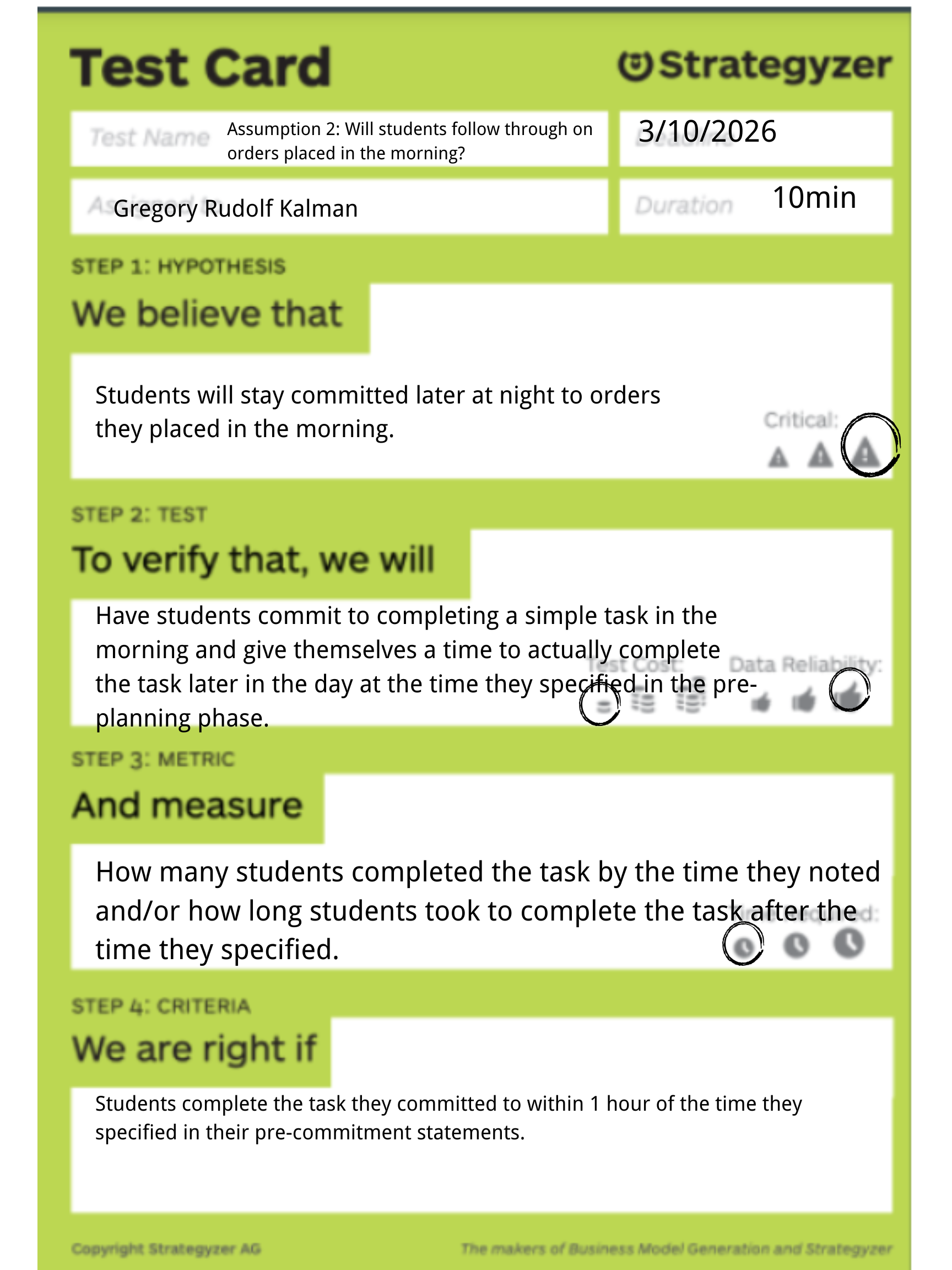
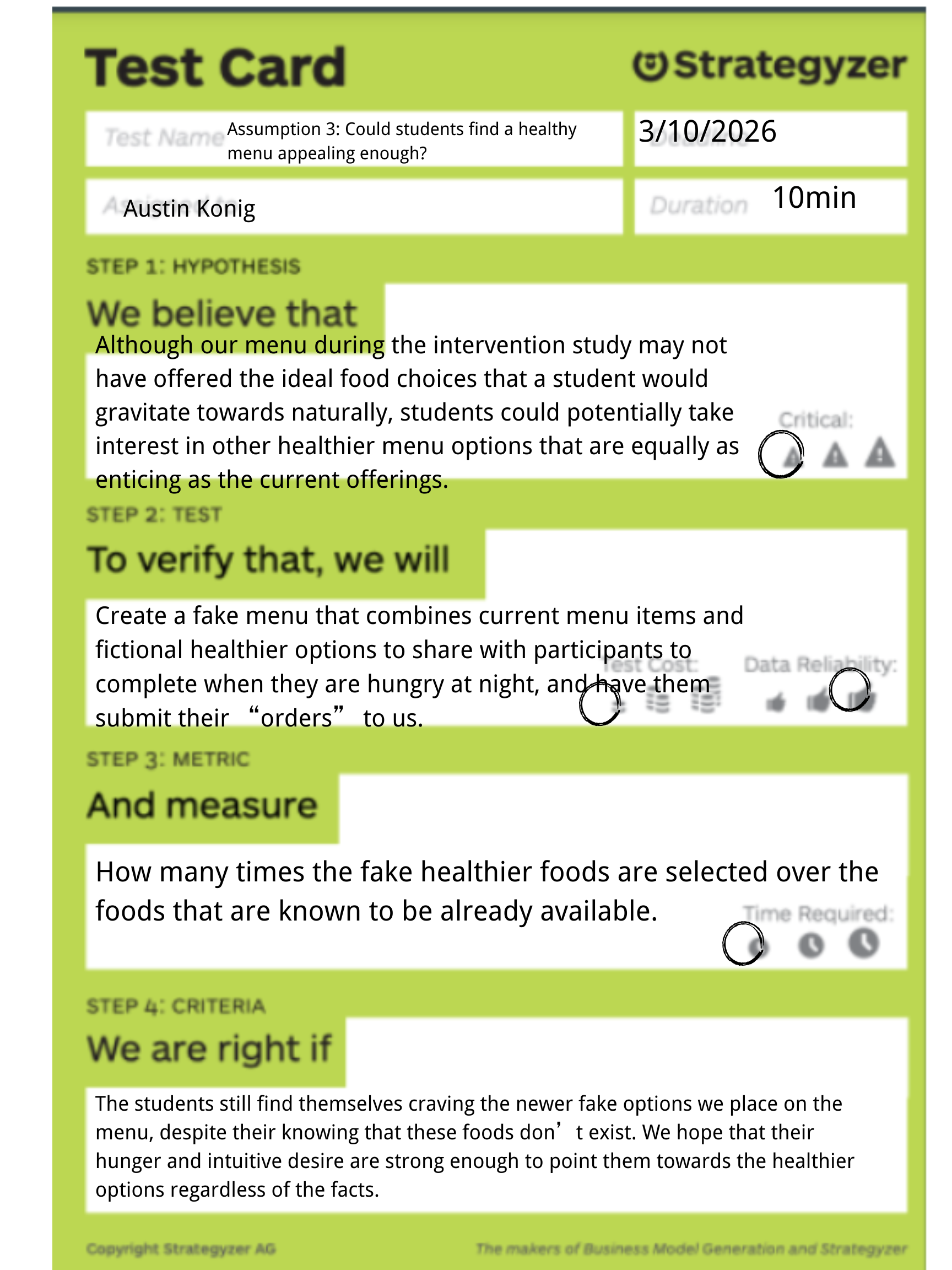
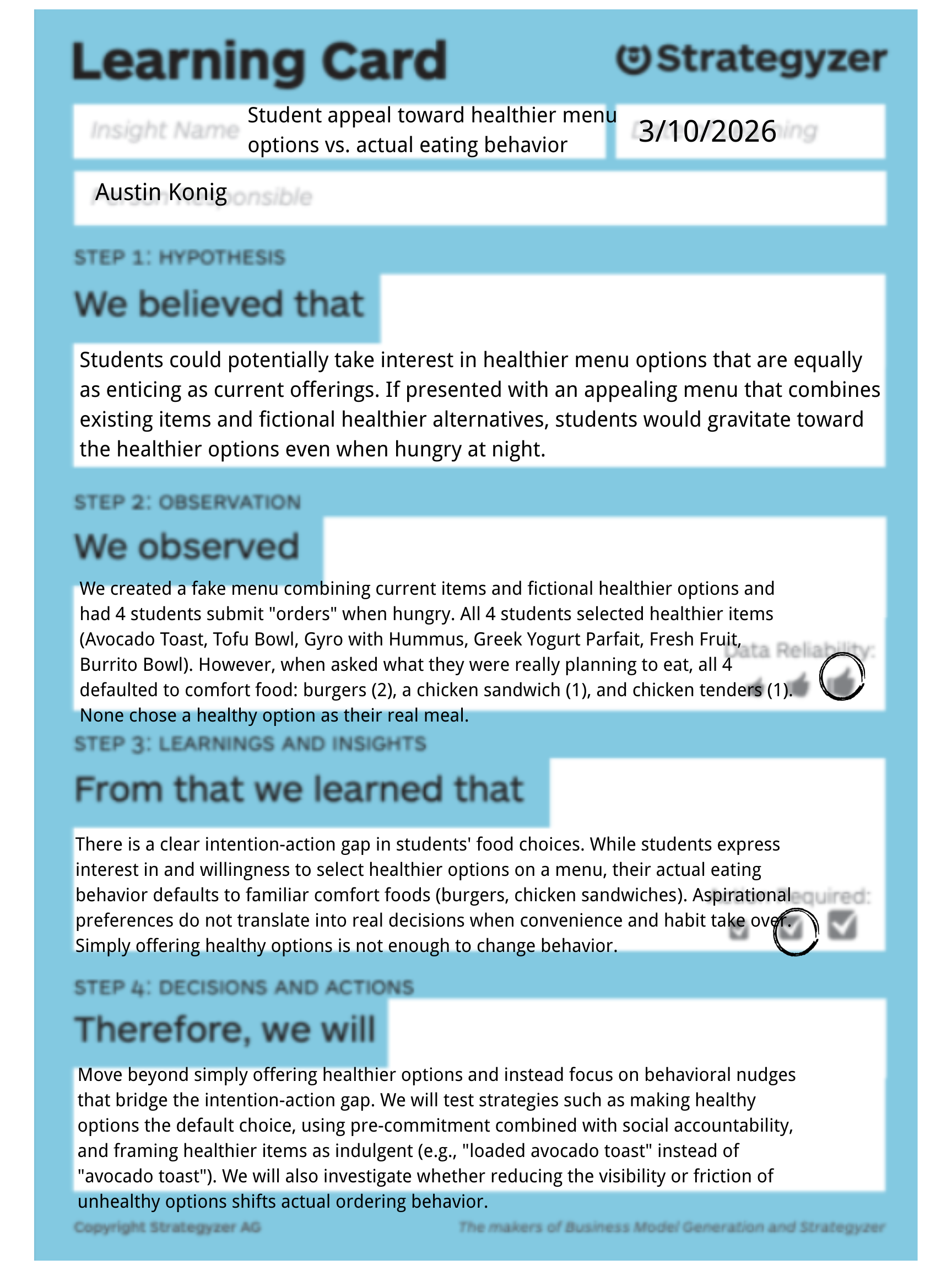
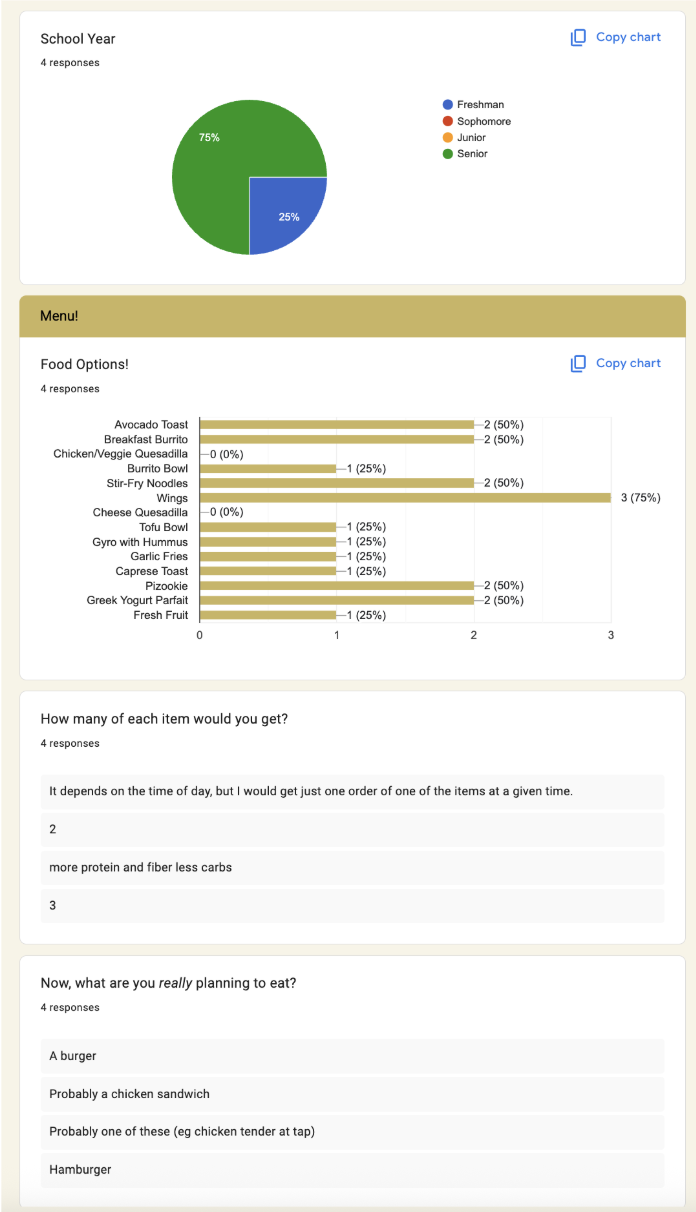
Assumption 3: Could students find a healthy menu appealing enough?
Recruitment Criteria: We recruited students who were willing to participate in a menu study during their typical late-night hours when they were hungry. We specifically sought participants who could compare their aspirational “orders” from a list of healthy, fictional alternatives against their actual planned eating behavior for that night.
Detailed Experiment Design: https://highercommonsense.com/cs247b/team-rakali-intervention-study-synthesis/