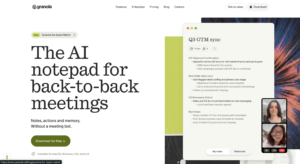
Granola positions itself as an unobtrusive notetaker for busy professionals. Its promise is simple: better notes without inviting a bot into your meeting. It primarily sells the Value Pyramid’s saves time, reduces effort, and reduces anxiety elements. What I find clever is that Granola differentiates itself through what it doesn’t do. Rather than advertising dozens of features, it emphasizes a more natural meeting experience.

Otter presents itself as a meeting assistant that turns conversations into action. Its transcription, coaching, and automated follow-ups appeal to professionals and teams who want greater productivity. Beyond saves time and organizes, Otter sells provides access by making past conversations searchable. However, its expanding list of capabilities makes the central promise less immediately obvious.

Fireflies targets teams and organizations that want to capture, analyze, and integrate meeting information into their workflows. Its emphasis on conversation intelligence and integrations suggests connects, integrates, and informs as its strongest value elements. This makes it compelling for businesses, although its feature-heavy homepage risks overwhelming someone looking for a simple notetaker.
The biggest difference is what each company considers the customer’s real problem. Granola focuses on the experience of being in meetings, Otter on what happens afterward, and Fireflies on what organizations can learn from conversations. If I had to choose one, I would buy Granola. It is the only one of the three I’ve actually used, both at work and at Stanford, and I’ve really liked the experience. That said, my preference also reflects my needs. Someone managing a large team might find more value in Fireflies’ integrations or Otter’s follow-up capabilities. The biggest lesson is that a strong value proposition isn’t about offering the most features, but about making the right benefits clear to the right customer.