
Team 1: Grace Zhang, Grace Zhang, Godsfavour Simon, Alix Cui
System Path
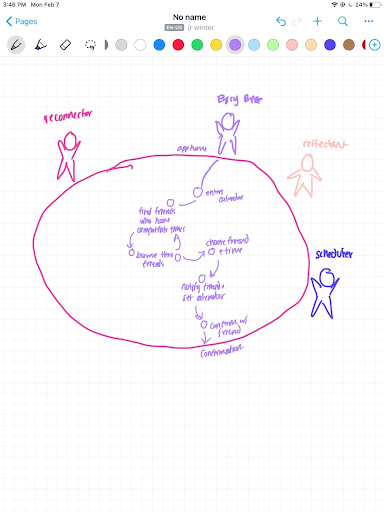
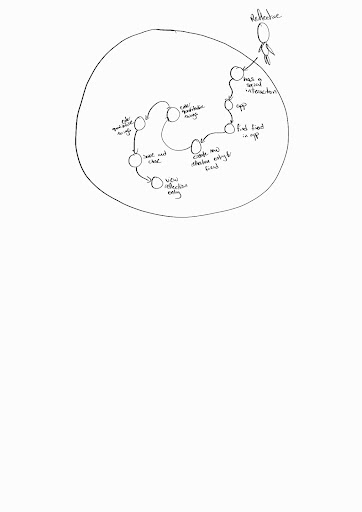
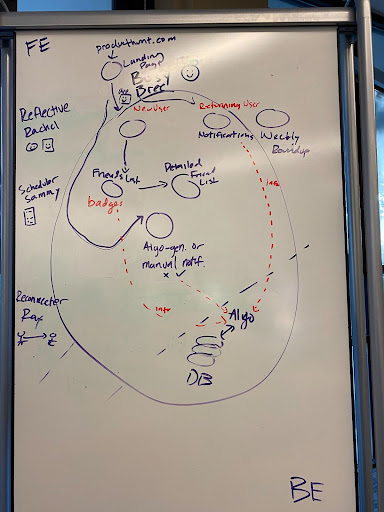
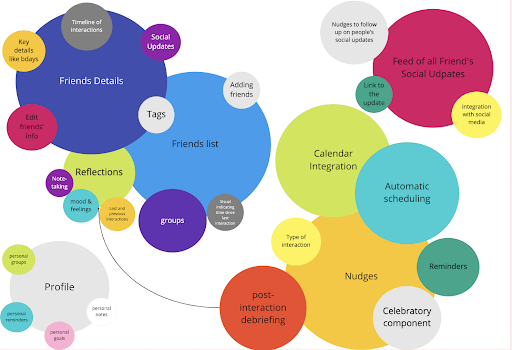
Bubble Map
Assumption Maps and Test Designs
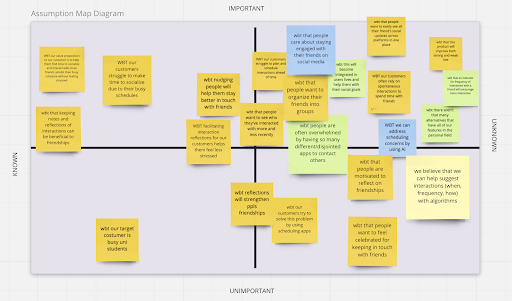
Assumption Testing Procedures
Assumption 1 — Wbt that people want to easily see all their friend’s social updates across platforms in one place
- Collect a number of participants
- Ask each participant for a list of friends they don’t see as often (ideally friends that post more or have public profiles)
- Observe their 3 closest friends across all their social media (Instagram, Twitter, FB, TikTok, Linkedin etc), and compile all their most recent updates into one “digest” doc
- Add an action to each update i.e “congratulate them”, “leave a comment” or “text them about it”
- Show the participant the digest, and note their reactions and feelings towards it
- Questions
- Would this be something you would want to receive on a regular basis? If so, how often?
- How up to date or connected did you feel regarding what’s going on in your friend’s life before we showed you this? After?
- How much do the suggested actions make you feel compelled to comment on their post or reach out to the person individually?
- Any other comments, reactions, feelings?
Assumption 2 — Wbt that an indicator for frequency of interaction with a friend will encourage more interaction
- Collect a number of participants
- Ask each participant for a list of their 3 closest friends and ask them to rank them in order of which ones they interact with the most
- Show them multiple versions of indicators to show friendship “ranking” (based on frequency of interaction)
- Emojis (ex. Sad emojis for friends one hasn’t interacted with in a while)
- Color indicators (ex. red for strength, blue for trust and unity, gray for boring, black for sadness)
- Badges
- Growth (plants, seeds, etc.)
- Ask participants certain questions regarding the indicators
- How did you feel in general after seeing the indicators?
- Do you think the indicators are potentially manipulative on how you perceive your friendship?
- Do the indicators make you want to hang out with friends the participants haven’t interacted with as frequently?
- Does the participant have any type of indicator that they would prefer to describe their friendship interaction frequency?



