
Experiment Overview
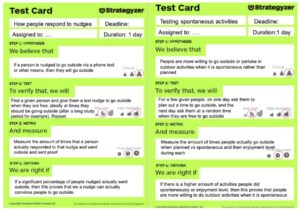
Link to detailed experiment design
Recruitment
We recruited four non-athlete Stanford undergraduate students, half of whom were part of our past studies and the other half were not. We chose these individuals because they aligned with our target demographic, and also the persona that aligns most closely with who we are targeting: busy, motivated college students who recognize the importance of outdoor activity and want quick and low-effort ways to engage in the outdoors. By balancing it across people who were both familiar and new to our project, we were able to cater to both people who have actively attempted to engage in outdoor activity and are familiar with the methods we are using, as well as new individuals that still fall within our target user base.
At the same time, given that these were individuals in our close circles and were accessible within a short period, future studies would need to be done with a larger and more diverse user base to ensure generalizability.
Documentation
Synthesis
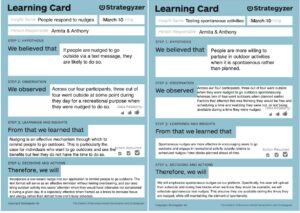
Based on the overall results, we found that 1) nudges are effective in encouraging individuals to go outdoors, and 2) spontaneous nudges are more effective than asking individuals to schedule a planned time to go outdoors. Firstly, we found that nudges reminded individuals who were often having a rather busy day that going outside would be a good idea, both to get a break from their work and reset, and also because they realized they would have a bit of spare time to do so. Without being reminded, they may have not thought about going outdoors that day, because they would assume they are too busy and do not have the time to do so. Secondly, spontaneous nudges were effective because individuals did not have to put going outside until later when they nudged. Instead, they received a cue to go outside during a time that they were already free / available, and the spontaneity created a sense of engagement and adventure for people.
Based on these insights, we plan to create a solution that focuses on sending text-based nudges to encourage outdoor activity. They will be spontaneously sent based on the user’s free blocks of availability as determined through their calendar. This will allow us to leverage the effectiveness of text-based nudges as well as the spontaneity that creates engagement. At the same time, it is important to note that the generalizability of these tests may be limited due to the small sample size, as well as the fact that these individuals are in our existing social circles. Future tests with broader audiences can provide more conclusive evidence on the effectiveness of nudges and spontaneity.



