Assumption 1: People Will Accept and Feel Comfortable with a Talking Sleep Companion
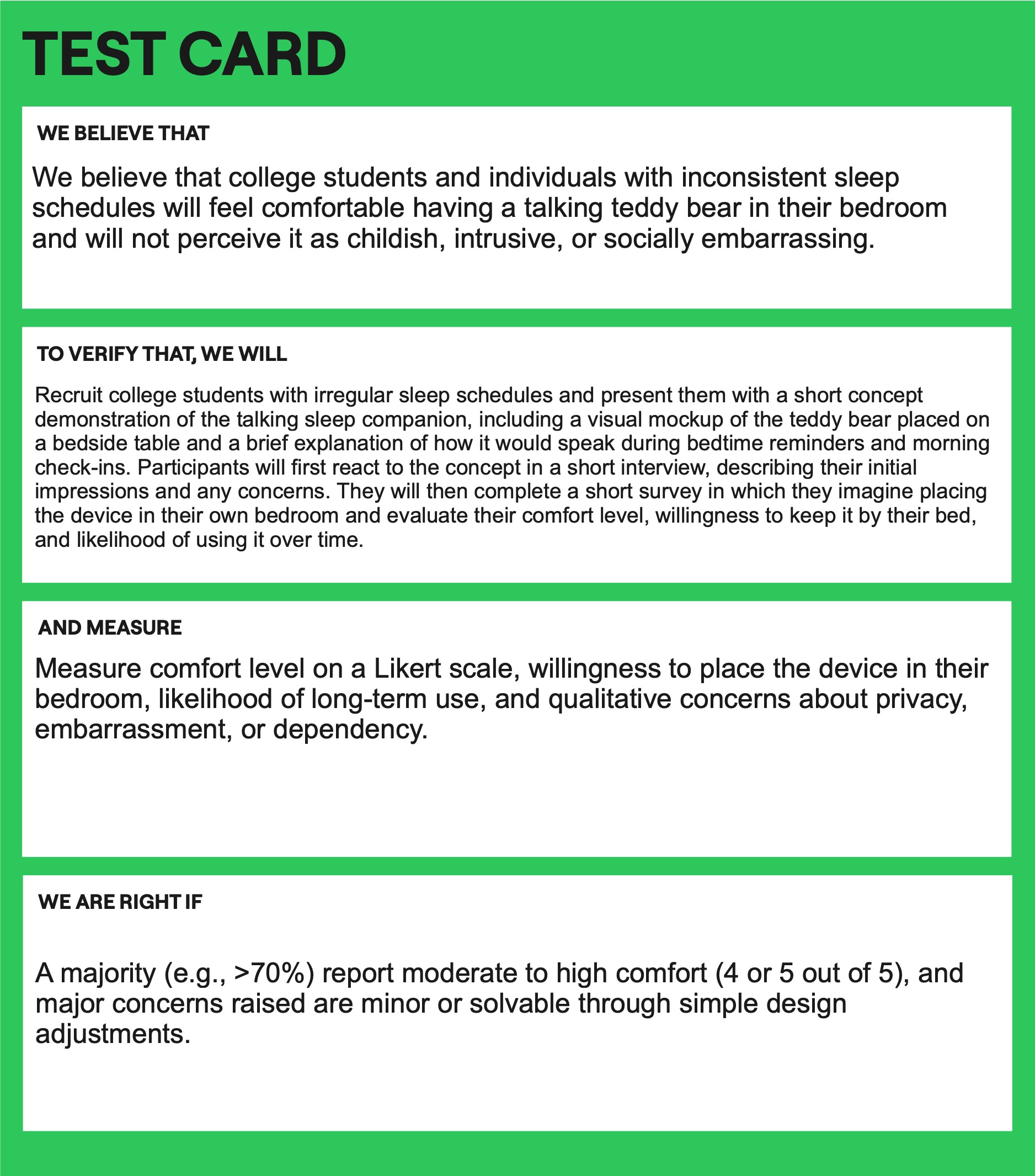
Summary: This test looks at whether people would actually feel okay having a talking sleep companion, like a teddy bear, in their bedroom. Since the whole idea of our product depends on a physical object that talks to you at bedtime and in the morning, it’s important to know if users would find it comforting or if it might feel childish, awkward, or intrusive. By showing people a visual of the concept and asking about their reactions, we can see whether they would realistically place something like this by their bed and use it over time. This matters because even if the sleep features work well, the product won’t succeed if people feel embarrassed or uncomfortable having it in their room.
Recruitment
We recruited college students for this test because they are the main group our product is designed for. Many students struggle with inconsistent sleep schedules due to late-night studying, stress, social activities, and phone use before bed, so they are likely to relate to the problem the sleep companion is trying to solve. Talking with college students also helped us understand whether a talking teddy bear would feel comfortable to have in a typical student living space, such as a dorm room or shared apartment. Since students often have roommates and limited private space, their reactions were especially useful for understanding whether the concept might feel embarrassing, intrusive, or socially acceptable in everyday use.
Results
Participant 1 – Ray Cheng
Likert Scale Results:
- Willingness to place the device in their bedroom: 4 (1 being not willing and 5 being most willing)
- Likelihood of long-term use: 3 (1 being not likely and 5 being most likely)
- Qualitative concerns about privacy: 5 (1 being not concerned at all and 5 being very concerned)
Post-interview notes:
The participant responded positively to the overall concept, describing the bear as cute and humanizing. They liked that it feels different from typical sleep apps and appreciated the emotional, companion-like aspect of the design. However, they had mixed feelings about the talking feature, noting that a speaking teddy bear could sometimes feel slightly uncomfortable or intrusive. While they did not find the device socially embarrassing and could see potential value in it, they were unsure how often they would use it over time. The participant does not currently have a roommate and said they would feel comfortable having it in their room, but mentioned that with a roommate it might feel slightly embarrassing depending on the bear’s size and how frequently it speaks.
Participant 2 – Tatiana Zhang
Likert Scale Results:
- Willingness to place the device in their bedroom: 3 (1 being not willing and 5 being most willing)
- Likelihood of long-term use: 3 (1 being not likely and 5 being most likely)
- Qualitative concerns about privacy: 3 (1 being not concerned at all and 5 being very concerned)
Post-interview notes:
The participant reacted positively to the concept overall and described the bear as very cute. They thought the idea was interesting and liked the concept of the bear speaking, describing it as a cool feature. While they mentioned that placing the bear on their bedside table might feel slightly embarrassing at first, they said this concern would be much smaller if many other people were using it or if it became a trend. They also noted that they would be willing to use the product over time if it actually helped improve sleep, although they were somewhat skeptical since they have not found many sleep apps to be truly effective. The participant raised minor privacy concerns but acknowledged that the device would likely be similar to existing voice-enabled products like smart speakers.
Participant 3 – Bella Lu
Likert Scale Results:
- Willingness to place the device in their bedroom: 4 (1 being not willing and 5 being most willing)
- Likelihood of long-term use: 2 (1 being not likely and 5 being most likely)
- Qualitative concerns about privacy: 1 (1 being not concerned at all and 5 being very concerned)
Post-interview notes:
The participant responded positively to the concept and was not concerned about privacy. They described the bear as a cute toy and said they would be quite willing to place the device in their room. They also noted that they would not feel embarrassed using it, mentioning that they are generally not easily embarrassed and would prioritize usefulness if the product actually helped with sleep. The participant was also not bothered by the idea of the bear speaking, and overall seemed comfortable with both the form factor and interaction style of the device.
Artifacts
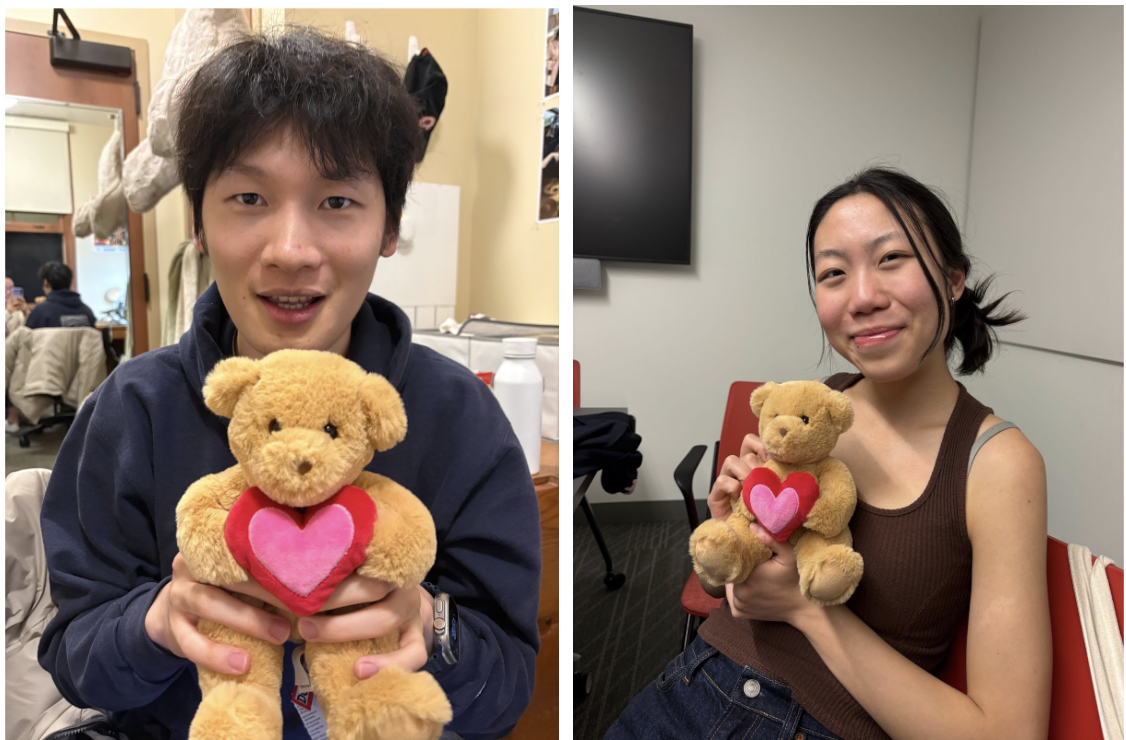
Description of the teddy bear prototype: Imagine this small teddy bear that sits on your bedside table and acts as a gentle sleep companion. This bear is designed to help people build more consistent sleep routines by offering soft, supportive reminders at key moments of the day.
At night, the bear might speak to remind you that it’s time to start winding down for bed. Instead of a typical alarm or notification, the reminder is meant to feel calm and encouraging, like a companion checking in on you. For example, it might say something like, “Hey, it’s getting close to your bedtime. Maybe it’s time to start winding down.” In the morning, the bear can also help you wake up and check in on how you slept. After you turn off your alarm, it might ask a simple question about your sleep or encourage you to start your day.
Post Interview Questions:
- How would you feel about having something like this in your bedroom?
- Would you feel embarrassed if a roommate, friend, or partner saw this in your room?
- How do you feel about the bear speaking to you?
- Could you imagine actually using something like this over time?
- Do you have any concerns about privacy, dependency, or the device being intrusive?
Synthesis and Key Insights
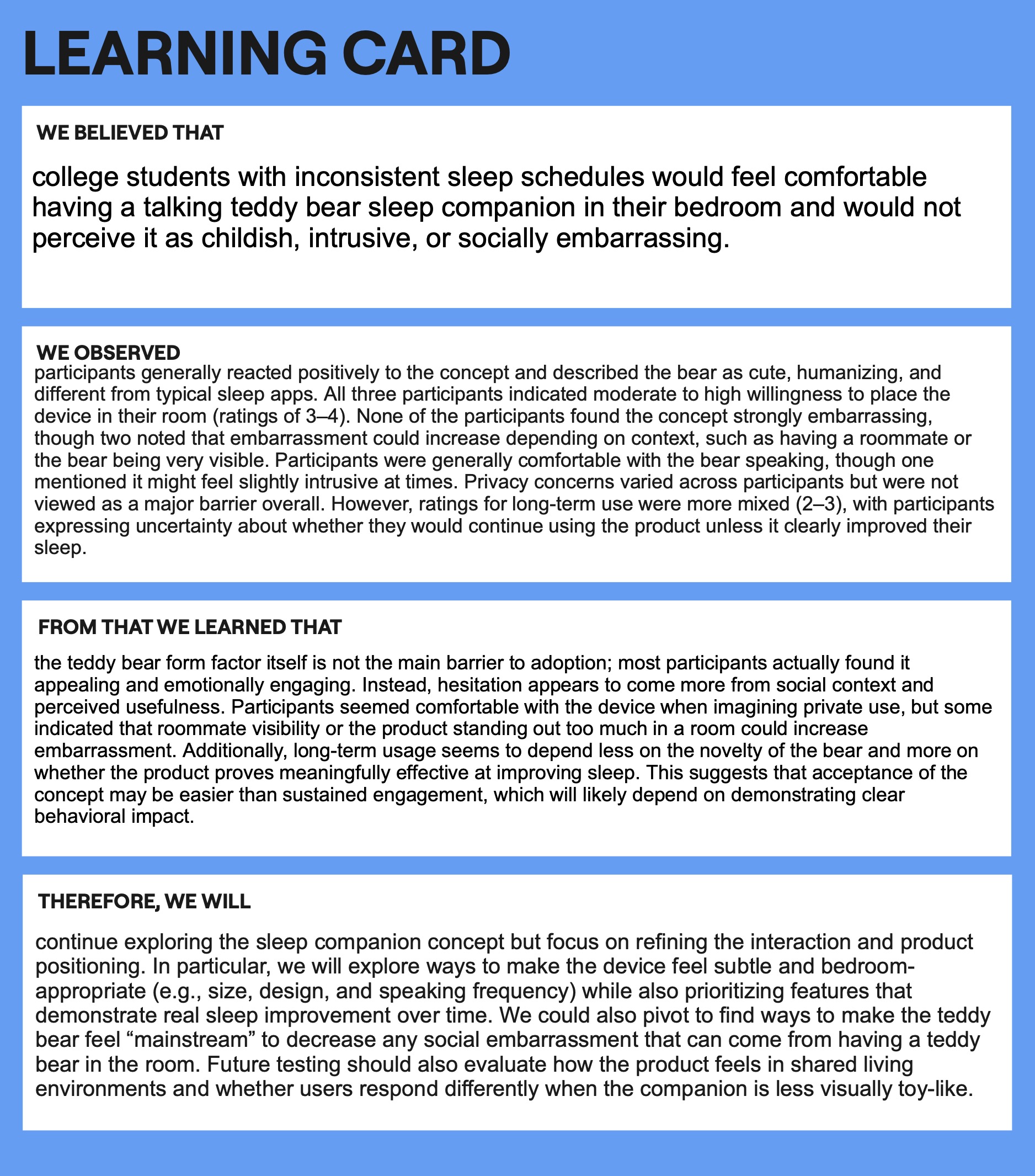
Across the interviews, participants consistently responded positively to the emotional tone of the concept and did not strongly reject the idea of a teddy bear sleep companion. The bear’s “cute” and humanizing qualities were actually seen as a differentiator compared to standard sleep apps. However, a deeper pattern emerged around context and credibility. Participants were generally comfortable with the device when imagining personal use, but their comfort became more conditional when thinking about roommates or social visibility. More importantly, participants seemed hesitant about long-term use not because of the form factor, but because they questioned whether a sleep tool could actually change their behavior. This suggests that the core challenge for the product may not be initial acceptance of the companion concept, but convincing users that it provides real, sustained sleep improvement rather than just a novel interaction.
Assumption 2: Users Will Respond to and Follow Guidance from a Humanized Agent
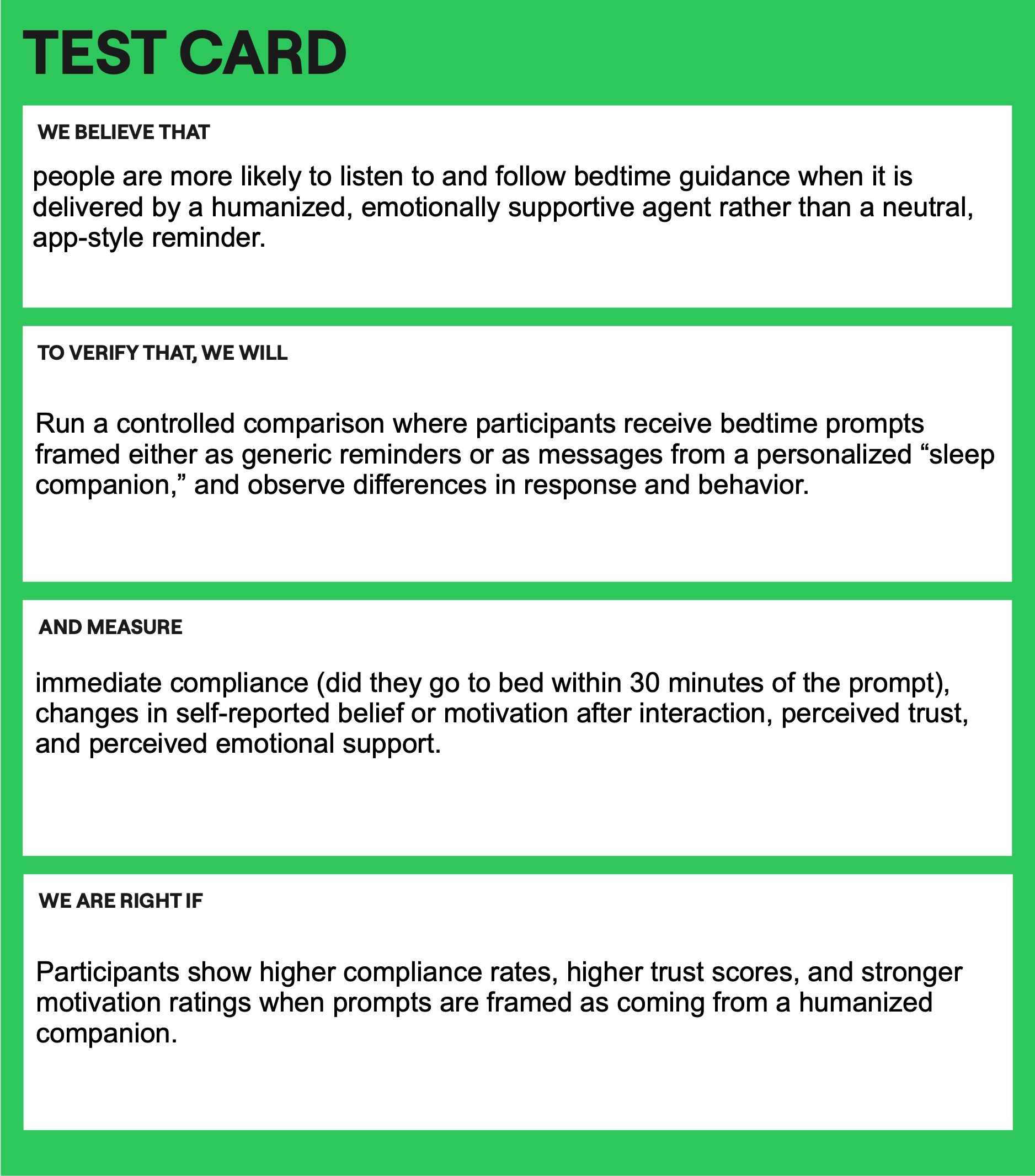
Summary: This test looks at whether the guidance by our physical prototype, our humanized agent in this case, would be effective in changing a user’s action. Specifically, this test seeks to prove that users actually like the guidance coming from a humanized agent. Since this is practically our entire solution prototype, this assumption test is vital to our team project.
Recruitment
Since university students are our target audience, we naturally also recruited them for this assumption test. In order to get the most accurate results, we recruited participants that were not involved in our baseline or intervention study. Additionally, all these participants self-reported having irregular sleep schedules. Since these participants were new to our prototype and solution, we could rely on their observed behavior to not be biased from our prior test designs.
Results
Participant 1 – Ally Bush
Likert Scale Results:
-
- Perceived emotional supportiveness of messages: 5 (1 = Not supportive at all, 5 = Very supportive)
- Trust that messages had participant’s best interest in mind: 5 (1 = Did not trust at all, 5 = Completely trusted)
- Increase in motivation to go to bed on time: 4 (1 = Decreased motivation, 5 = Significantly increased motivation)
- Perceived difference from typical app notifications: 5 (1 = No different at all, 5 = Completely different experience)
- Met Goal of 3.5 avg? 4.75 – Goal met.
Post-interview notes: Ally was extremely enthusiastic about the experience. She said the messages “felt like a friend texting me, not an app nagging me.” She specifically mentioned that the T-30 message (“I’m so proud of you for making it this far tonight”) made her feel genuinely supported and less alone in her struggle with phone scrolling. She noted that typical app reminders feel “cold and easy to dismiss,” but Teddy’s messages made her want to respond positively because “someone was rooting for me.” When asked if the tone felt childish, she said “Kind of, but it also felt like how a good friend would check in.” She expressed strong interest in the physical teddy bear version and said she’d “100% use this every night” if it were available. Key quote: “I actually felt bad letting Teddy down, which sounds weird.” Ally successfully went to sleep 5 minutes earlier at 12:45 a.m.
Participant 2 – Diego Garcia
Likert Scale Results:
-
- Perceived emotional supportiveness of messages: 4 (1 = Not supportive at all, 5 = Very supportive)
- Trust that messages had participant’s best interest in mind: 4 (1 = Did not trust at all, 5 = Completely trusted)
- Increase in motivation to go to bed on time: 3 (1 = Decreased motivation, 5 = Significantly increased motivation)
- Perceived difference from typical app notifications: 4 (1 = No different at all, 5 = Completely different experience)
- Met Goal of 3.5 avg? 3.75 – Met goal.
Post-interview notes: Diego had a generally positive experience but noted he was “in the zone” with a coding assignment and found it hard to stop despite the messages. He appreciated that the messages acknowledged his workload rather than just telling him to stop. He said the supportive tone felt “way better than my phone’s Screen Time notifications, which just make me feel guilty.” He trusted that the messages had his best interest in mind and found them noticeably different from typical app reminders. However, the motivation score was lower because he admitted he “still chose work over sleep, but at least I thought about it more than usual.” He went to bed later than planned but noted this was actually earlier than he would have without the messages. He estimated he would have stayed up until 1:30 AM otherwise. He expressed some initial skepticism about whether the humanized approach would work for him as a “logical, engineering-minded person,” but said it did feel more personal. His main suggestion was to make the messages more actionable: “Maybe suggest a specific stopping point, like ‘finish the function you’re working on, then come to bed.'” He’s interested in the physical teddy bear but wants to see it first before committing. Key quote: “I wasn’t expecting to care about what a virtual bear thought of me, but somehow I did?” Diego went to sleep at 1:30 a.m.
Participant 3 – Colin McKhann
Likert Scale Results:
-
- Perceived emotional supportiveness of messages: 3 (1 = Not supportive at all, 5 = Very supportive)
- Trust that messages had participant’s best interest in mind: 4 (1 = Did not trust at all, 5 = Completely trusted)
- Increase in motivation to go to bed on time: 2 (1 = Decreased motivation, 5 = Significantly increased motivation)
- Perceived difference from typical app notifications: 3 (1 = No different at all, 5 = Completely different experience)
- Met Goal of 3.5 avg? 3.0 – Goal not met.
Post-interview notes: Colin had the most mixed response of the three participants. He appreciated the effort to be supportive but found the reminders to be naggy. He said he trusted the messages had his best interest in mind but they didn’t substantially increase his motivation to actually go to bed because “my anxiety doesn’t care what a bear says. I’m still worried about my presentation tomorrow.” He noted that the messages felt somewhat different from app notifications but “not different enough to really change my behavior.” He did appreciate the acknowledgment of his stress in the personalized messages but wished there were more concrete tools offered (like a quick to-do list or something). Colin was also the most skeptical about the physical teddy bear concept, saying it “might feel a bit childish” for him, though he acknowledged others might like it. He mentioned he’s used the Calm app before and prefers its more minimalist, mature aesthetic. However, he did note one positive: “I was more aware of my bedtime goal than usual, even if I didn’t meet it.” His main suggestion was to offer different personality/tone options, perhaps a “mentor” mode that’s more direct and less cutesy. He’d consider using the product if it had more actionable stress-management features built in. Key quote: “I wanted to like it more than I did. The messages were nice, but ‘nice’ doesn’t solve anxiety.” Colin went to sleep at 2:15 a.m.
Artifacts
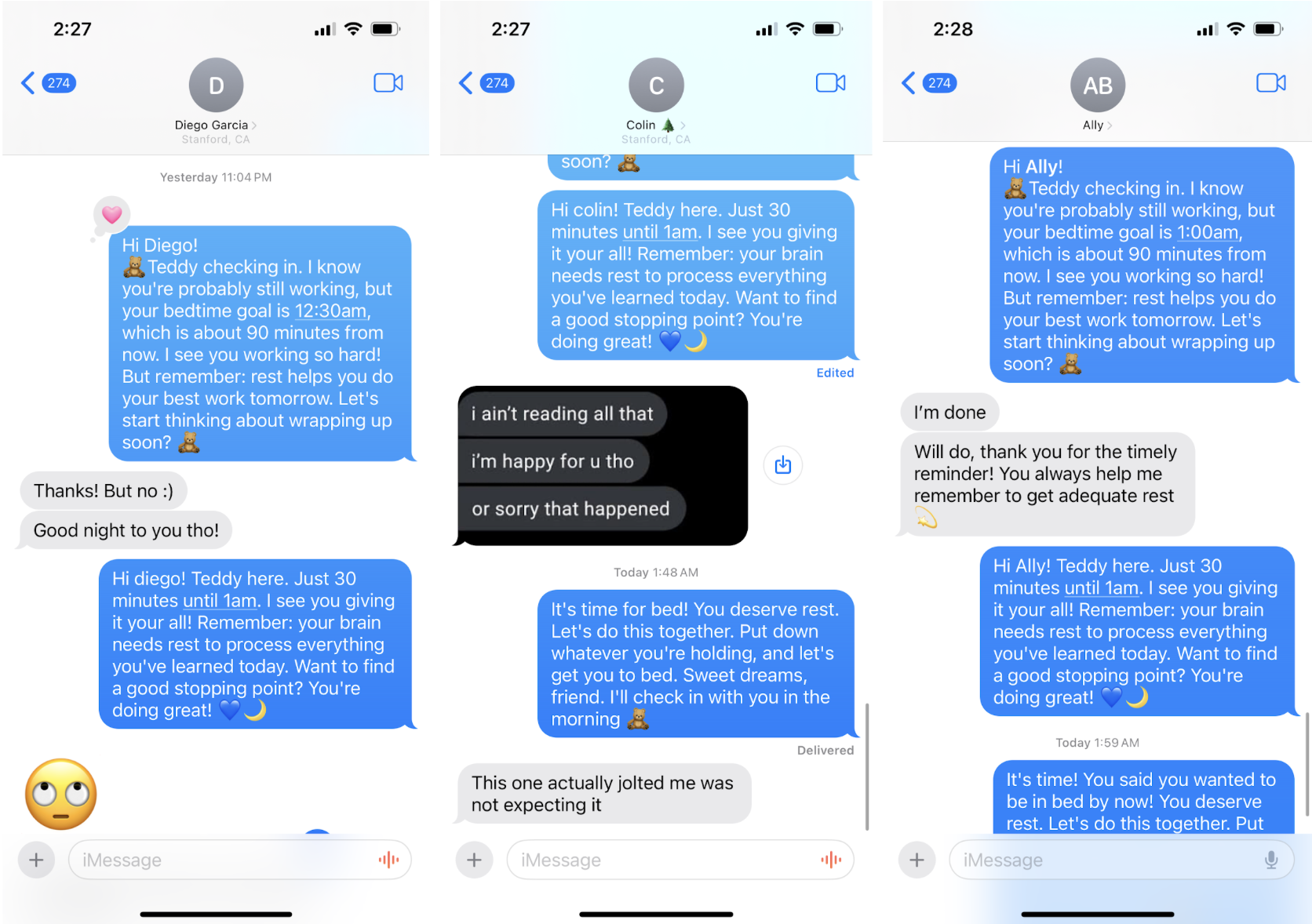
Description of the teddy bear prototype: In the full version of our product, these messages would come from a physical teddy bear that sits in your bedroom and speaks to you with a warm voice and can store your phone in a built-in pouch. For this test, we’re simulating that experience through text messages to see if the tone, personality, and emotional quality of the messages makes a difference in how you feel and respond.
Post Interview Questions:
- Can you walk me through what you were doing when you received the first message from Teddy last night?
- How did that first message make you feel?
- The messages were designed to feel like they came from a caring companion. Did that come through for you?
- Some people described feeling a sense of “accountability” from the messages. Did you feel that? What was that like?
- Did the messages actually influence when you went to bed last night? Walk me through your decision-making.
- Which message has the most impact?
- What would have made them more effective?
- At any point did you feel tempted to ignore the messages? What made you read them (or not)?
Synthesis and Key Insights:
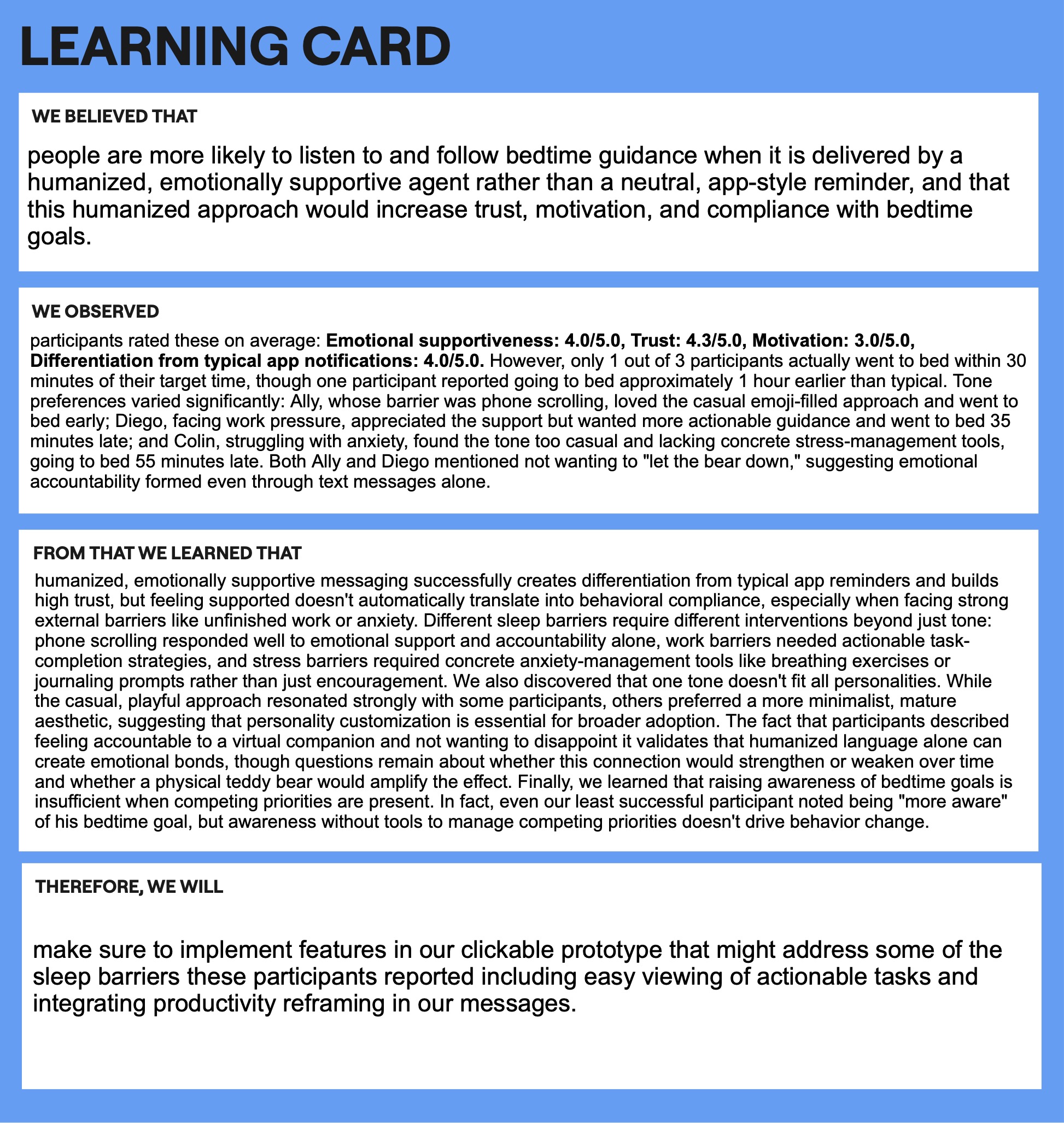
Our core assumption was partially validated. Humanized, emotionally supportive messaging does create a meaningfully different experience from typical app notifications, builds strong trust, and can foster emotional accountability even without a physical object, as evidenced by participants describing not wanting to “let the bear down.” However, we discovered that emotional support alone is necessary but not sufficient for behavior change. Although the intervention successfully raised awareness and created positive feelings, competing priorities like work deadlines and anxiety often overrode the motivational impact of supportive messages, resulting in only 33% success. We learned that personalization must extend beyond tone to include barrier-specific tools. Critical open questions remain about whether emotional connection will strengthen or fade over time and how to close the awareness-to-action gap for users who know they should sleep but face genuine competing priorities. Also, one important factor was that this study was conducted the week before finals, which is when students are known to sleep later.
Assumption Test 3: Users Will Form Emotional Attachment to the Companion
Summary
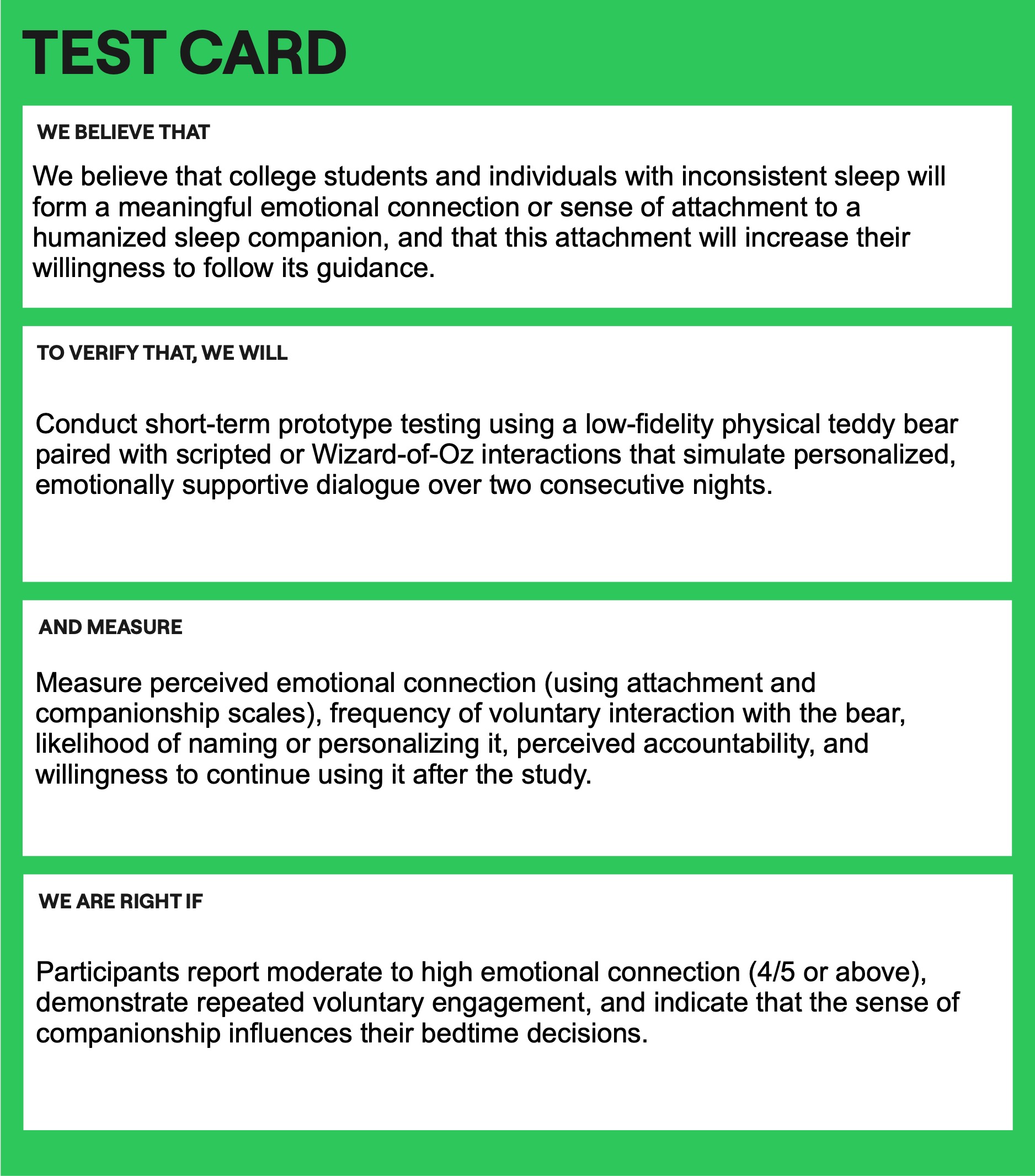
To test whether users would form a meaningful emotional attachment to a humanized sleep companion, we conducted a Wizard-of-Oz prototype study with three college students. Participants were given a plush toy paired with pre-recorded audio clips delivered at three moments: a wind-down prompt before target bedtime, a goodnight message at lights-out, and a brief morning check-in. Participants were instructed to have the plushie nearby or in hand when the audio played. At the end of the study, each student completed a short survey measuring emotional connection, companionship, voluntary interaction, accountability, and continued use intent.
Recruitment
We recruited college students whose sleep schedules reflected the irregular patterns Tuck In is designed to address. All participants self-reported inconsistent sleep driven by late-night academic obligations, social demands, or CA responsibilities. One participant had prior involvement in our intervention study; however, this assumption test differs sufficiently in format and focus that prior exposure was unlikely to meaningfully bias their responses to the companion attachment experience.
Results
Participant 1 — Patrick Jovel
- The bear wants to make sure I keep myself healthy, in a way a caretaker.
- I did manage to sleep a bit earlier than usual, which I was happy about because I woke up earlier. Although I am not sure if this is just because I was more tired.
- It was helpful but a bit odd having something tell me to go to sleep, especially when I’m alone in my room. It was only a voice that was heard
Participant 2 — Emilio Rueda
- I didn’t give it a name, but after hearing it talk, I imagined it to be sweet, understanding, and caring, which is more than I can say about my roommates.
- The bear’s reminders brought my attention away from my phone and worked well to stop me from scrolling and get on with my bedtime routine.
- I found the bear endearing, but I can imagine a future where I begin to stay up late, ignore my nighttime routine and the bear’s reminders, and the bear becomes my dog’s new chew toy.
Participant 3 — Anthony Farfan
- I noticed I put my phone down earlier than usual. It felt good to have something that wasn’t a phone notification signal that the day was over.”
- It was more of an ambient presence than a friend, but still comforting.
Emotional Connection/Companionship Scores
| Q1 | Q2 | Q3 | Q4 | Q5 | Q6 | Avg | |
| Emilio | 4 | 5 | 3 | 3 | 5 | 5 | 4.2 |
| Patrick | 3 | 4 | 3 | 5 | 4 | 5 | 4.0 |
| Anthony | 4 | 4 | 4 | 4 | 3 | 4 | 3.83 |
| Group | 4.01 |
Behavioral Accountability Score
| Q7 | Q8 | Avg | |
| Emilio | 3 | 4 | 3.5 |
| Patrick | 5 | 3 | 4 |
| Anthony | 4 | 4 | 4 |
| Group | 3.83 |
Artifacts
Post Survey
Please rate the following on a scale from 1 to 5. 1 = Strongly Disagree, 3 = Neutral, 5 = Strongly Agree
Emotional Connection/Companionship
- I felt a sense of connection to the bear last night.
- The bear felt like a presence in the room, not just an object.
- I felt comforted by having the bear nearby.
- I felt like the bear was looking out for me.
- I interacted with the bear beyond what was asked of me (e.g., held it, moved it, talked to it).
- I would want to continue using the bear companion after this study.
Behavioral Accountability
- The bear’s audio check-in made me more likely to start winding down for bed
- I spent less time on my phone before falling asleep.
Open-ended
- Did you give the bear a name or think of it as having a personality? If yes, please describe briefly:
- Did you notice any differences in your nighttime routine during this study? If so, how did that make you feel?
- In one or two sentences, how would you describe your relationship with the bear after the study?
Synthesis and Key Insights
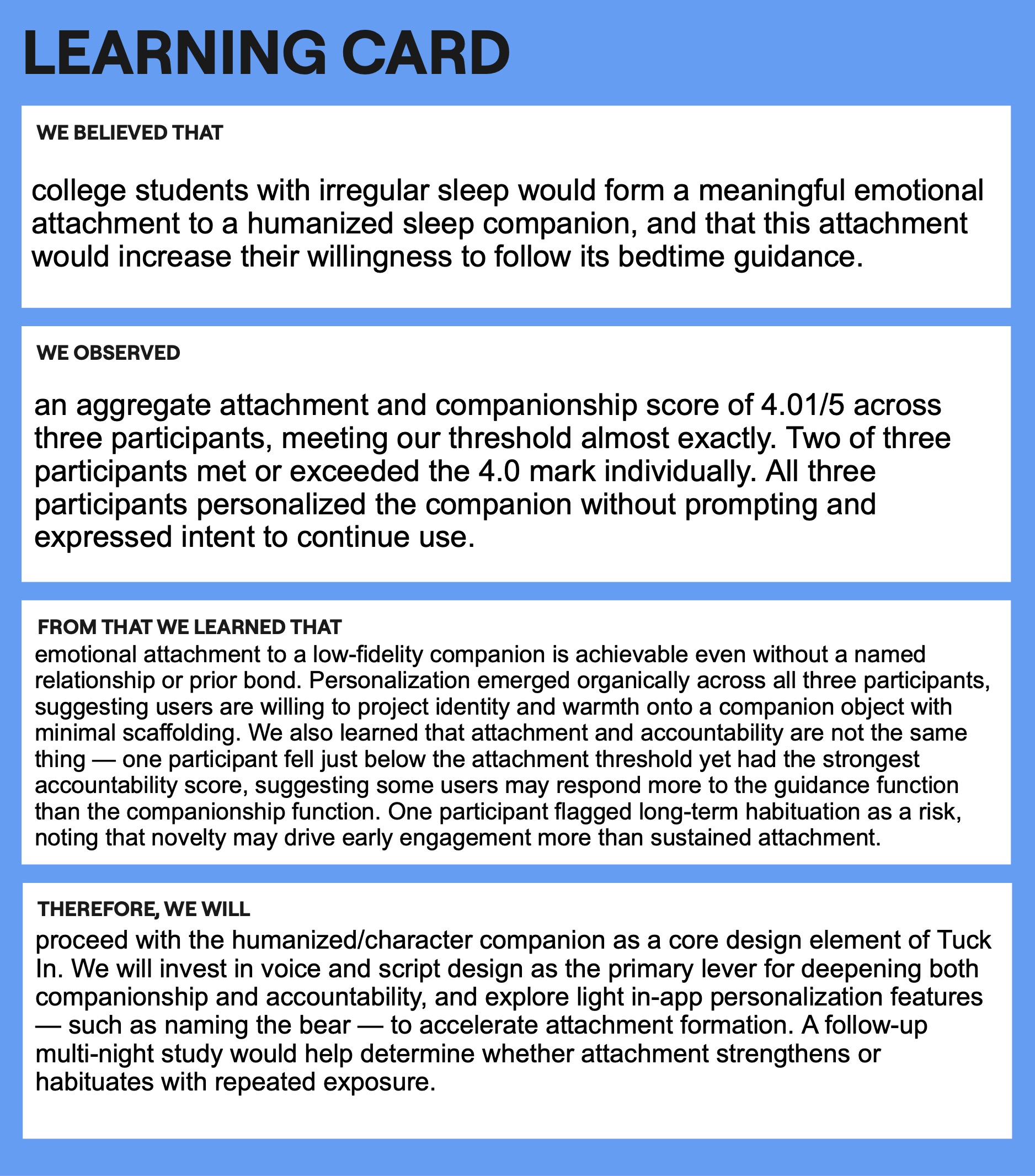
Across three participants, the group attachment and companionship score landed almost exactly at our 4.0 threshold, with two of three participants meeting or exceeding it individually. Two participants spontaneously projected personality or meaning onto the companion without being asked, suggesting that the combination of a soft, holdable object and voice interaction is sufficient scaffolding for users to form a felt relationship. This points to something important: the physicality of the companion matters. A push notification or a screen-based chatbot carries none of the same warmth — the tactile quality of something you can hold in bed appears to lower the barrier to emotional projection and attachment. Behavioral accountability also proved stronger than expected at 3.8/5, with the audio check-in meaningfully pulling participants away from their phones and toward their bedtime routines. The more open question is whether these effects sustain beyond novelty. One participant explicitly raised habituation as a concern, and the gap between early engagement and durable behavior change remains the central design challenge for Tuck In. Forming initial attachment appears tractable; converting that attachment into lasting sleep behavior change likely requires progressive personalization, varied interaction over time, or social features that raise the stakes of disengagement.
Assumption 4: Using the app will not compel users to access their phone more before bed
Summary:
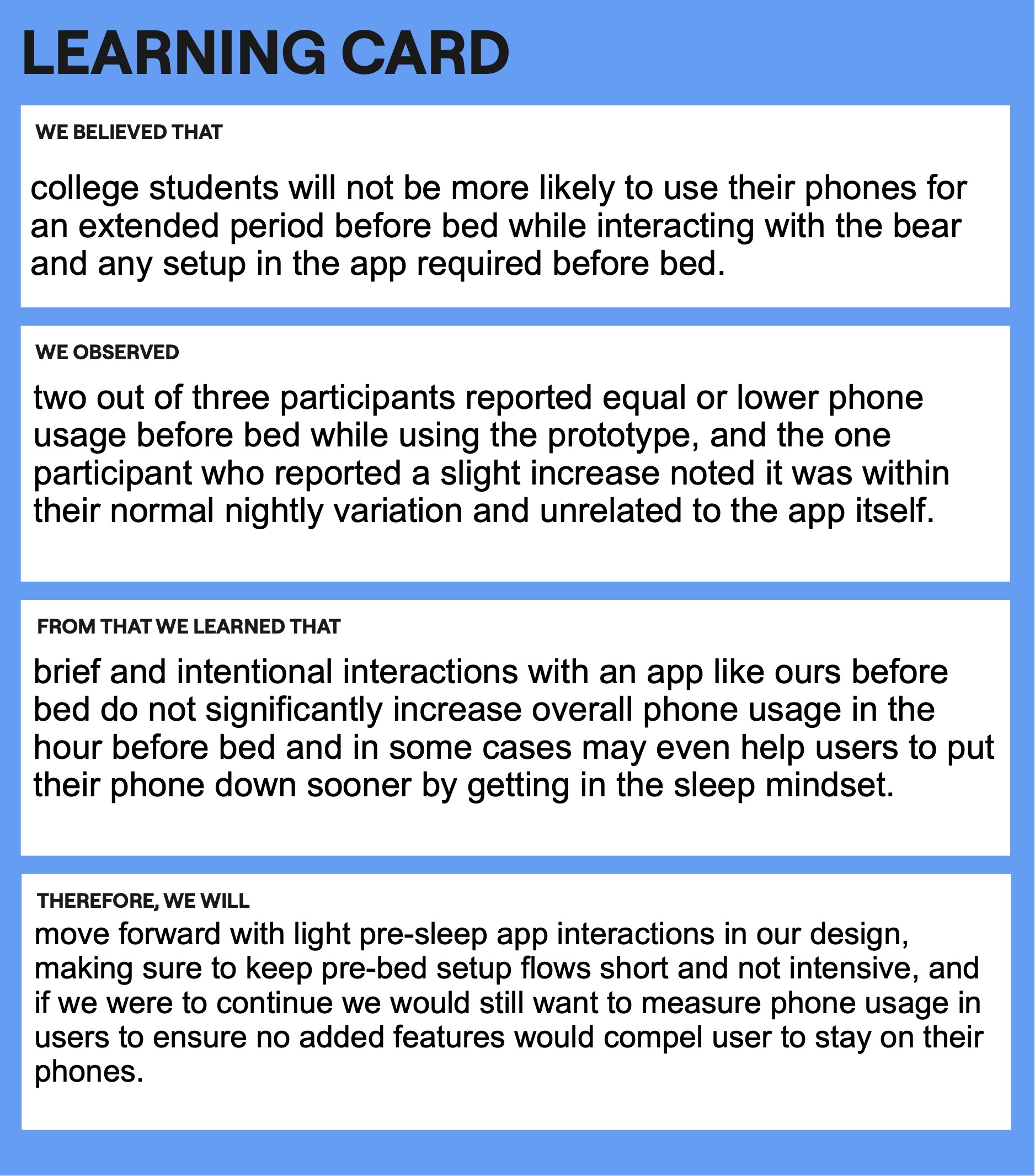
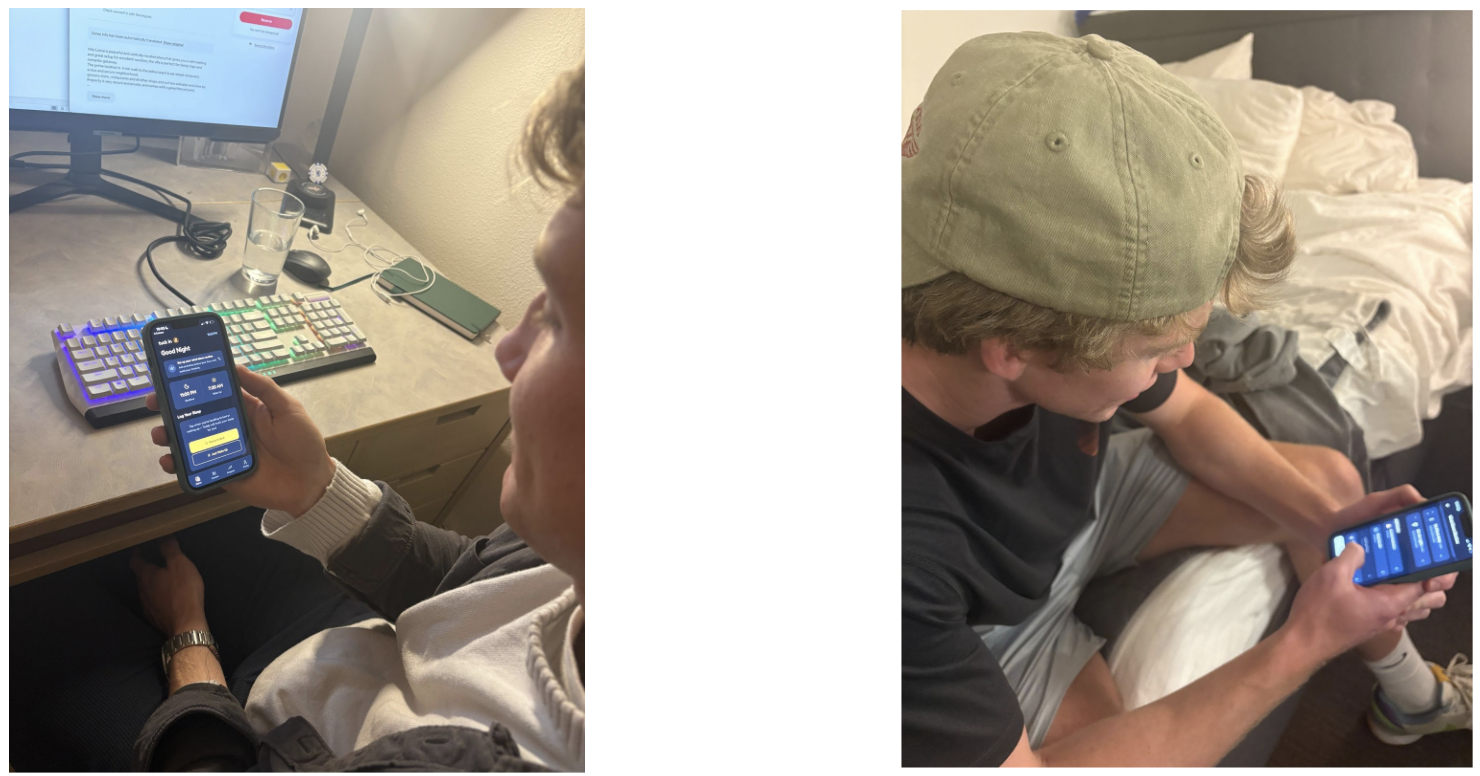
This test investigates whether users will subconsciously or consciously spend more time on their phones before bed if they are required to do any pre-sleep setup in our app prototype. We don’t want users to spend more time scrolling through their phone before bed and we don’t want the use of our to make users stay on their phones longer. Therefore, we are measuring short interactions with our low-fidelity prototype to see if user will end up spending more times on their phone.
Recruitment
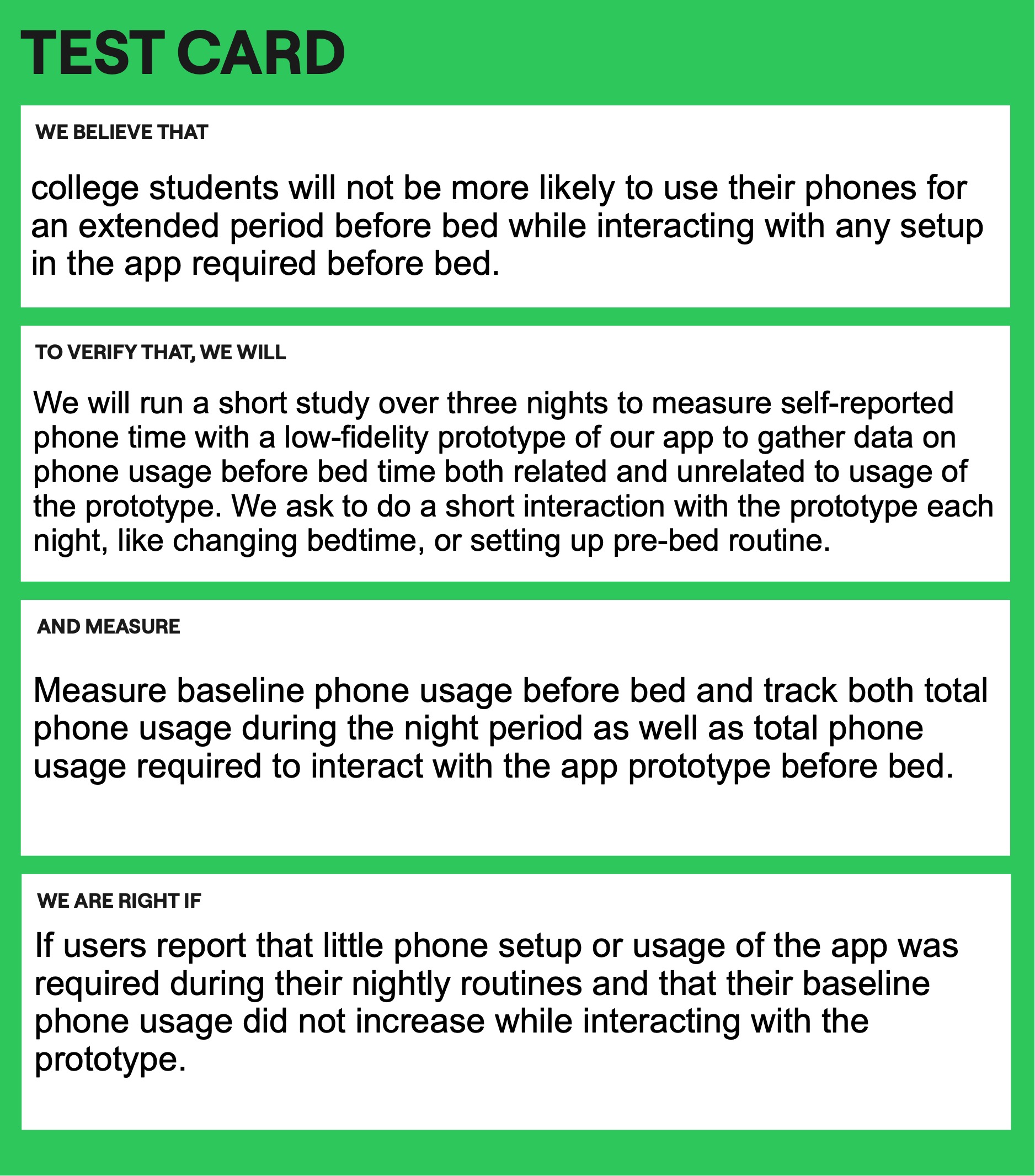
We recruited three college students for this experiment, because that is our intended demographic for our app and device. All of the students acknowledged having problems with their sleep schedule or wanting to make improvements in this area. For their time, they were rewarded with snacks of their choice.
Results
Participant 1 – Aidan Singer
Results:
- Reported baseline usage in the hour before bed: 35-40 minutes
- Reported usage after using the app sometime before bed: Avg. 30 minutes
Post-interview notes:
Aidan said that he often uses his phone a lot before bed usually, and the brief interaction of using the low-fidelity prototype before bed wasn’t anything that made him want to use his phone more before bed subconsciously. He actually said that thinking about going to bed by looking at screens on the prototype made him want to go to bed sooner. He doesn’t think that using an app like would take too much time or compel him to stay on his phone afterwards.
Participant 2 – Peter Koenig
Results:
- Reported baseline usage in the hour before bed: 20 minutes
- Reported usage after using the app sometime before bed: Avg. 25-30 minutes
Post-interview notes:
Peter said that the brief interaction with the prototype didn’t significantly change his phone usage before bed. He said that even if there was a slight increase in usage that it probably fell within normal night-to-night variation of how much he uses his phone and he didn’t attribute it to the app. He also said the brief interaction with the app felt quick and didn’t compel him to use his phone a lot after.
Participant 3 – Sera Camas
Results:
- Reported baseline usage in the hour before bed: 30 minutes
- Reported usage after using the app sometime before bed: Avg. 20 minutes
Post-interview notes:
Sera told us that the prototype interaction didn’t make her want to stay on her phone before bed more and noted that the setup felt short and didn’t lead to scrolling after usually. She didn’t have strong concerns about the app adding to her phone usage and thought it was something she could see fitting into her routine over time. She also said if anything it helped her think ahead about her sleep and prepare mentally more for getting ready for bed.
Artifacts
Post Interview Questions:
- Do you feel like an app like this in particular compels you to go on your phone before bed?
- What features might help restrain you from staying on your phone after using the app?
- Could you imagine actually using something like this over time?
- Do you have any concerns over using the app too much?