
From our assumption map (linked here), we gained insights into how people perceive their posture habits and how they might want to adjust them. We observed various assumptions about motivations, and technical logistics—factors that shape whether or not a posture‐improvement solution will integrate into users’ daily routines.
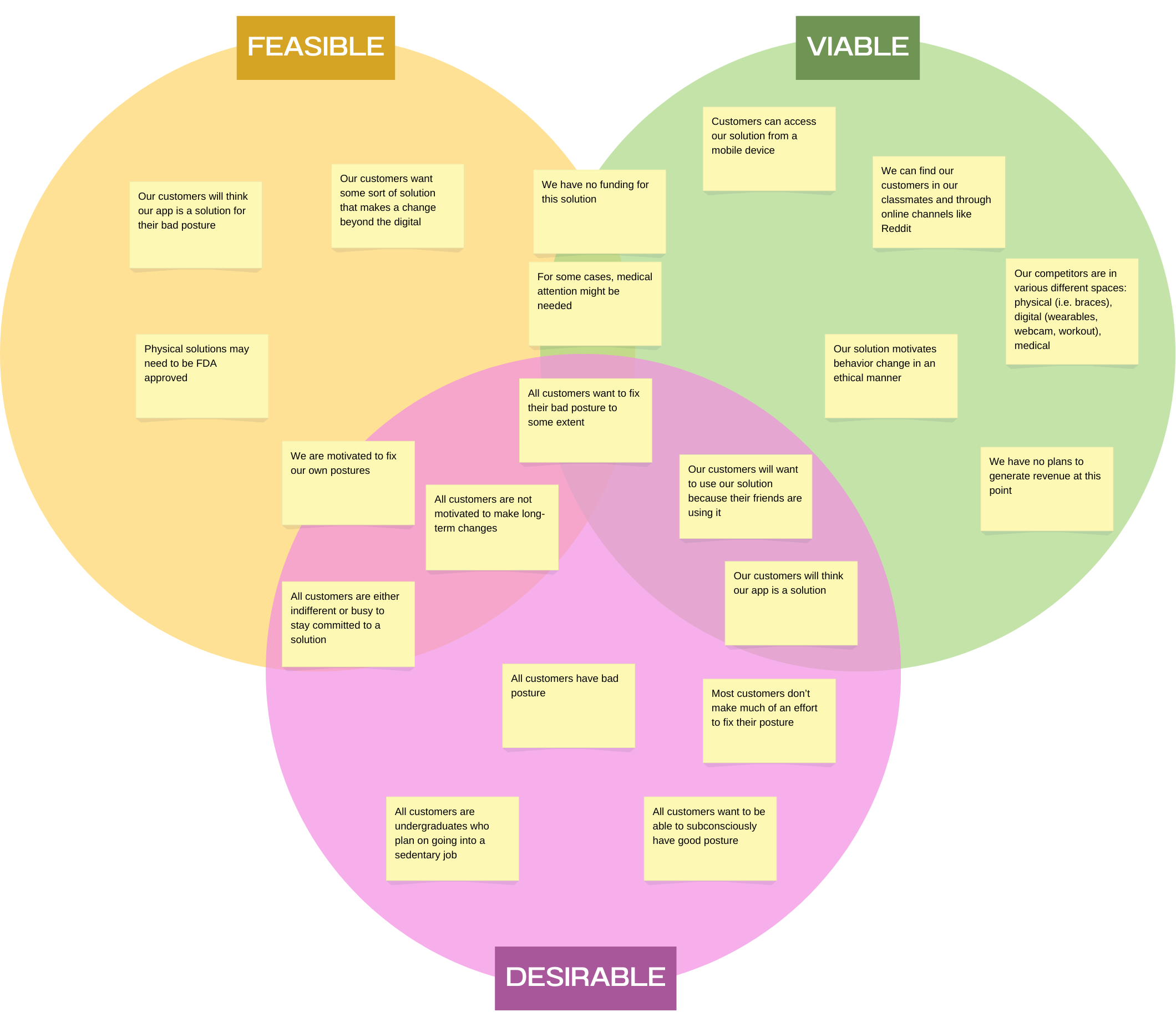
As we refined these assumptions, some were moved into the “important and unknown” quadrant, giving us a more concrete basis for testing.
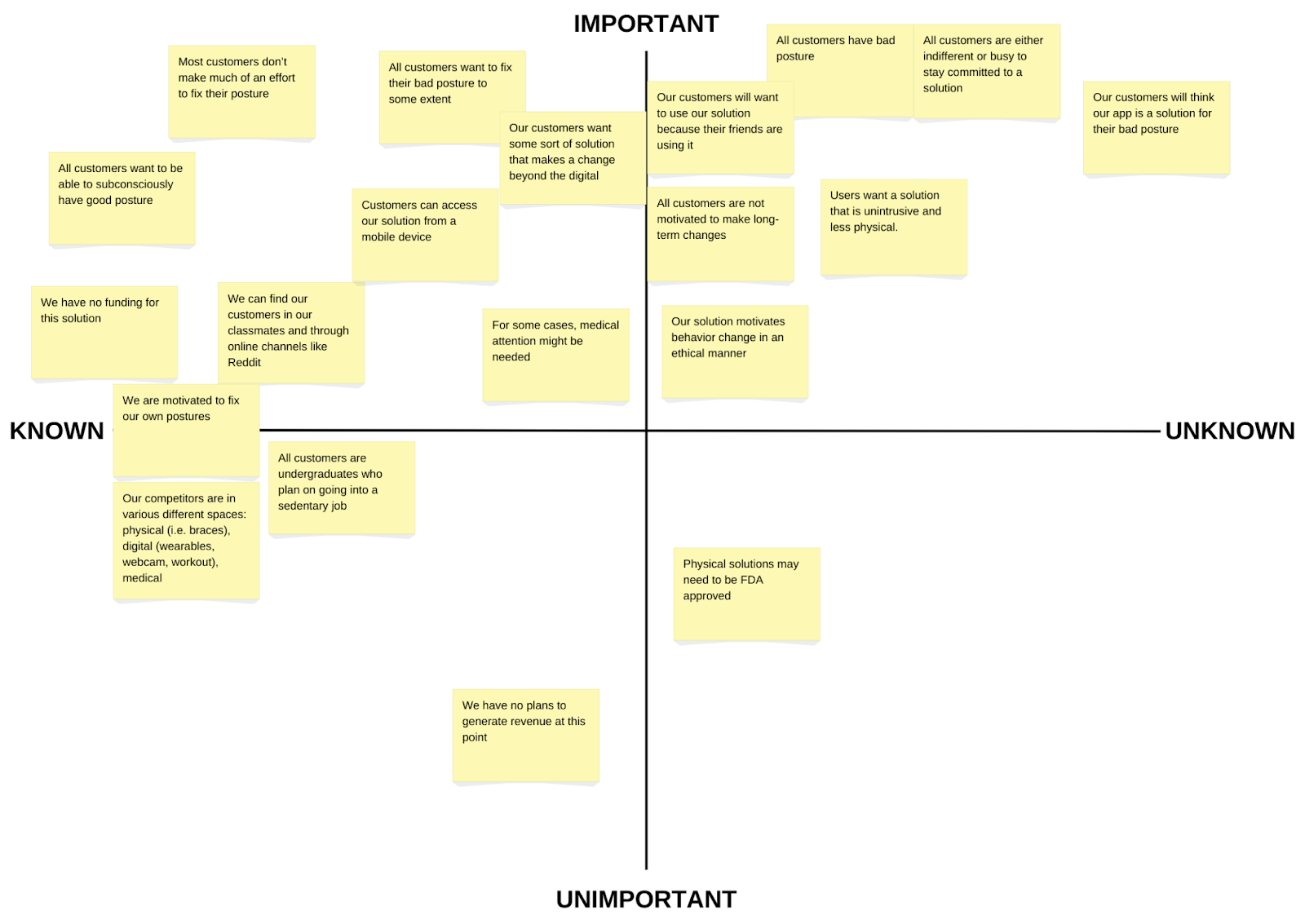
Here are some key insights drawn from working on our assumption map:
- One of the most clear takeaways from our analysis is that people may not want to wear bulky or invasive devices which may communicate a low tolerance for physical inconvenience.
- It is also important that we keep at the forefront, solutions they can integrate into existing routines without adding too much friction(and risking user motivation dropping off at record speed).
- For posture, which is an inherently personal behavior, peer and social influence could be a potentially strong ally if it’s framed in the right way.
- Even when people say they want better posture, they may often lack the persistence to do what will create change.
- We may need to leverage some habit formation strategies to keep the staying power of our future intervention.
Below are the three assumptions we chose to test (using the test card as guidance), presented below:
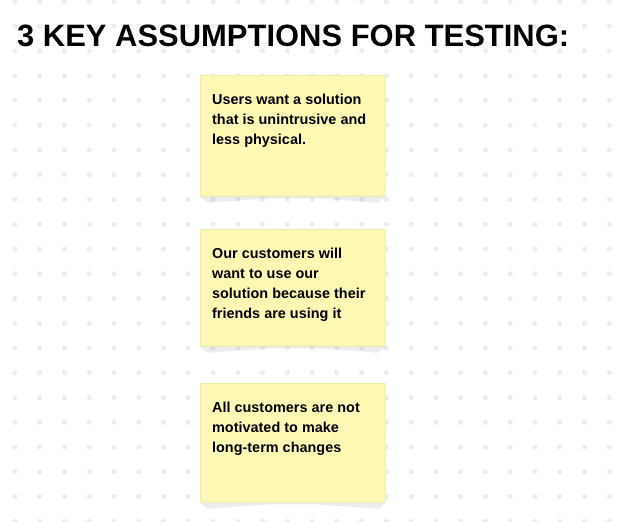
Hypothesis: We believe that the users want a solution that is unintrusive and less physical.
Test: To verify that, we will show them the range of existing solutions and ask them to rank which ones they prefer and explain why.
Metric: And measure the rankings.
Criteria: We are right if they prefer digital or less intrusive solutions over more intrusive ones (i.e. chiropractors, braces, etc.)
Hypothesis: We believe that our customers will want to use our solution because their friends are using it.
Test: To verify that, we will share two fake products, where on the sign-up page it says either that some of their friends are using it/referred the app or a sign up page that doesn’t include this information. Have them rank how willing they are on a scale of 1-5 to sign up for the app.
Metric: And measure which one has a higher average ranking.
Criteria: We are right if the one with information on friends gets a higher ranking.
Hypothesis: We believe that all customers are not motivated to make long-term changes.
Test: To verify that, we will provide two hypothetical solutions that cost the same amount of money, but one is a one-time payment that guarantees results in a year and the other is a monthly subscription (but same price over the course of a year) that also guarantees perfect posture by the end of one year.
Metric: And measure the number of votes each solution gets (start with just a one month subscription or just buy the long-term solution).
Criteria: We are right if more people vote to get a one-month subscription.



