Baseline Study Description
- Study Overview
- The baseline study allowed us to explore how busy university students eat and whether or not they eat consistently. We aimed to accomplish what real college students’ routines look like (understand how eating actually fits into students’ unpredictable schedules) and identify barriers and triggers that lead to skipped meals or deyed eating). Some of the questions we sought to answer include:
- What do students’ current eating patterns look like day-to-day?
- How regular/irrugular are meals?
- What contexts drive those patterns?
- How do students feel about their eating habits and change efforts?
- What has (and hasn’t worked) in past attempts to eating more consistently/change eating habits?
- What strategies were tried? What barriers made changes hard to sustain?
- What do students’ current eating patterns look like day-to-day?
- The baseline study allowed us to explore how busy university students eat and whether or not they eat consistently. We aimed to accomplish what real college students’ routines look like (understand how eating actually fits into students’ unpredictable schedules) and identify barriers and triggers that lead to skipped meals or deyed eating). Some of the questions we sought to answer include:
- Study Methodology
- We conducted a 5-day diary study on eating routines that combined quantitative and qualitative self-report data from surveys and structured interviews. Recruitment and screening. Participants were recruited through an online screener administered via Google Forms. The screener collected demographic information, university enrollment status, schedule constraints, and eligibility factors related to health and safety. It also gathered baseline information about meal consistency, recent irregularity, common challenges around eating, and interest in improving eating routines. Based on screener responses, we selected participants who met eligibility criteria and could commit to 5–8 minutes per day during January 20–24. Pre-study interview (30 minutes). Selected participants completed a 30-minute interview before the diary period. We collected context about their typical eating patterns, the factors that shape their routines, and what they hoped to change. We also introduced the study protocol and explained how to complete the daily diary entries.Diary period (5 days). For five consecutive days, participants completed one short daily diary entry in Google Forms. Each entry captured the previous night’s bedtime, wake time, and meal timing for breakfast, lunch, and dinner when applicable. Participants also wrote a brief reflection describing how eating felt that day, including hunger, fullness, energy, and mood.Post-study interview (30 minutes). After the diary period, participants completed a second 30-minute interview to reflect on patterns across the five days, explain unusual days, and add context not captured in the daily entries. Overall, these approaches produced structured time-based data on sleep and meal timing alongside open-ended reflections, allowing us to analyze both routine consistency and the lived experience of irregular eating.
- Participant Recruitment
- Participants were recruited through an online screener distributed to university students and administered via Google Forms. The screener collected demographic and enrollment information, assessed schedule constraints and daily time availability during the study window (January 20–24), and included health and safety questions to ensure participation would not be uncomfortable or unsafe. It also captured baseline characteristics of eating routines, including meal consistency, recent irregularity, and common routine challenges such as eating at highly variable times, eating late due to schedule demands, skipping meals unintentionally, relying on quick foods, or substituting snacks for full meals. From the pool of respondents, we selected participants who were currently enrolled students, could commit to completing a brief daily diary entry, met safety eligibility criteria, and whose responses indicated that their routines were relevant to the study’s focus on everyday eating variability.
- Key Research Questions
- The baseline study aimed to understand how students’ eating routines fluctuate across days and what factors contribute to that variability. Specifically, we asked how consistent participants’ meal timing was over a five-day period and how sleep timing and daily schedule pressure related to when meals occurred, were delayed, or were skipped. We also examined how participants experienced these routines in context by analyzing daily reflections about hunger, fullness, energy, and mood, with attention to moments when irregular timing corresponded with fatigue, low energy, overeating, or rushed eating. Together, these questions establish a foundation for identifying recurring barriers and patterns in student eating routines and for informing future analysis or design directions focused on supporting more consistent and sustainable routines.
Raw Data → Grounded Theory Report
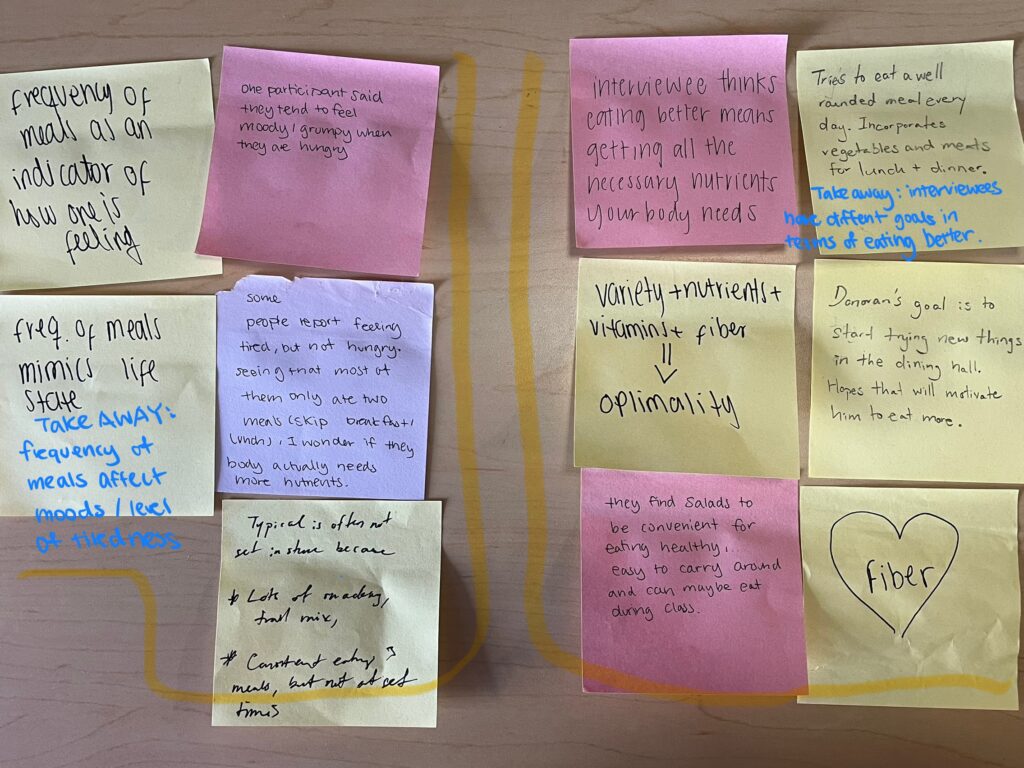
We used affinity grouping to organize our findings. During the pre-study interviews, we gathered information about participants’ schedules and discussed the challenges they face in maintaining healthy eating habits. We found that participants held diverse definitions of what “healthy” means and were influenced by different personal goals and constraints. For example, some participants aimed to increase fiber intake, others wanted to reduce snacking in favor of regular meals, and some focused on lowering carbohydrate consumption. Despite these differences, participants generally demonstrated a shared understanding of common standards of healthy eating. Additionally, we observed that participants reported improved mood and well-being when they ate more consistently, which contributed to a high level of motivation across the group.
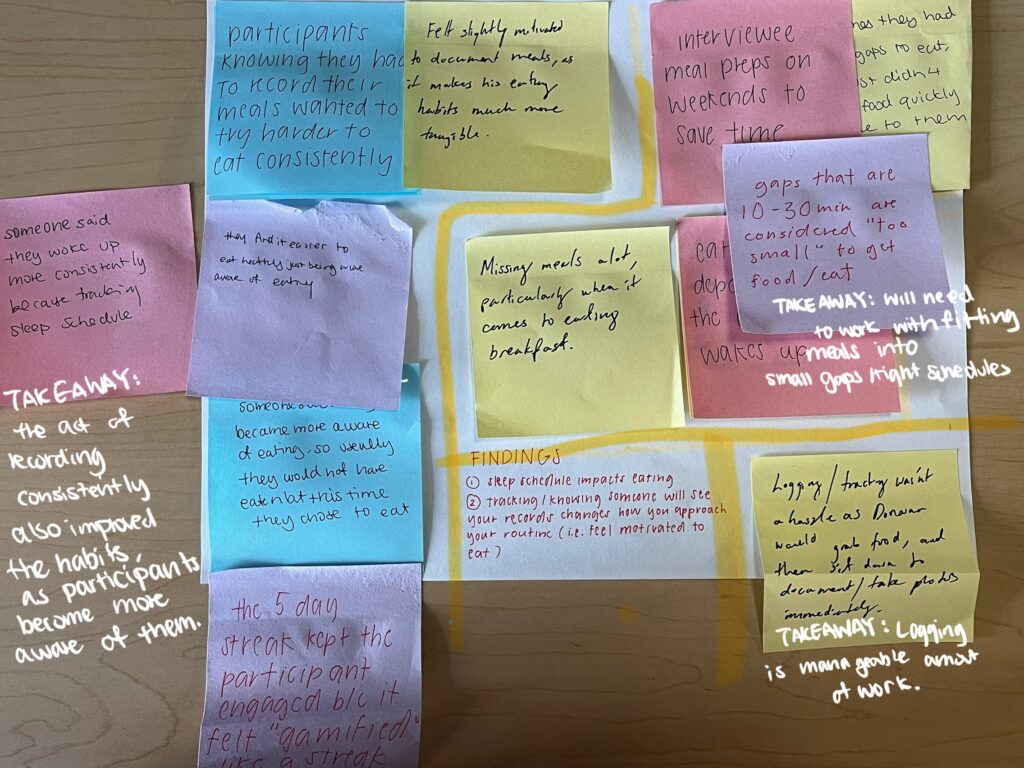
During the post-study interviews, we observed that although the study was not designed as an intervention, the act of asking participants to track their eating behaviors influenced their habits. Participants reported that knowing they needed to log their meals increased their motivation to eat more regularly, describing the tracking process as somewhat “gamified.” One participant also noted that having to record their sleep schedule led to more consistent sleep patterns. However, many participants reported having very limited time windows, often 10-30 minutes, around lunchtime, which made it difficult to obtain and eat a proper meal. These findings suggest that an effective intervention should explicitly account for such constraints and make good use of these short time windows to support healthier eating behaviors.
Synthesized Findings
Finding 1: People Have Different Health Goals
Insight: Participants had different ideas of what being healthy meant to them. Some wanted to eat more fiber, some wanted to snack less and eat real meals, and others wanted to reduce carbs.
Theory: The solution we come up with should allow people to choose goals that work for them instead of forcing everyone to follow the same rules.
Finding 2: Eating Regularly Affects Mood
Insight: Participants said they felt happier and in a better mood when they ate more consistently.
Theory: Helping people eat regularly could improve both their mood and overall well-being. Our participants are motivated to change
Finding 3: Tracking Behavior Changes Habits
Insights: Even though our study was not meant to change behavior, asking participants to track their meals affected how they ate. Knowing they had to write things down made them more motivated and aware. Some participants said it felt like a game. One person also slept more consistently because they had to track sleep.
Theory: Small tools like tracking or reminders can help people improve their habits without a lot of effort.
Finding 4: Lack of Time Is a Big Problem
Insights: Many participants only had short breaks of about 10 – 30 minutes around lunchtime, which made it hard to get and eat a proper meal.
Theory: Any solution should work within short time periods and not require long meal breaks.
Overall Insight
People generally know how to eat healthily and are motivated to do so, but busy schedules and limited time make it difficult. Simple actions like tracking meals can help increase awareness and motivation. A successful intervention should be flexible, easy to use, and designed to fit into short and busy time slots.
System Models
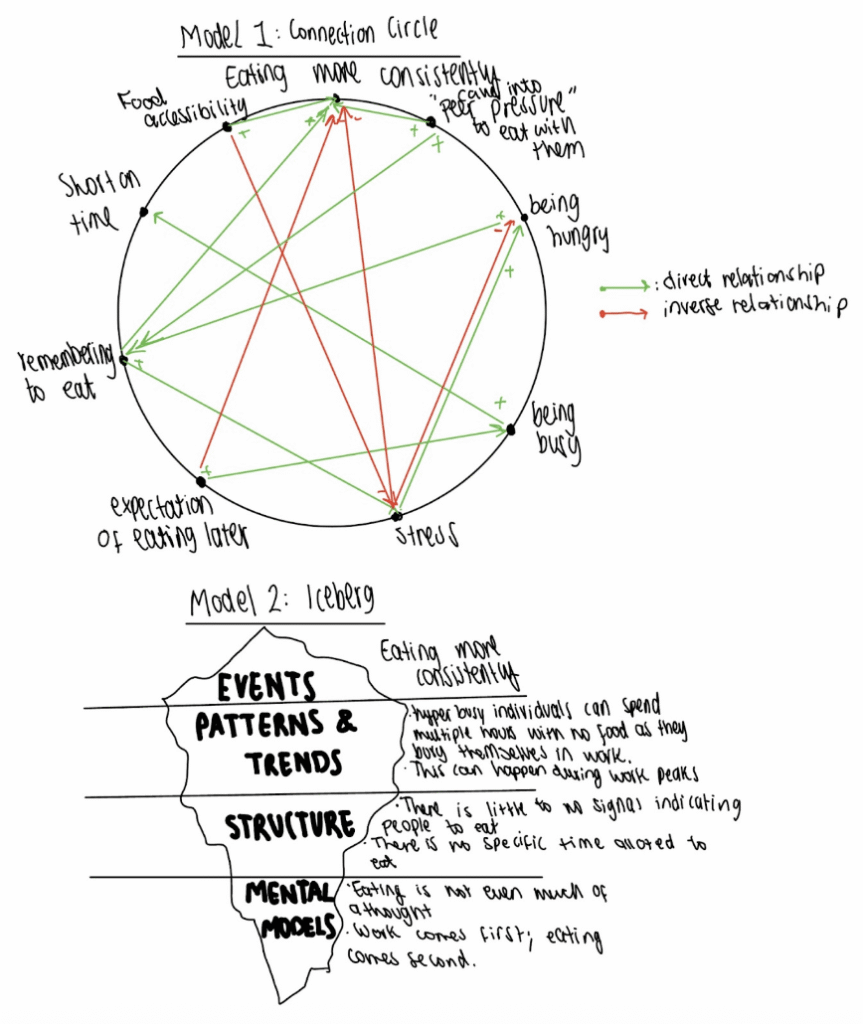
Secondary Research
Literature Review Insights
There was an article on following adolescent for 27 years to see if irregular meals had an effect on metabolic syndrome in adulthoods. The results should that skipping breakfast on its lead to increased risks hence we should really encourage our users to eat breakfast. Another article asked students to eat less high calorie food/more fiber/less fat, without directly monitoring what they ate and only provided high level guidance. Even with this minimal setup, the college students had improved fitness at the end of the study. This shows that it’s not important to exactly control what people eat but having a general goal in mind is helpful on its own.
One of our studies was done to understand whether self-reported GPA was associated with different weekly eating and drinking habits. Conducted a survey of 755 U.S. undergraduate students and used regression analysis. GPA showed no relationship with consumption of milk, vegetables, green salad, fruit juice, or fresh fruit, but was higher among students who ate breakfast more often and lower among those who ate fast food more frequently. Authors conclude that some eating habits relate to academic performance, though other factors like sleep likely weigh more. Academic performance appears to be more strongly associated with consistent eating routines than with specific food choices, suggesting that structured eating behaviors (e.g. regularly eating breakfast) may support cognitive stability and daily functioning.
Recent studies show that eating meals at regular times is important for maintaining good health. The body follows circadian rhythms that help control appetite, digestion, and energy use. When meal times are inconsistent, these rhythms can be disrupted, which may increase the risk of health problems such as obesity, diabetes, and heart disease. Research suggests that even when people eat healthy foods, irregular eating schedules can reduce some of the benefits. Eating consistency operates as a biological regulator and predictable timing reduces physiological stress and promotes stable energy.
Comparator Analysis Insights
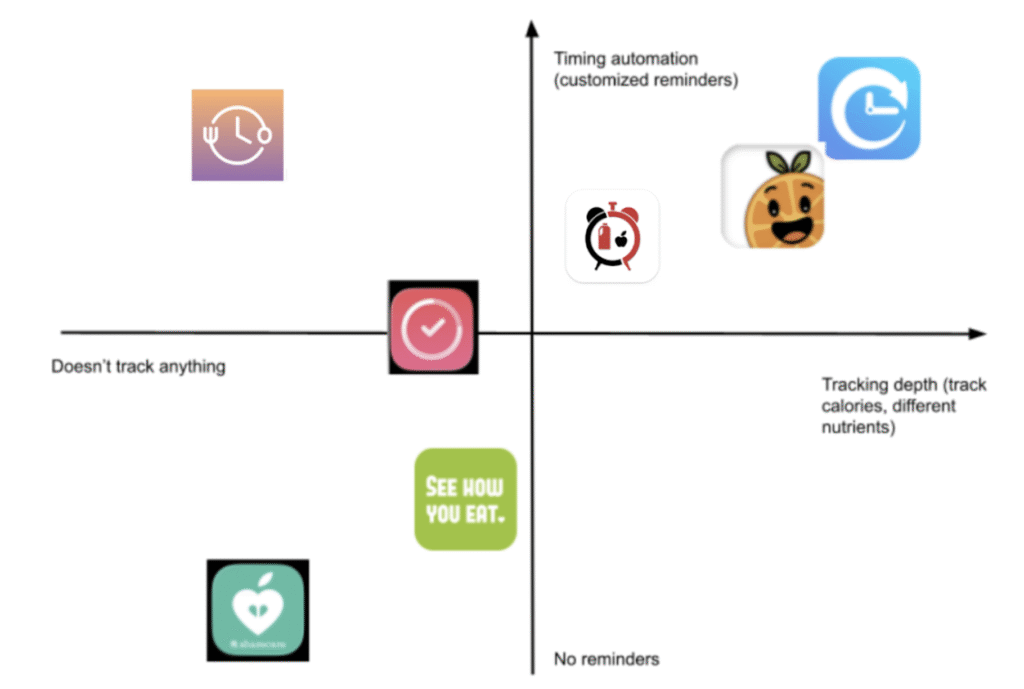
One competitor APP we found is called “Eat Right Now” and focuses more on mindfulness practices than on traditional reminders. The app is designed to help users reduce craving-driven eating by teaching them how to reshape the reward value of food through lessons and mindfulness exercises such as breathing. It encourages users to map out habit loops and connect with others who struggle with similar eating behaviors. A strength of the app is its emphasis on mindfulness, which is relatively rare among eating-related apps and can be genuinely helpful for building long-term awareness and habits. However, a key weakness is that the app can feel easy to forget or stop using, since it lacks reminders and interactive or motivational elements, making the experience feel more like taking a course than using an engaging daily app. Habit Tracker is a general-purpose habit-building app featuring a calendar and streak-based interface that allows users to track multiple habits at once. It also supports social features such as groups and the ability to view friends’ progress, along with widgets that appear on the home screen and customizable reminders.One of its main strengths is its visually appealing and motivating calendar and streak system, which encourages consistency. However, a notable weakness is that it is not tailored to eating-related habits; for example, it lacks features for meal planning or food-specific tracking, which would make it more useful for users focused on improving their eating habits.
Another competitor app we examined is a reminder-based meal scheduling tool that is focused on helper users eat on a consistent weekly timeline. It allows for users to create meal schedules organized by the day of the week or as one-time schedules that are tied to specific dates, making it flexible for people whose routines change frequently. It also includes other tools, such as a built-in water tracker where users log ounces consumed to monitor progress towards their hydration goals. The app serves individuals who want simple, structured reminders to support consistent eating habits without requiring deep nutritional tracking. A key strength of the app is its flexibility, users can maintain multiple different eating schedules, toggle them on or off, and adjust meal timing even after the day has begun. This makes it adaptable to real life circumstances and schedules, which aren’t always so predictable. We did notice that one of the weaknesses was its reliance on notification reliability, some user reviews report missed reminders.
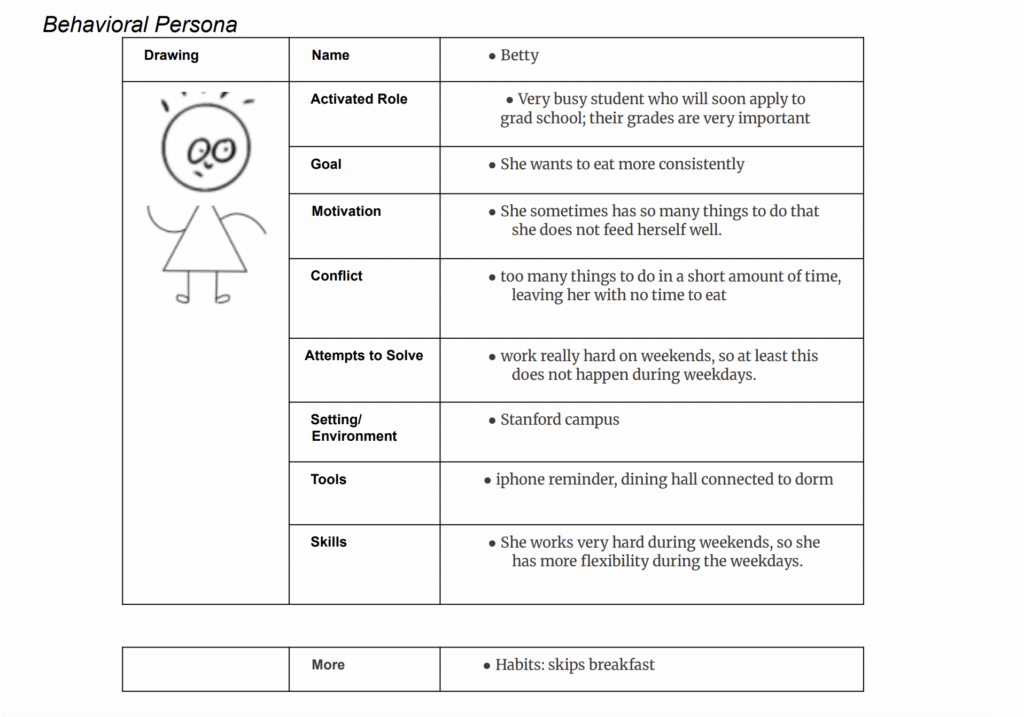
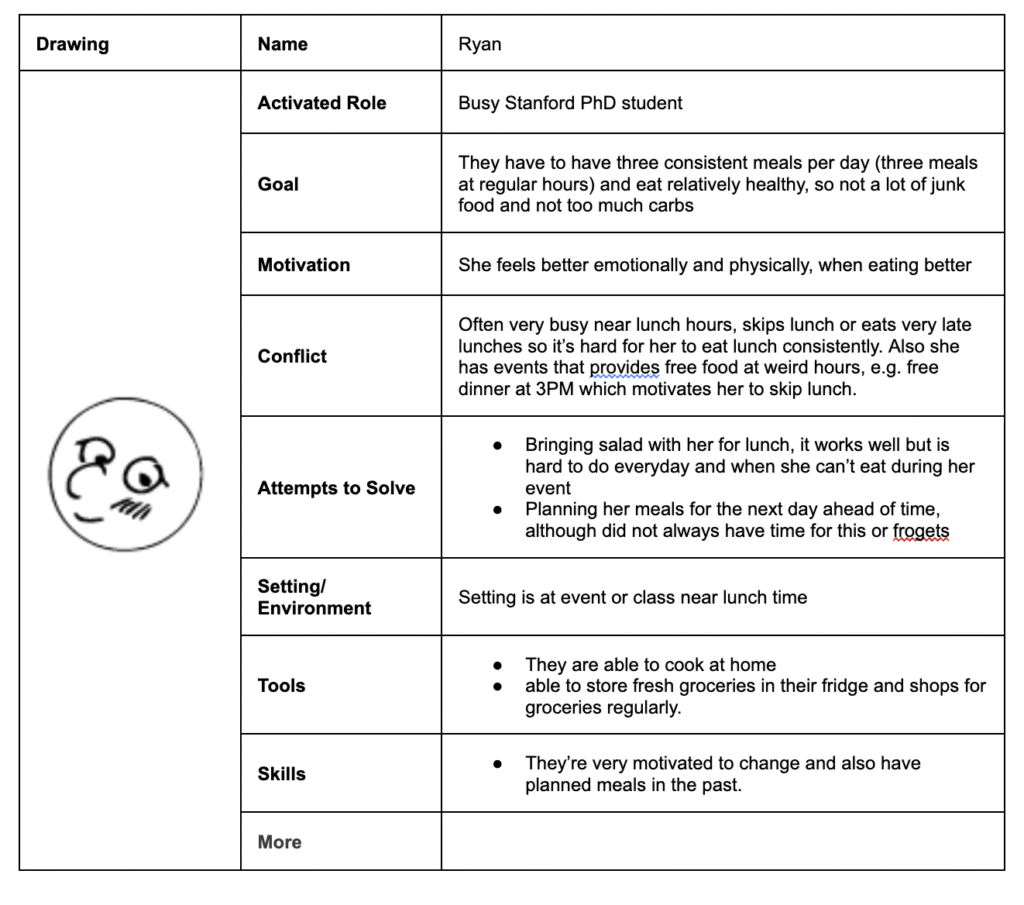
Behavioral Personas
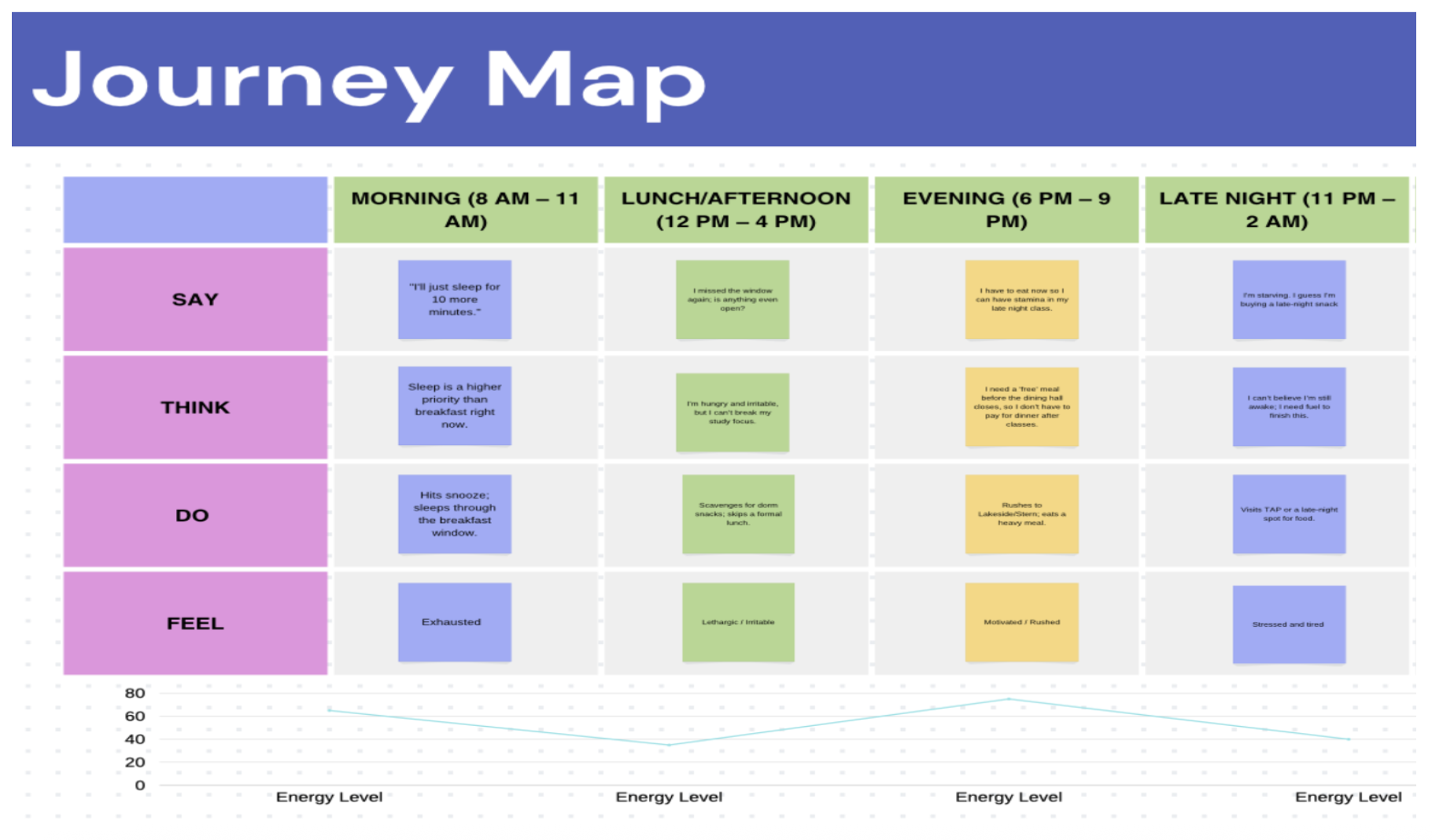
Journey Map