The “Social Spender”
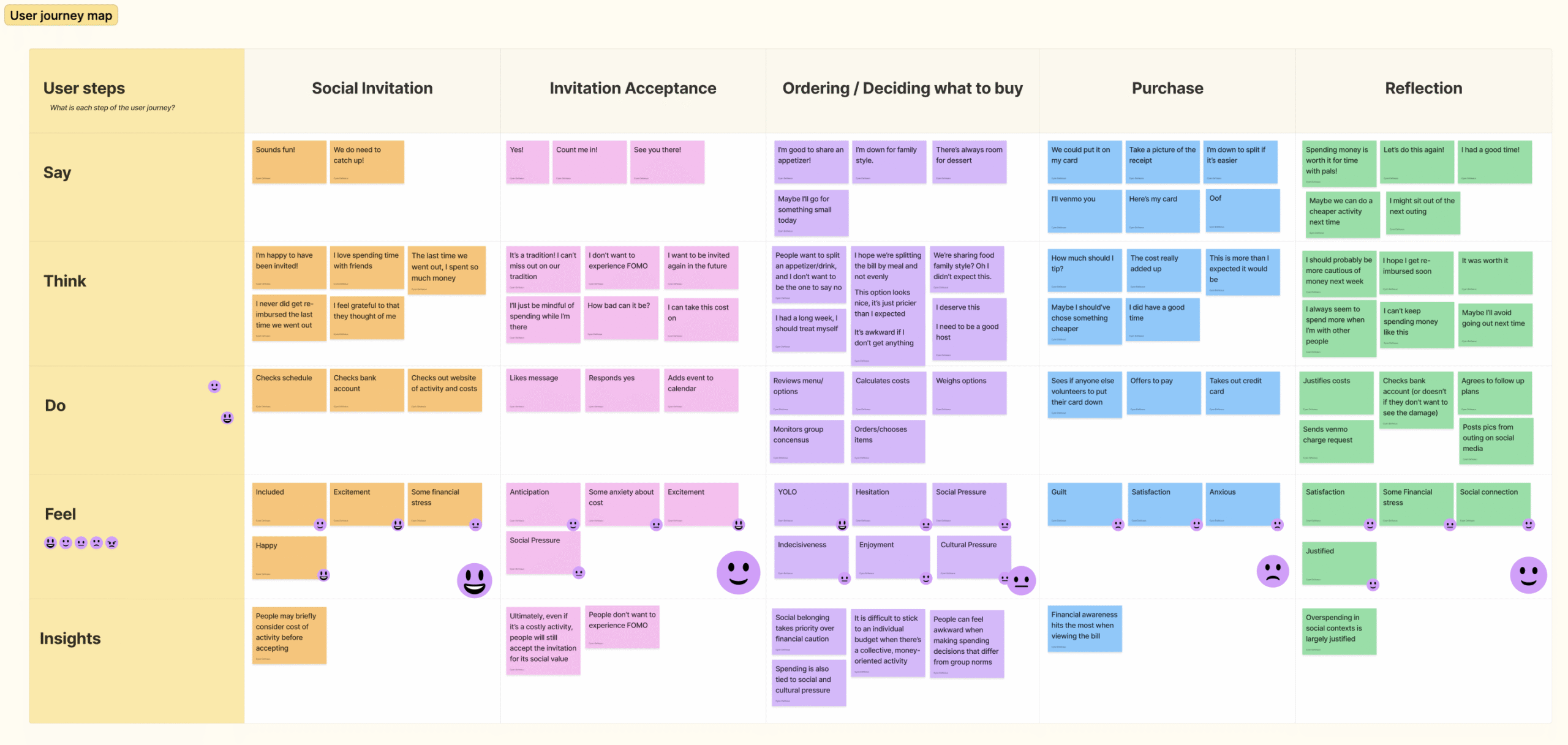
Across pre-interviews, diary studies, and post-interview data, one of the most consistent themes that emerged was spending in social contexts. Being around others (e.g., friends, family, colleagues) was commonly described as an environmental factor that contributed to increased spending. Participants largely justified spending in these situations, viewing the social connection as “worth it.” However, these moments were also frequently identified as instances where participants felt they spent more than they ideally should have. Based on this pattern, this blog post introduces the “Social Spender” as a persona for our project on impulse spending.

- Activated Role
- Student / Professional
- Goal & Motivation
- Wants to spend quality time with friends and feel socially connected.
- Conflict
- Many social activities involve spending money, which can often lead to spending more money than expected and experiencing some financial stress.
- Attempts to Solve (and Results)
- Do nothing and enjoy time with friends –> Tighter budget the week after
- Socializing less –> Saves money, but leads to less social connection
- Suggest cheaper activities –> Can feel socially awkward
- Not buy anything at outing –> Can feel socially awkward
- Settings Where the Problem Occur
- Restaurants and cafes
- Bars, trivia nights, happy hours
- Celebrations
- Vacations and day trips
- Shopping centers
- Homes
- Key Tools / Skills
- Venmo for splitting costs
- Justifying costs because it feels worth it
- Routines
- Weekly social outings (e.g., bar trivia)
- Celebration traditions
- “Spontaneous” coffee
- Habits
- Not hesitating to say “yes” to social situations, even when pricey
- Paying for others, and hoping for re-imbursement
- Ordering food without a clear budget
- “Treat yourself” mentality
- Wanting to be a good host