
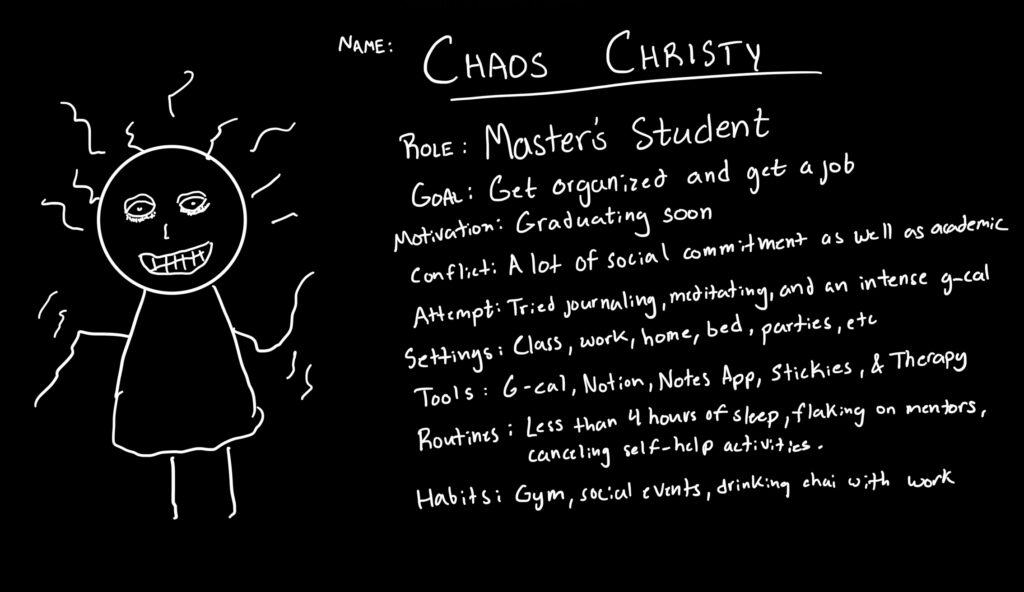
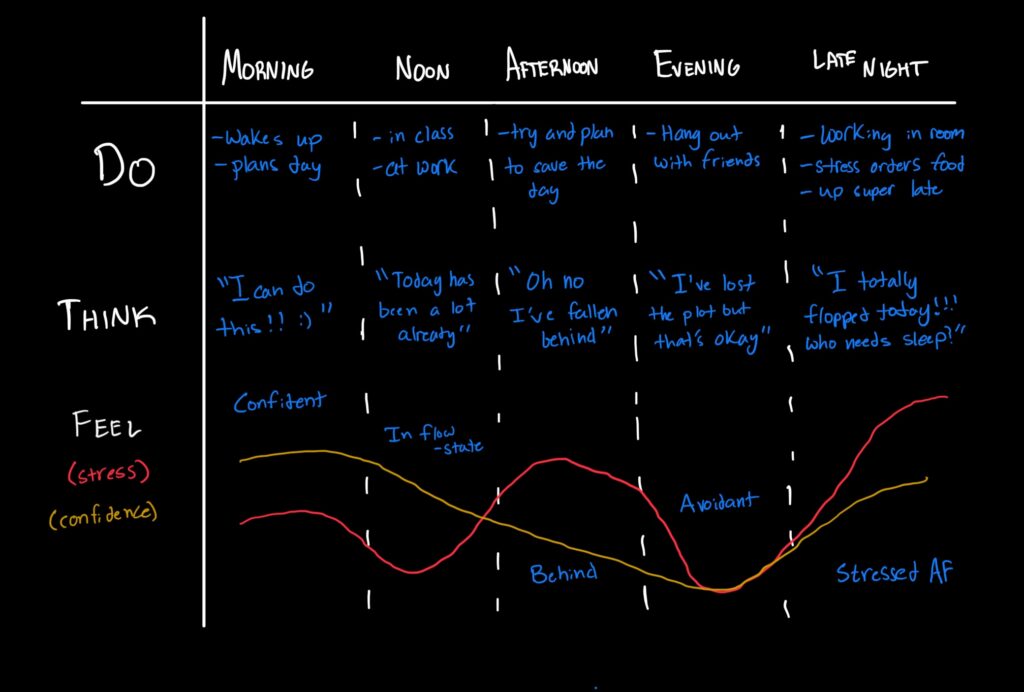
Chaos Christy is a master’s student juggling intense academic and social commitments while trying to get organized before graduation. She relies on a lot of tools: Google Calendar, Notion, Notes app, sticky notes, etc. Still her system feels fragmented and ineffective. Her stress climbs steadily through the day because her motivation is highly mood-dependent. The moment anything negative happens externally, her goal shifts from “accomplish things” to “just get through it,” and non-mandatory tasks get cut. Confidence starts high each morning but fades as the afternoon hits. Her least productive time, every single day is the afternoon. By evening she’s moved into an avoidance mode and by late night she’s stressed and working frantically. She often chooses social time over tasks due to FOMO even when she knows the cost. She described completing her research assignment one day late, rushed and poorly done, despite listing it nearly every day of the study.
This archetype shows high-achieving students who maintain ambitious academic and social lives but whose productivity is tied to their emotional state. They are not lazy or disorganized in the traditional sense. They have multiple tools, good intentions, and solid awareness of what needs to happen. But any external disruption (like negative feelings or something social) derails their plans. They operate in two modes: thriving when conditions are right, and surviving when they’re not (basically no in between). Tasks without hard deadlines or social stakes get sacrificed first, and FOMO consistently wins over long-term priorities. Because last-minute panic usually works out, the pattern continues. This persona is left feeling capable but unreliable, always one bad day away from abandoning their intentions.
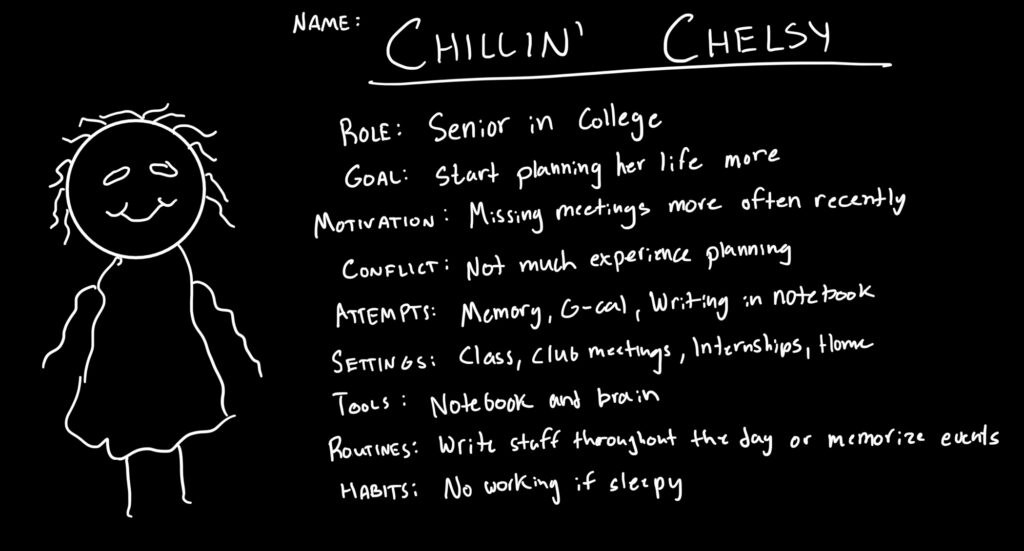
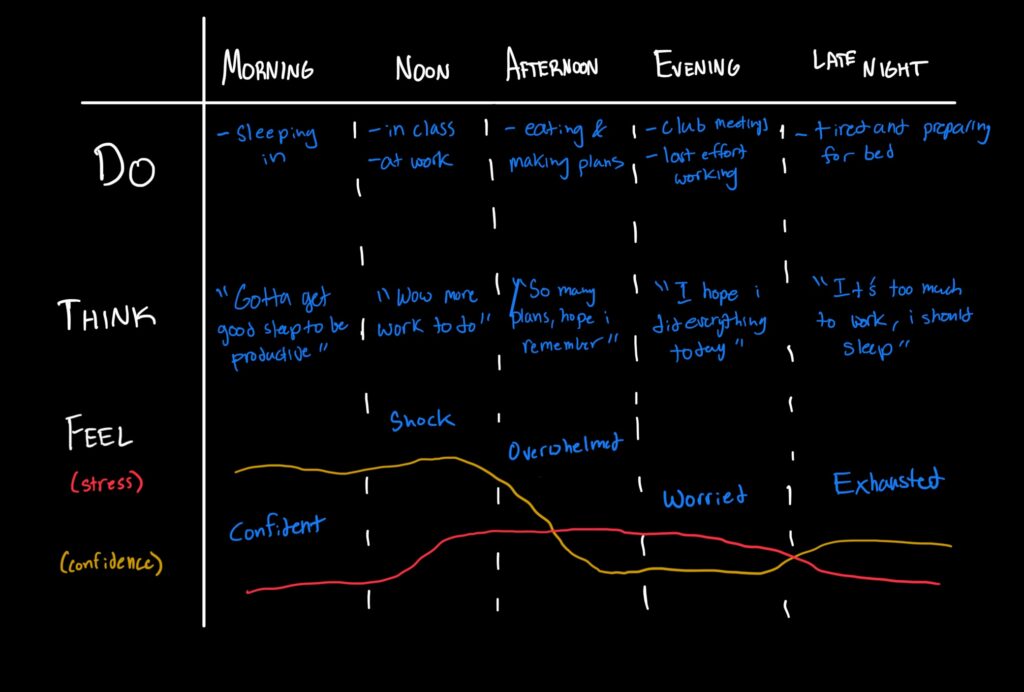
Chillin’ Chelsy is a college senior who’s recently noticed she’s missing meetings more often and wants to start planning her life with more intention. She has minimal planning structure at the moment. She just uses a notebook and her memory. She’s got little experience with more formal systems. Her stress rises gradually because she procrastinates on tasks until mid-afternoon (meanwhile she keeps getting new tasks throughout the day). Confidence drops steadily because she starts each day optimistically believing everything will get done, then later tasks start to slip. She believes that by 6pm, if serious progress hasn’t been made, anything without a hard deadline simply won’t happen. She’s too exhausted from work and school to force herself (hard line for her). She revealed the study helped her realize her current memory-driven system is inefficient and that she needs to complete important tasks before it’s too late and she’s tired.
This archetype represents students who lack a planning system that helps them translate intention into action. They start each day confident that everything will get done, but have no system to keep that confidence during mid-afternoon interruptions. They procrastinate not out of perfectionism or avoidance, but simply because nothing forces them to start. By the time urgency arrives, they’re too tired to act. Their tools are minimal (memory, a notebook, good vibes), and while this flexibility feels okay, it means patterns of failure go unrecognized until someone makes them track it.
Bryant Perkins
February 1st, 2026
CS 247B
Behavioral-Personas & Journey Maps




Comments