Todoist
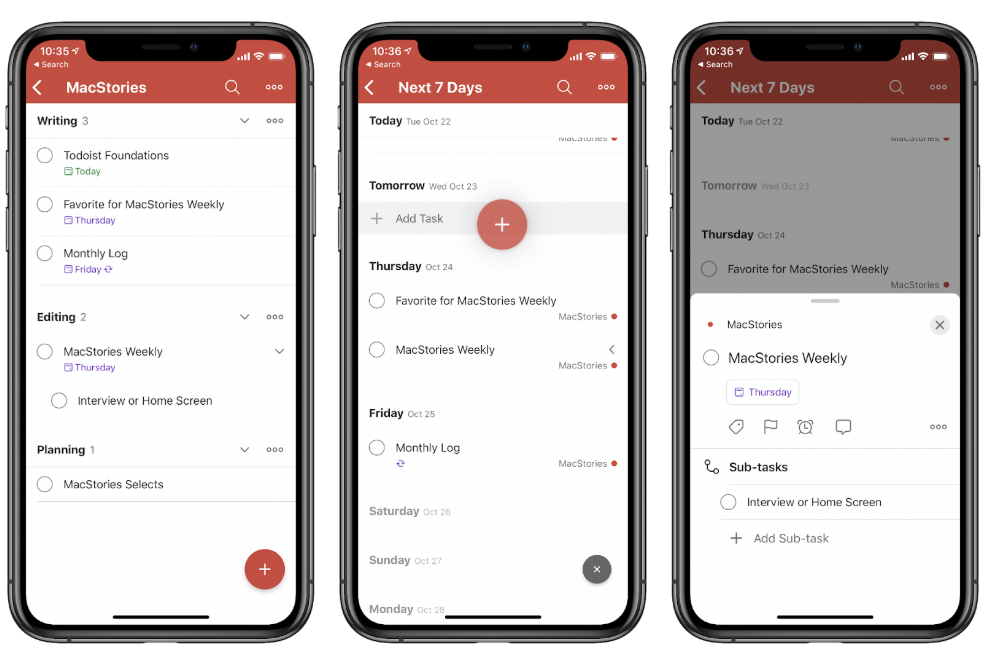
Picture Analysis: Tasks are categorized, function as a check list, and can be reminded throughout the week or repeated. They can also be broken into subtasks for smaller tasks.
Overview: Todoist is a task management app where users create to-do lists and it helps teams and individuals track, manage, and organize their assignments and tasks. Todoist’s target audience is high-achieving students, professionals, and planners who need a digital to-do list. Its unique features are around how they use NLPs to quickly add tasks with complete dates, labels, and reminders, “capturing tasks at the speed of thought”. It takes traditional reminding tools and adds extra features of prioritization, labels, reminders, collaborators, deadlines, and more.
Strengths: Reliable, organized, cross-platform sync, prioritization, clean UI, helps with habit formation, team task management.
Weakness: Lack of visualization of tasks, complex to use, takes time to integrate into daily routine.
Gap: The gaps in this market they are filling is the target of everyday micro-tasks instead of projects.
Opportunity: We could add more social factors and emotional indicators instead of just due dates and team task management
Habitica
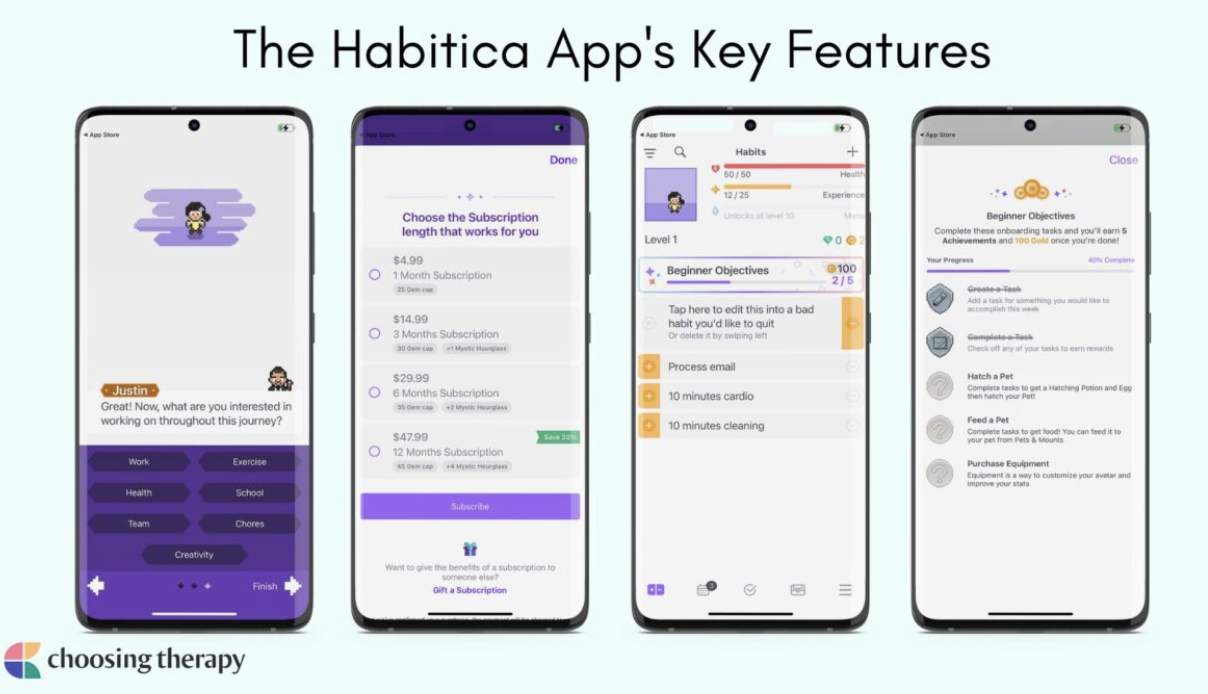
Picture Analysis: There is a user story journey, and a home page where tasks are being tracked in a very specific language. They are checked off and rewarded with coins, which could be used to purchase items for their avatar. Users can also set goals and work towards them.
Overview: Habitica is a gamified task management tool, where you are given a character to gamify your productivity experience, organizing chores, work tasks, creative projects, fitness, routine, and more. When you complete tasks, you receive rewards and items to be used in the game. The target audience is people with goals, tasks, ADHD, and need productivity management tools. Its unique features is that you can create guilds and challenges with your friends to battle monsters and have an immersive experience.
Strengths: Reward system for small actions creates a positive feedback loop of wanting to do tasks more, there are social stakes to invite friends, you can set difficulty levels for tasks for organization
Weaknesses: Need to have a connection with the avatar/care enough to gamify and personalize the character, you manually enter your tasks
Gap: This app fills the gamified accountability gap where it brings fun and excitement into mundane tasks. It turns completion of tasks into rewards and also incorporates social support.
Opportunity: If you miss tasks, your character loses health, which supports negative reinforncement which could be harmful. There is an opportunity for greater reframing and positive nudging and recovery to motivate positive behavior instead of punish.
5MinutesMe

Overview: 5MinutesMe is a habit tracker built specifically around “just five minutes at a time,” aimed at busy professionals and students who feel overwhelmed by big goals and prefer tiny, low-friction actions one step at a time
Audience: Focuses explicitly on 5-minute actions, not long sessions
Market need: reduces activation energy for self-improvement by shrinking perceived effort into micro-habits.
Strengths: Very tight fit with a “micro” time window. Clear, simple mental model: “just five minutes,” which lowers psychological resistance.
Weaknesses vs our product: No proof-of-completion mechanic; it relies on self-reporting only. No money-at-stake or commitment contract, so accountability is relatively weak
Why our app is better: Adds proof (photos, app integrations) to reduce self-lying for quick tasks. Adds weekly buy-in and refunds to leverage loss aversion, making “just 5 minutes” hard to ignore
DOMINUS Daily Micro Goals
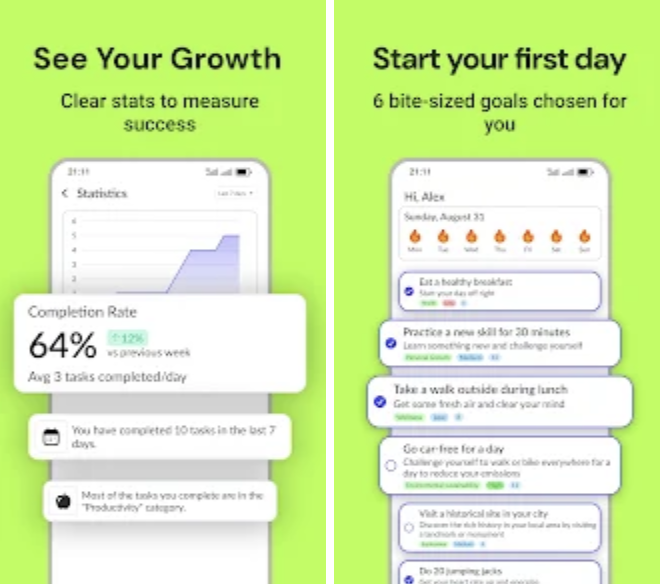
Overview: Delivers a curated set of several micro-tasks per day across fitness, wellness, productivity, creativity, and exploration
Market need: Smart selection engine with category quotas and priority weighting to keep days balanced. Streaks, tiered badges, and weekly/monthly analytics to maintain consistency and motivation.
Strengths: Gamified streaks and achievements with light analytics keep people engaged
Weaknesses vs our product: No explicit proof requirement or integration-based verification
Why our app is better: Introduces a weekly buy-in pot and all-or-nothing refund to create sharper accountability
Superhuman Mail
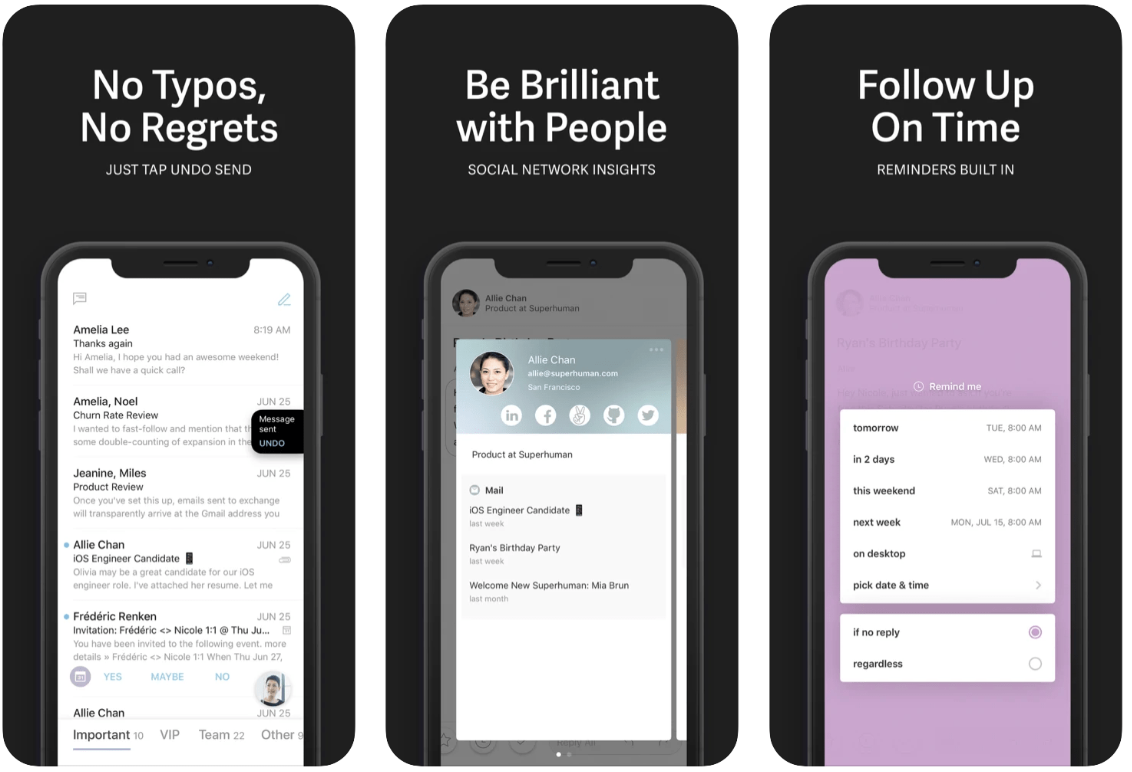
Overview: Superhuman is a productive email app designed to help users process emails faster and never miss follow-ups, encouraging speed, efficiency for high-volume email users.
Target Audience: Professionals, founders, students, CEOs
The Market Need they fulfill is users with a high volume of emails who need to respond quickly and follow up actively.
Strengths: Effective at encouraging active follow-ups with timed reminders, Strong automation reduces mental overload, AI assistance helps come up with draft responses to emails instantly or refining already written emails, Provides automatic one line summaries over each conversation, Users can live view and add comments to emails instead of forwarding, screenshots or BCCing
Weaknesses: Expensive, Email-only (does not include texts, DMs or other social obligations from other apps), Does not address emotional avoidance (laziness, anxiety, guilt etc)
Why Our App Is Better: Our app targets why users avoid replying in the first place, Focuses on students and also includes social micro-responsibilities to help make adulting easier, Works across texts, emails, social messages etc, not just email
In this image, you can see users can set reminders to follow up on emails.
Notion

Overview: Notion is an all-in-one workplace that allows users to organise notes, tasks, databases and projects. Many users adopt Notion as a personal task manager or life organisation system.
Target Audience: students, productivity enthusiasts, teams
Market Need it fulfills is one place to organise everything a user needs to remember, plan or follow up on
Strengths: Flexible, Widely adopted by students, Can track micro-responsibilities manually
Weaknesses: High setup requirements, Organisation focused, not behavior change focused, Lacks real time reminders or nudges
How our app is better: Better for improving the behavior actively (replying, following up), Focuses on tiny actions, not big elaborate ones
In this image, the user tracks all of their life goals manually in one place, they can be categorised and also timed.
Jira
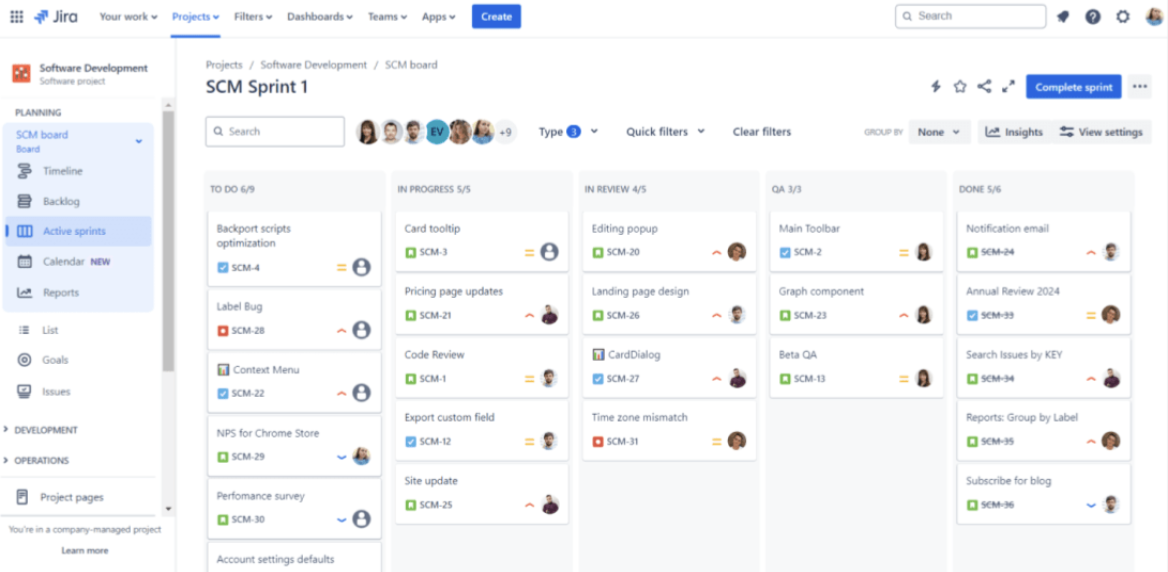
Overview: Jira is a project management tool for software teams to manage their responsibilities.
The target audience is software teams in any company from startups to large corporations.
Unique features: Jira uniquely enables team-based task management. First, it allows teammates to easily assign tasks to each other, and see what tasks others are working on. It also has the ability to rate each tasks in terms of difficulty and organize them by (biweekly) “sprints”. This allows teams to see how many “points” they got by the end of the sprint, in terms of how many tasks they completed & how difficult these tasks were.
Market need: B2B service that fulfills the needs of team-based task management for software teams.
Below is an image showing the interface of Jira. As seen, it’s easy to track which team members are working on which task, how much progress has been made in each task, and categorizing the tasks within sprints or categories. It’s clear that for more casual, personal task management, this Jira interface might be too complicated and intricate. However, for teams, its customizability and intricacies are useful.
Strengths: team-based task management, especially for software teams which operate in sprints.
Weaknesses: easy for tasks to get lost in past sprints and never closed or addressed, as Jira doesn’t naturally ‘nudge’ for uncompleted tasks.
Opportunity: Jira doesn’t fill the need for personal task management, it’s purely professional and team-based. Our product could address this side of it.
Apple Clock App
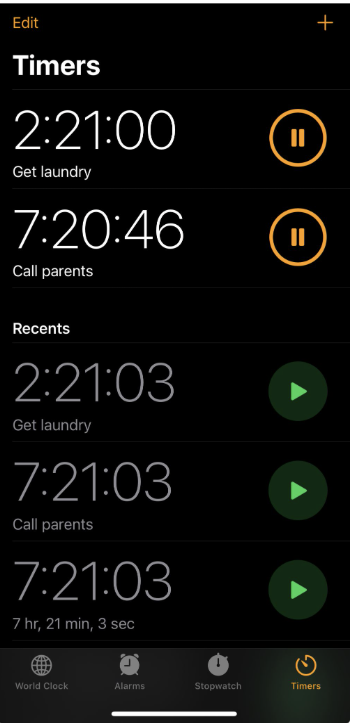
Overview: Many people use Apple’s built-in clock app to set alarms or timers for things that they know they have to do in the near future.
Target audience: people who aren’t looking to manage too many responsibilities, but do need a solution for short-term and important tasks
Unique features: the clock app allows users to get an alarm at any specific time of day, or at any given number of hours or minutes into the future.
Market need: users who need short-term solutions for lightweight personal task management.
The image below shows how a user can add several timers with different labels of tasks they need to complete. Clearly, it’s a very simple, not customizable interface.
Strengths: the clock app comes installed with every iPhone, and the interface is incredibly easy to use. Hence, the initial friction of starting to use this app is very low.
Weaknesses: the interface would be very unorganized once the number of tasks or alarms starts to grow, and the timers or alarms can be really disruptive.
Opportunity: our product can learn from the feature of being reminded at a task at any given time of day, but also execute this reminder in a less disruptive, more organized way.
Apple Notes
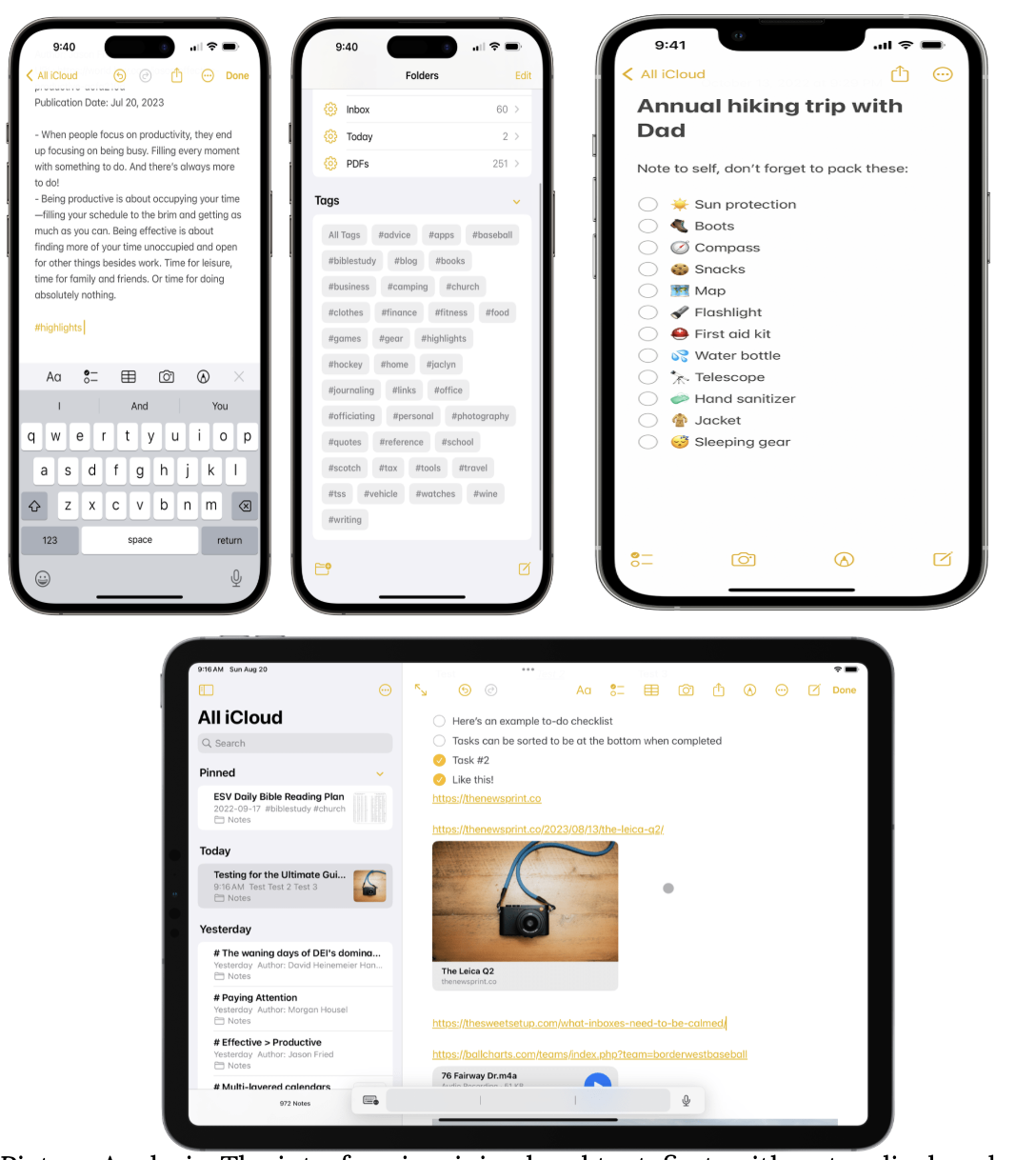
Picture Analysis: The interface is minimal and text-first, with notes displayed as a vertical list and individual notes acting as free-form canvases. Users often create informal checklists, draft messages, or jot down reminders without assigning deadlines or structure. The design emphasizes capture and storage rather than completion, with no visual cues for urgency or progress.
Overview: Apple Notes is a lightweight note-taking app designed for quickly capturing thoughts, lists, and information across devices. Many users repurpose it as an informal to-do list or reminder space rather than a structured task manager.
Target Audience: Everyday smartphone users, students, and professionals looking for a fast, low-friction way to externalize thoughts and tasks.
Market Need It Fulfills: Provides a simple, always-available place to offload memory and capture intentions without setup overhead.
Strengths: Extremely low friction and easy to use, Ubiquitous and trusted across Apple devices, Flexible format supports lists, drafts, and partial tasks
Weaknesses: No reminders, nudges, or follow-up mechanisms, Tasks can be forgotten indefinitely, No sense of progress, priority, or completion, Offers no support for acting on emotionally avoided tasks
Gap: Apple Notes is good for remembering tasks but fails to help users act on them once they are written down. Thus, it fails to provide any mechanism for accountability. It passively stores intent without offering any behavioral support to help users follow through on small, lingering responsibilities.
Why Our App Is Better: Actively supporting follow-through on micro-tasks, Helping users understand why tasks remain undone, Preserving a no-nudge experience while still enabling accountability
Google Calendar
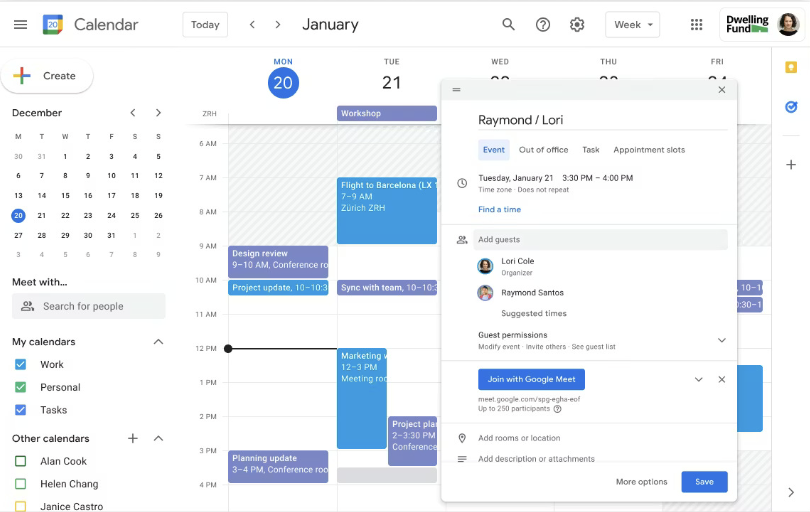
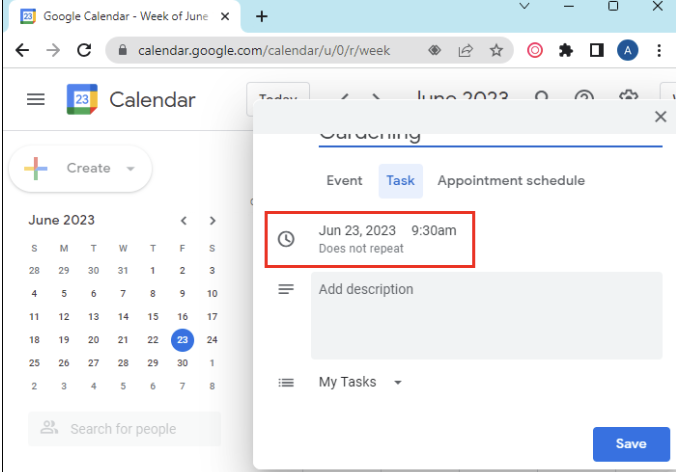
Picture Analysis : The interface is structured around time blocks in daily, weekly, and monthly views. Events are visually constrained by duration and placement, reinforcing a mental model where productivity is tied to scheduling. Color-coded calendars separate work and personal commitments but all actions are framed as time-bound events rather than effort-based tasks.
Overview: Google Calendar is a scheduling and time-management app used to plan meetings, events, deadlines, and personal commitments across both work and life contexts.
Target Audience: Students, professionals, teams, and families managing shared or individual schedules.
Market Need It Fulfills: Helps users coordinate time, avoid conflicts, and gain visibility into upcoming commitments across personal and professional domains.
Strengths: Clear visualization of time commitments, Widely adopted for both work and personal use, Strong integrations with email, meetings, and conferencing tools, Social accountability through shared calendars and invites
Weaknesses: Optimized for events, not tasks or intentions, Assumes users can accurately predict when they’ll act, Poor fit for small, ambiguous, or emotionally loaded actions, Notifications are binary (alert or silence) with no other nuances possible
Gap: Google Calendar structures when something should happen, but does not support why it might not. Tasks that require emotional readiness, motivation, or effort often do not belong on a calendar and are therefore left unsupported.
Why Our App Is Better: Supporting effort-based micro-tasks that don’t map cleanly to time slots, Helping users act on tasks when they feel ready, not just when scheduled, Addressing avoidance and hesitation rather than assuming compliance
- Obsidian
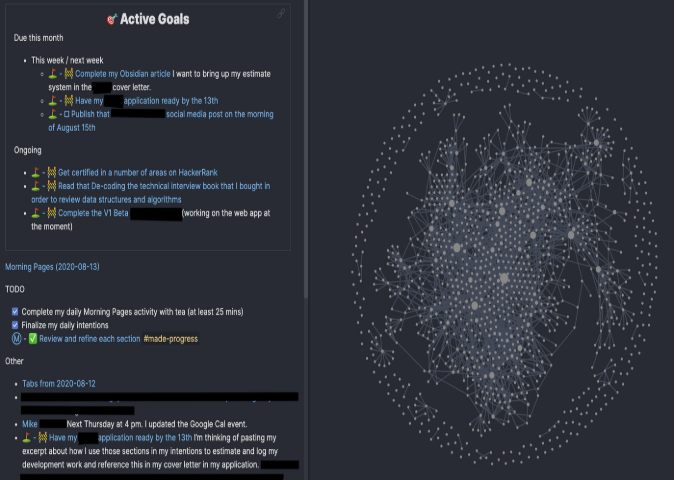
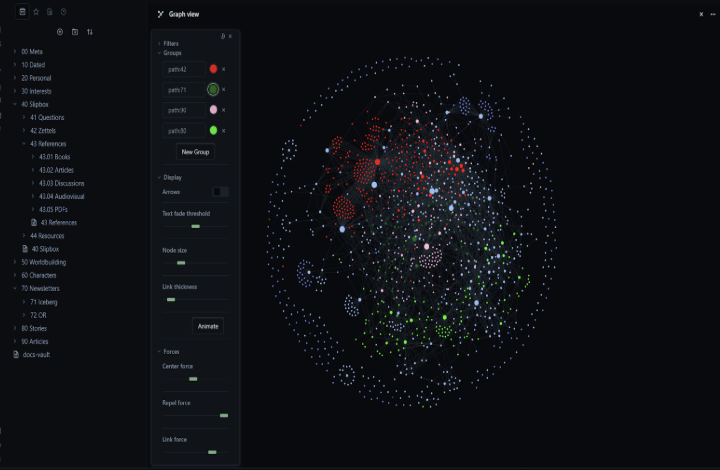
Picture Analysis: The interface is text-heavy and document-centric, with notes written in plain markdown and connected through bidirectional links. A graph view visualizes relationships between notes, emphasizing structure and knowledge building over task completion. There are no visual indicators for urgency, deadlines, or progress; instead, the design encourages users to return intentionally and navigate their information manually.
Overview: Obsidian is a personal knowledge management and productivity app that allows users to create, link, and organize notes locally. Many users adopt it as a system for deep work, research, planning, and long-term project thinking rather than traditional task tracking.
Target Audience: Students, researchers, engineers, writers, and productivity enthusiasts who prefer highly customizable, self-directed workflows.
Market Need It Fulfills: Provides a powerful, flexible environment for organizing complex information and ideas over time without imposing rigid structures or workflows.
Strengths: Extremely flexible and customizable, Encourages deep thinking and long-term knowledge organization, Works well for complex projects and research, No notifications, reminders, or forced workflows, Strong sense of user ownership and control
Weaknesses: High learning curve and setup cost, No built-in accountability, reminders, or nudges, Tasks and intentions can remain abstract or unfinished, Requires strong intrinsic motivation to maintain use
Gap: Obsidian excels at structuring thought, but not supporting action. While it helps users understand and connect ideas, it does little to help users follow through on small, effort-based tasks or lingering responsibilities that require motivation rather than insight.
Why Our App Is Better: Focusing on actionable micro-responsibilities, not just information organization, Supporting follow-through without requiring a complex setup, Helping users get past hesitation and avoidance, Giving users accountability without taking away control
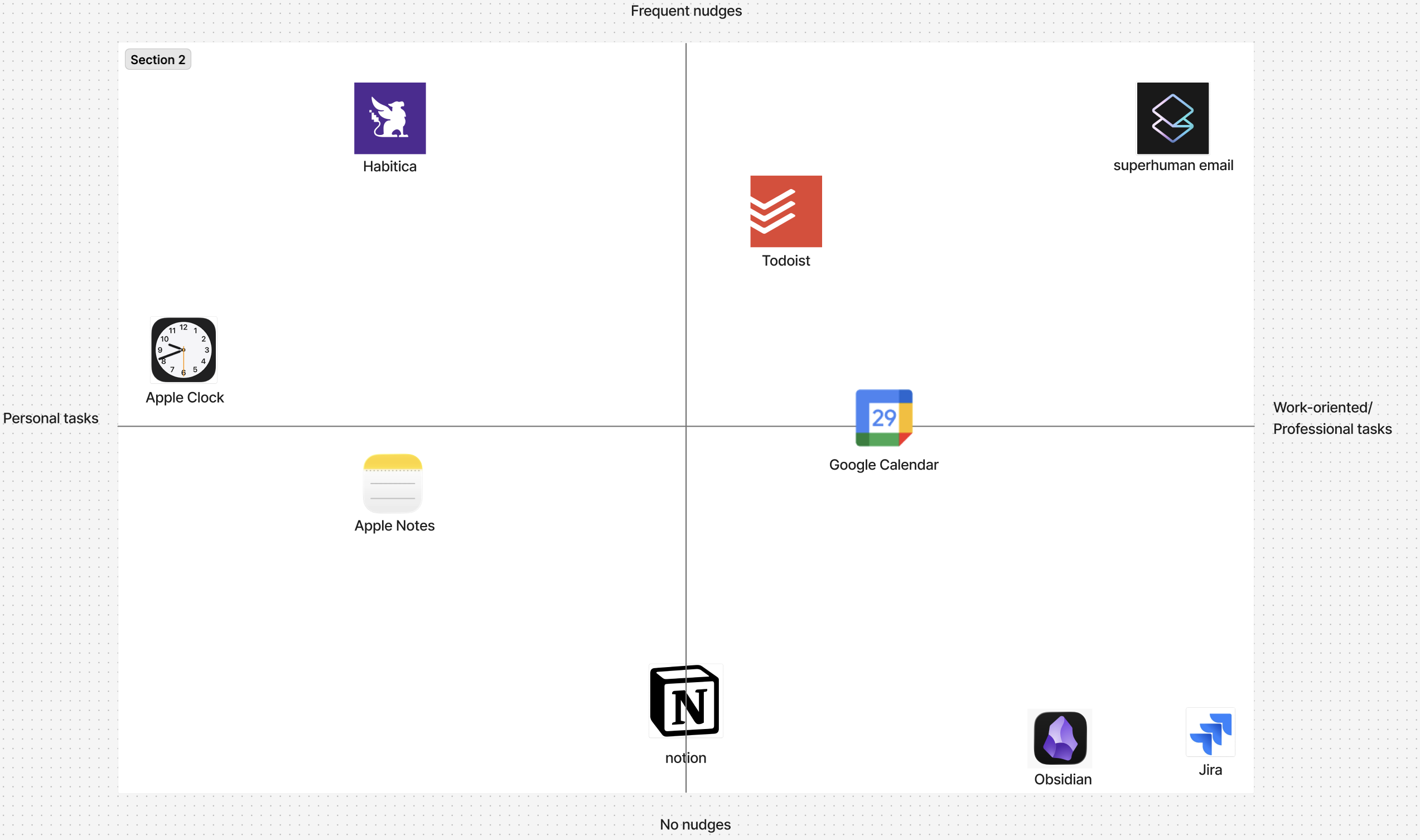
2×2 Competitive Landscape:
If the image is too blurry, please find a clearer version here.