The Art of Introducing New Products!
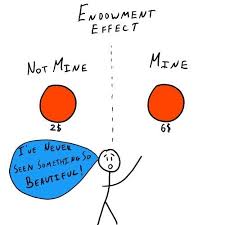
You know that feeling when you’re excited about a new gadget, but your friend just shrugs and says, “Meh, I’m good with my old one”? Welcome to the world of product management! As Gourville mentioned in ‘Eager Sellers and Stony Buyers’, companies juggle bringing cool new ideas to the market while dealing with folks who’d rather stick to what they know. This endowment effect can be very challenging to deal with: Webvan and TiVo, they had brilliant ideas, but people were like, “Nah, I’ll just go to the store and watch TV the old-fashioned way.”
So, what’s a product manager to do? To counter this, as Gourville said, PMs should aim to reduce the perceived risks associated with change, as even incremental shifts in routine can create significant resistance. PMs should also use insigths from loss aversion strategically. Rather than just focusing on objective benefits of new features, offering seamless transitional experiences, such as tutorials, free trials, or backward compatibility, can lower the barrier to adoption. Other strategies I apreciated from our reading that can help companies tremendously:
- Keep It Familiar: Make your new product feel like an old friend. If it’s too different, people might freak out. Like Toyota’s hybrid cars—they drive just like regular ones, but with extra eco-points!
- Small Changes, Big Wins: Instead of asking for leap of faith, offer tiny improvements. TiVo didn’t reinvent TV—they just let people pause it! Baby steps win hearts.
- Turn Loss into Gain: People hate losing stuff, even if it’s small. Show them your product gives more than they could ever lose, and they’ll be sold!
- Say Goodbye to the Old (Gently): Sometimes you have to let go of outdated products. Just do it in a way that makes the new one feel like exciting upgrade, not a scary replacement.
However, I disagree with the Gourville’s point “Don’t Rush It: Change is scary! Give customers time to warm up to your product.”
In our ever fast-pacing world with AI and tech, taking too long to allow customers to “warm up” to a product can put a company at competitive disadvantage. Competitors who move faster may capture market share, capitalizing on early adopters while the slower company waits for cautious consumers to adjust. Dangers of moving too slowly can be seen from BlackBerry’s decline in the smartphone market. Once leader with its physical keyboard phones, BlackBerry was slow to adopt touchscreen technology after iPhone’s launch in 2007. The company assumed users would hesitate to switch, allowing competitors like Apple and Android to dominate with more innovative devices. By the time BlackBerry released its own touchscreen phones, it had lost significant market share. This hesitation to push users toward change contributed to BlackBerry’s fall from its market-leading position. Instead of not rushing, better approach could be creating a sense of excitement and urgency through timed promotions, limited offers, or integrating customer feedback early on, allowing for adjustments without stagnating progress.
Avoiding the Temptation of “Just One More Feature”
PMs can also easily fall into the trap of feature creep: it’s like when you’re cooking and keep adding spices, thinking it’ll taste better, but end up with dish only a dragon could love. From what I saw Microsoft Word is a prime example. While packed with tools and menus, the core utility of the software, which is word processing, became overshadowed by peripheral functions that most users never needed. This is classic example of product teams prioritizing innovation over usability, leading to frustration for customers who just wanted a simple tool.
In real-world scenarios, PMs can prevent feature creep by rigorously prioritizing features using frameworks like MoSCoW (Must have, Should have, Could have, Won’t have). I believe that aligning stakeholder expectations and maintaining strong product management leadership are crucial in warding off the creeping in of unnecessary features. Similarly, the creation of clear product roadmaps that tie every new feature back to strategic goals helps maintain focus and resist unnecessary additions. Internally, drive to constantly innovate and stay ahead of the competition pushes product teams to introduce feature after feature, but this momentum needs to be balanced with a clear understanding of the buyer’s psychological barriers to change.
PMs must learn to say no. It’s a difficult task, especially when senior executives champion certain features, but PMs need to protect the core value of their products fiercely, ensuring that each new feature aligns with the overarching product strategy. After all, not every product needs to make coffee and do your taxes!
By understanding why people might resist change and staying tuned in to what users really care about, we can turn that “Meh” into a “Wow, I need this in my life!”