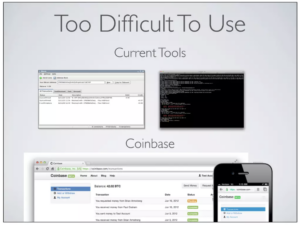
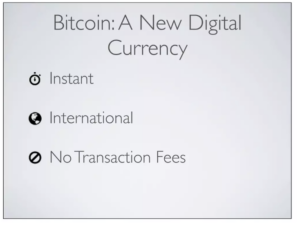
The deck shows the problem on Slide 6, titled “Too Difficult To Use.” It puts the tools people had at the time, a plain desktop wallet and a black terminal window, above the Coinbase web interface. I understood the problem in about two seconds. Slide 2 sets this up by listing what bitcoin offers: it is instant, international, and free of transaction fees.
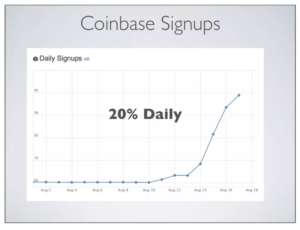
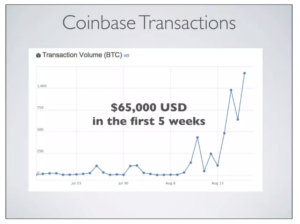
The evidence that the need is real appears on three slides. Slide 4 shows bitcoin transaction volume climbing to about $2 million per day. Slide 9 shows Coinbase signups growing 20% daily, and Slide 10 shows $65,000 in transaction volume in the first five weeks. The first chart shows the currency is growing, and the other two show people want this product.
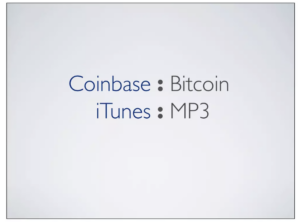
The deck never gives a market size. Slide 5 lists early uses like remittance, microtransactions, and games, but it attaches no dollar figures. The closest thing to sizing is Slide 8, which compares Coinbase to iTunes and bitcoin to MP3.
An investor would ask how Coinbase makes money, since the deck never mentions revenue. They would also ask how it keeps hosted wallets secure, how it handles regulation and bitcoin’s price swings, and how it will find users once the early spike fades.
For my Sanity Check pitch, I will copy the iTunes comparison from Slide 8, because one line explains the whole business. I will also show the problem with a side-by-side image, as Slide 6 does.