
This quarter, we’re interested in tackling increasing time spent outdoors—that is, we’re interested in the successful behavior interventions that encourage users to go outside. As part of our review, we looked to compare a few different solutions introduced in this field that involve outdoor activity or engagement.
Market Research
Below, we document eight representative apps that solve for increasing outdoor activity along with their affordances, drawbacks, and unique value propositions.
Pokémon GO, app
Analysis by Fernanda
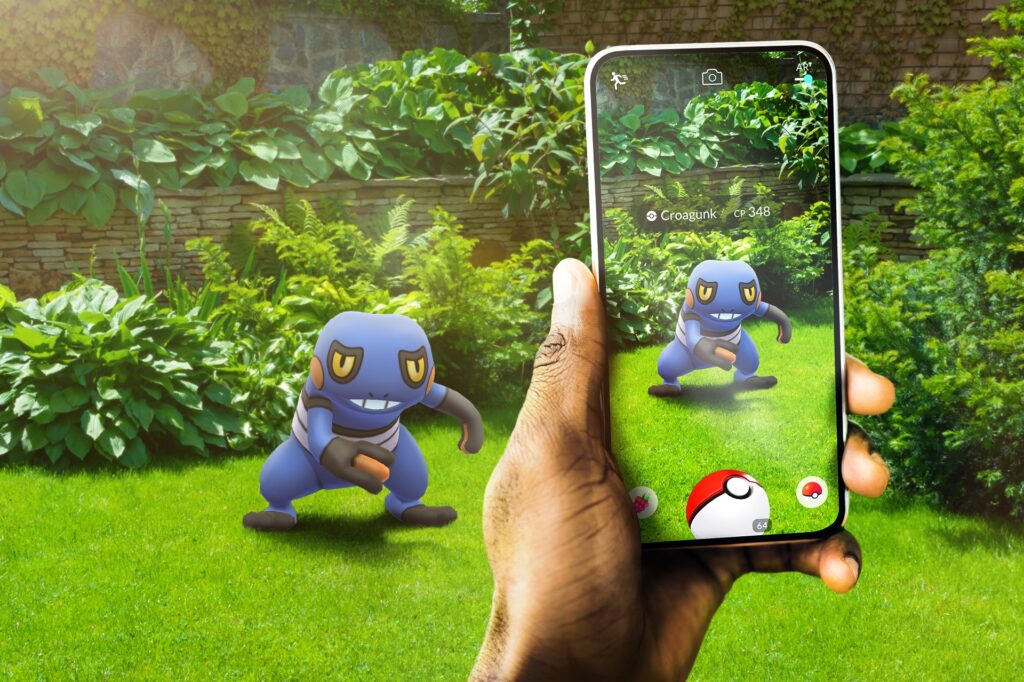
Image from pokemongolive.com
Pokémon GO is an app that takes the classic Pokémon games to the mobile device. The app uses the user’s location to make Pokémon appear around them through augmented reality. The objective of the game is to catch as many Pokémon as possible. When the user moves locations, different kinds of Pokémon appear. Users can also engage in battles with other users depending on their location and proximity to each other. Different Pokémon are assigned different values, so users are encouraged to move around in order to find and catch the best, increasing their Pokémaster status.
The target audience is millennials who grew up with Pokémon in the 90s and 2000s. However, the AR game experience and social elements of the app allow Pokémon GO to appeal to a wide range of audiences. As of 2021, there are over 800,000 daily users. Pokémon GO went viral soon after its release in 2016, and Community Days would lead to large groups of people gathering outside with everyone trying to catch rare Pokémon. With over a billion downloads and the “Best Mobile Game” title according to the Game Developers Choice Awards, there is no doubt that Pokémon GO is one of the most successful apps that encourage going outside.
Strengths:
- The unique game experience attracts a wide range of audiences and keeps users entertained and engaged.
- The Pokémon fanbase existed prior to the app’s launch, allowing it to have a large audience before its release.
- Community events encourage users to go outside and meet fellow players.
- Advancing through the game requires exploring new places to find new Pokémon.
Weaknesses:
- Pokémon GO has become more playable from home since COVID.
- The UI is complicated for those not familiar with the Pokémon universe. Pokémon information and stats can be difficult to comprehend.
Unique value proposition: a fun and social game for people of all ages that integrates going outside and moving locations as a way to advance through the game
AllTrails
Analysis by Fernanda
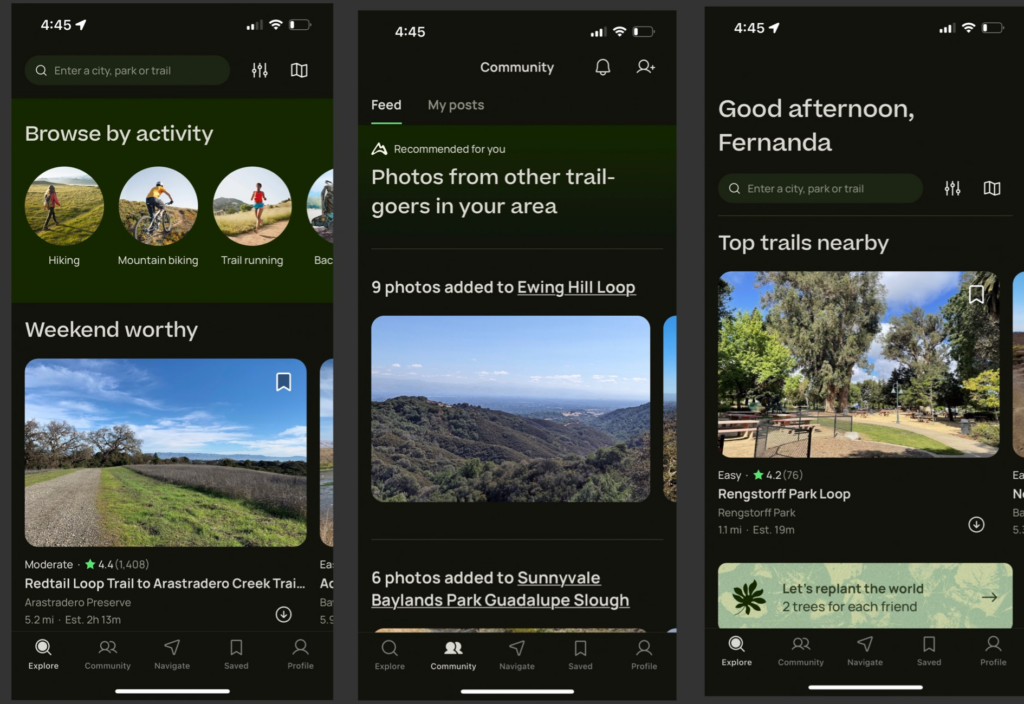
Images from AllTrails app
AllTrails is a fitness and travel app for outdoor activities such as hiking, mountain biking, climbing, and snow sports. The app uses the user’s location to present nearby trails, views, waterfalls, and other outdoor experiences. Users can filter trails based on difficulty, accessibility, activity, and other criteria as well as provide ratings for visited trails. With the Community feature, users can post photos of their outdoor experiences, connect with friends, and follow other users. Users can also track their activity under the Navigation feature. All these features allow users to optimize their outdoor experiences. The app is free; however, a yearly subscription grants access to AllTrails+ and its premium features such as offline maps and an ad-free experience.
By presenting trails tailored to the user’s preferences and providing a platform to share outdoor experiences, AllTrails helps users make the most of the time they spend outdoors. When it comes to getting outside, this app would not be most helpful people for those who do not already have an interest in outdoor activities.The target audience for AllTrails includes those who already have an interest in going outdoors and want to find the best trails for their preferences.
Strengths:
- Users can search for outdoor activities by category, allowing them to easily find options for their preferred activity. This also makes AllTrails very versatile.
- Users can filter activities based on difficulty, making AllTrails accessible to a wide range of audiences
- Users can review trails and other outdoor attractions. Community approval of a trail assures users that their time outside will be well spent.
- Users can track and log their walks / hikes to see their progress.
- The UI is clean and intuitive.
Weaknesses:
- A yearly subscription is required to access AllTrails’ premium features.
- Offline maps are not included in the free version. The offline map is very useful, and sometimes necessary, for when users explore the trails found in the free version of AllTrails.
- Ads are present in the free version of the app.
Unique value proposition: a useful and informative app that acts as a map, fitness tracker, and Yelp for outdoor attractions
Geocaching
Analysis by Faith
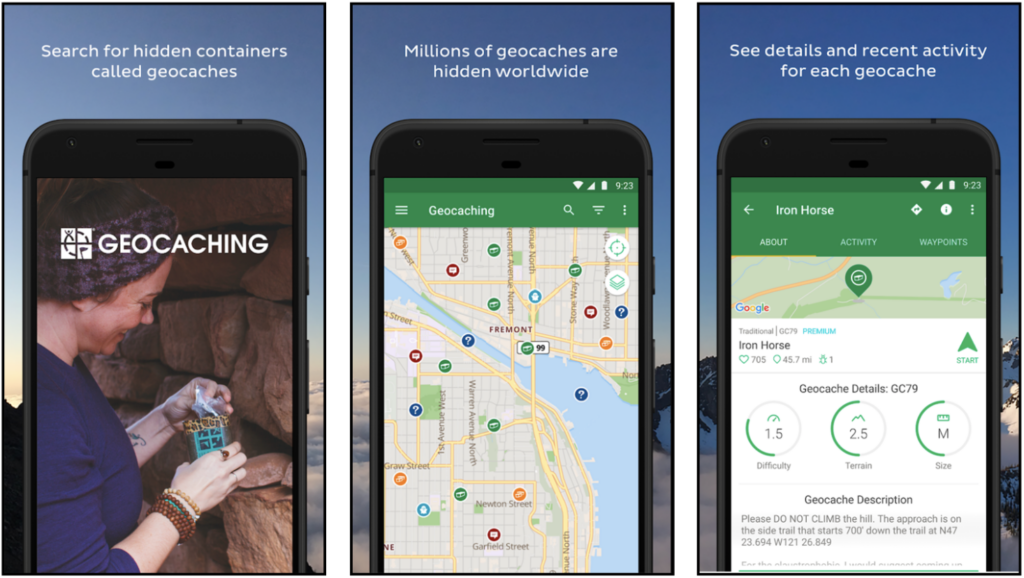
Image from reviewgeek.com
Geocaching is an interactive app where participants use GPS capability and other navigational techniques to hide and seek geocaches (trinket-filled containers) at specific locations marked by coordinates. It’s a global treasure hunt that involves a large community of users. The app’s concept works well for individuals who enjoy participating in group activities and want to explore areas they are not familiar with. When exploring the app’s user experience, the following observations were made:
Strengths:
- In-app messaging allows users to socialize and build community with other users
- Concept of adventure gives users purpose to be outside
- In-app map feature includes the terrain and trails to follow
- UI is clean and intuitive to use for all kinds of users
Weaknesses:
- Very involved = may be too high of an activation energy for some
- When finding a cache, users have to open the cache page to get hints, but this stops the navigation and requires the user to click “Navigate” again when returning to the map = inconvenient and aggravating since it requires more interaction with the app
- Only allows you to add one photo to a cache log from the app. Additional photos have to be uploaded from the photo library.
One key takeaway from analyzing the comparator is the importance of providing users with a strong sense of purpose and intention to go outdoors. Geocaching does this well by simulating a treasure hunt and giving users the means to explore and uncover something tangible. With that level of involvement, however, there must be as few barriers in the user experience as possible. Our design would need fleshed out in-app features and no unnecessary interactions. Ideally, the app would be a one-stop shop that accomplishes everything without needing to go into other apps such as the camera or maps.
Unique value proposition: an app which encourages users to go outside and embark on a fun treasure hunt with other users.
Night Sky
Analysis by Faith
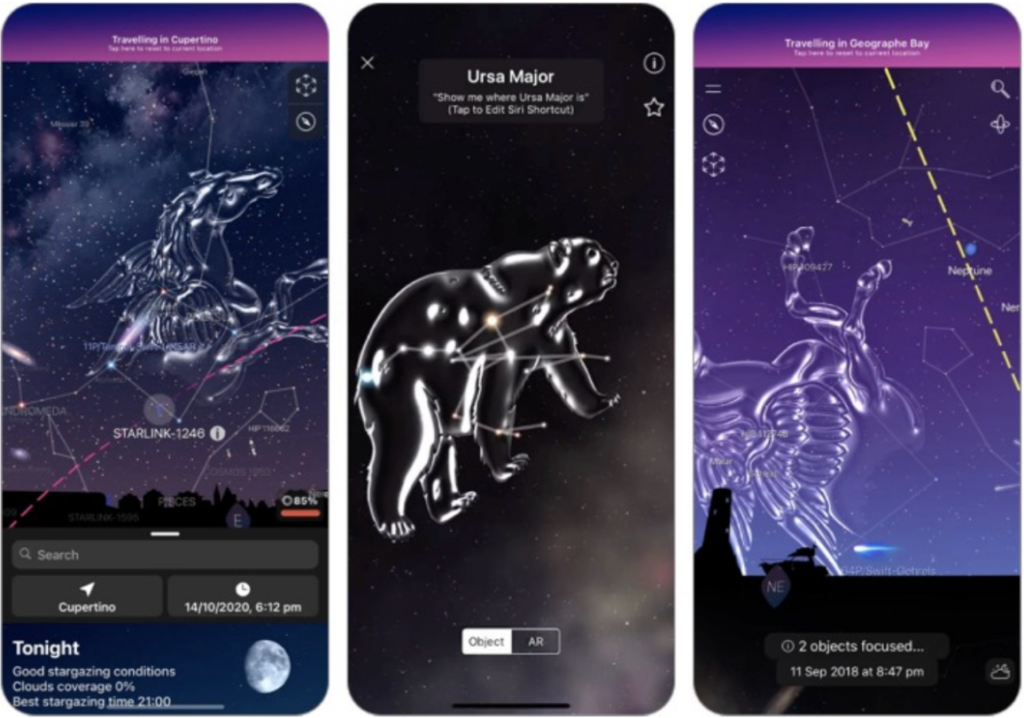
Image from igeeksblog.com
Night Sky is an app that uses GPS capability and the time of day to allow a user to aim their camera at the sky and be able to see a labeled projection of the celestial objects in space. Using augmented reality, the app illustrates constellations, planets, and satellites; provides weather reports to recommend optimal times to stargaze; and notifies when cool astronomical events occur. The target audience include avid stargazers and those interested in astronomy. When exploring the app’s user experience, the following observations were made:
Strengths:
- Layout of the informational pages is clean and easy to read
- Graphics are beautiful and engaging
Weaknesses:
- Free but requires premium upgrade for many of the features
- Screen is extremely cluttered and clickable objects are hard to identify amongst the dark background
- User gets visually flooded when zooming into a local body
One key takeaway from analyzing the comparator is the importance of providing users with novelty and uncertainty to maintain interest and engagement. Night Sky does this well by “uncovering the unknown”, which appeals to the broader population and fascinates users to want to learn more beyond what can be seen with the naked eye. Visual clutter, however, is a problem that Night Sky faces that we would want to avoid for our future design.
Unique value proposition: an educational and fascinating app that can show and visualize to users the objects that lie in the night sky.
Oh, Ranger! Parkfinder
Analysis by Nick
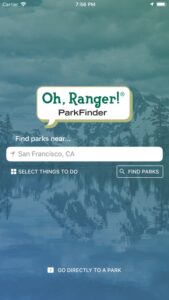
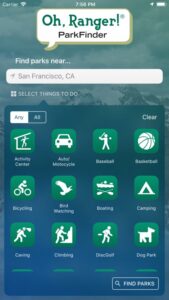
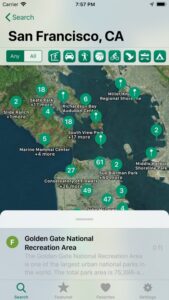
Images from appadvice.com
Oh, Ranger! ParkFinder is an app that lets users access a database of national, state, and local parks. It provides descriptions of the location and uniquely provides some of the activities that one can do at the parks, which users can also filter by. The app works somewhat consistently, however the database is not complete especially for smaller parks, and the largest pain points are centered around the lack of options to fine tune the searches. You can only filter by one characteristic at a time, making it difficult to search for a specific set of features. Its primary value add is that Oh, Ranger! makes it easy to search for national parks at a given location and see things to do in the area, which works very well for travelers who want to experience areas they are not familiar with. However, it mostly caters to individuals who are already the outdoorsy type, and helps them find things that they are looking for. This would not help get someone who is not as strongly invested in the outdoors into the consistent action of going outside. One would also have to know what they are looking for in order to maximize the abilities of the app.
Strengths:
- Very informative and descriptive
- Works well especially for those who know what they like
Weaknesses:
- Not good for new outdoor enthusiasts
- Difficult to query for multiple activities, need background knowledge for effective use
Unique Value proposition: an easy way to find and search for activities in national, state, and local parks anywhere in the United States.
PlantSnap
Analysis by Nick

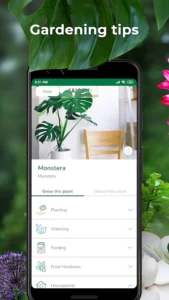
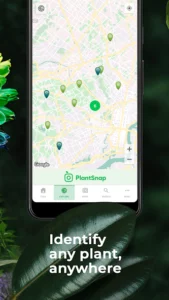
Images from play.google.com
is an app that helps users identify plants using their camera, and encourages users to go outside by helping them learn about the surrounding foliage. It specifically targets those who are interested in learning more about the plants in their surroundings. It has seen some success commercially and on the App Store with much positive press. However the negative reviews showed it was inaccurate in many cases, and more importantly the development team seems to have a poor relationship with the community based on the responses to negative reviews (many replies that I read were rude and passive aggressive, with many calling out the dev team for the interactions). Additionally, after searching in some communities like botany and foraging for what apps people use that have a similar function, many had other preferences putting this one’s immense success under a more scrutinizing light. Finally its limitations for free users (limited number of scans per day) will dissuade those who are not frequently going to use it from benefiting from the app and its features. However, for a more casual user who is simply trying to find a reason to go outside for a few more minutes, this app could serve a good role in their lives. We would seek to better balance the free experience for those who are not intensely interested in learning about plants and are more interested in the nudge the experience provides when the user is outside.
Strengths:
- Generally very effective at identifying plants
- A very useful learning tool
- Easy and intuitive to use
Weaknesses:
- Lack of community
- Free experience is rather limited
Unique value proposition: a fast, accurate way to identify any plant or foliage you see on your walk, run, or hike.
Map My Run
Analysis by Lisa
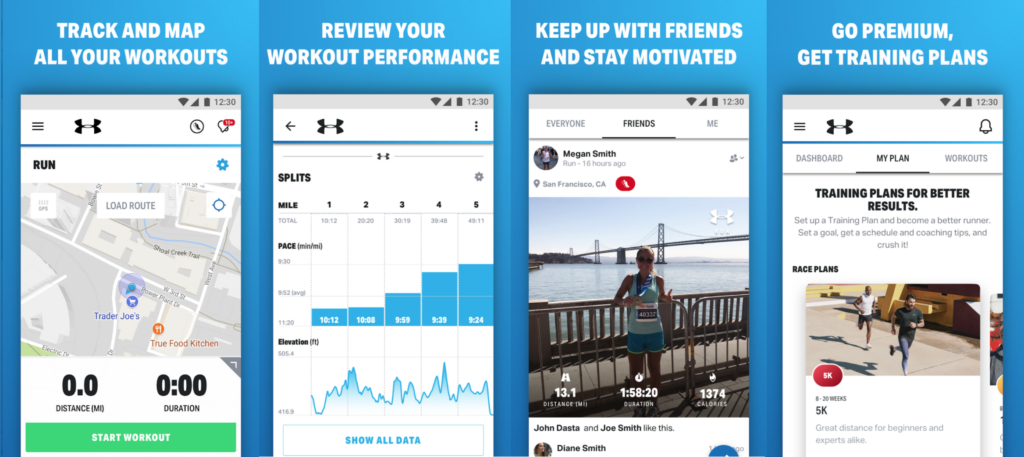
Image from underarmour.com
May My Run is an app that can track the routine for over 600 different activities such as running, cycling, walking, gym workouts, cross training, and yoga. It provides a great way to visualize the workout activities, and provide a sense of achievement. Boasting a community of over 60 Million athletes, Map My Run is not only a fantastic way to stay inspired, but it’s a great way to get outdoors, and stay on track with your goals. Map My Run integrates with the latest apps along with most wearables, including Apple Health, Apple Watch, Garmin and MyFitnessPal. It’s easy to track your fitness activities with Map My Run — and don’t let the name of the app fool you — you can log over 600 different activities.
Strengths:
- User-friendly interface
- GPS tracking: using GPS technology to accurately track your running routes and provide you with valuable data
- Social features: The app allows you to connect with other runners, join groups, and share your workouts on social media.
- Goal setting: set goals for your workouts and provides you with personalized coaching to help you achieve those goals.
Weaknesses:
- Inaccurate tracking
- No offline mode
- Free feather is rather limited
Unique value proposition: a visual way to track your fitness activities and measure achievements.
Merlin Bird ID
Analysis by Lisa
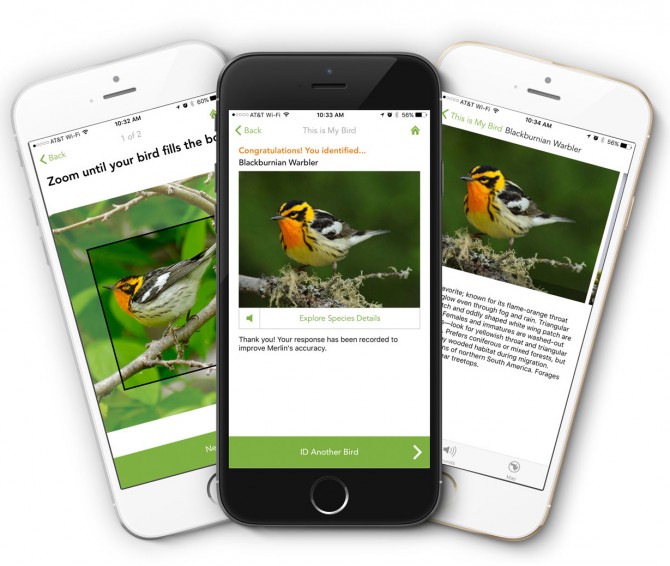
Image from news.cornell.edu
For those who really enjoy being in nature watching birds, Merlin Bird ID is a great app to incentivize people to learn more about birds. This could create positive synergy to boost outdoor activities and gain bird knowledge. Want to know what kind of bird you’re looking at? “Merlin offers four fun ways to identify birds. Answer a few simple questions, upload a photo, record a singing bird, or explore birds in a region.” Merlin is powered by ebird, the world’s largest database of bird sightings, sounds, and photos. Who knows, maybe bird watching will become your new favorite way to spend time outdoors!
Strengths:
- Extensive bird database containing information about birds’ characteristics.
- User friendly and attractive interface
- Offline mode
- Social features attracting bird-lovers
Weaknesses:
- Limited accuracy
- Limited range only allowing to use in north America
- Might cause battery drain
- Has privacy concerns on sharing data with third-party advertisers.
Unique value proposition: an informative app with photo and audio identification technology for those interested in bird watching
Comparative Research Map
Taking these solutions we found, we mapped them on a comparative matrix where we measured audience (the scope of audience, either niche or general, that the app is tailored towards) and gamification vs. informative (whether the app is more like a game or an informative source).
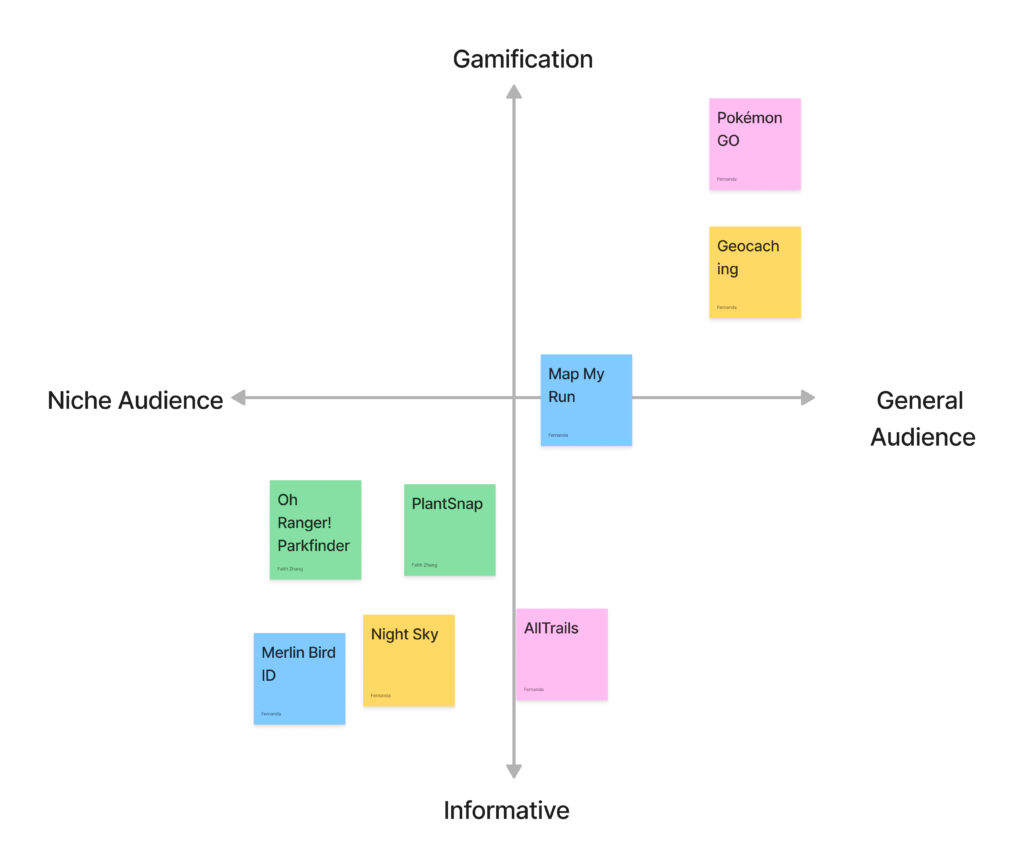
Our comparative matrix, mapping our secondary research across niche vs. general audience and gamification vs. informative.
We found that solutions were generally crowded around niche audience, highly informative space. Apps in this space included bird, plant, and star identification apps as well as park and trail-finding apps. The next most populated quadrant was the general audience, gamification space.
From this matrix, we’ve tentatively found ourselves interested in developing a solution in the general audience, informative space since it is not as saturated as the other quadrants. We would like to reach as many people as possible and feel that gamification is not always conducive to increasing healthy habits.




Comments
Comments are closed.