
Behavior Change Reflection
By: Jacob LeBlanc
Behavior change, crazy stuff right? Before this class, I thought that changing people’s behavior was always a difficult task that required a lot of effort. Design-wise, I thought that everything was all about aesthetics and other considerations were secondary.

I really loved seeing the design process from a different perspective. Although I’ve done several HCI classes, this is the first time I went through the target audience deeply enough to make personas and consider how these users would both enter and exit our system. I think that this process is really important to actually understanding the project more deeply, and it actually helps creators figure out their ideal outcomes more so than anything else. I really liked this because I don’t think we would have considered “How are we actually being discovered?” or “Do we want people to eventually stop using our app?” that I think helped us really align our wants. I also loved pre-mortems. I thought it was a ton of fun to speculate on what could possibly go wrong with a product. We did include a fair bit of what can only be called “science fiction”, but the inclusion of some fiction helped us to really identify the likely endings to our app. On the other hand, I really didn’t like the synthesis process that we went through. I can understand how it could be useful but it just felt like a very formal process for such small scale experiments/studies that we were running. I think that one of the issues that I experienced during this class was that of ethical considerations, and how far should we as students working on a small team actually go to accommodate as many ethical desires as possible. For example, for our team we had the issue of anxiety come up in our intervention study. It can be rather difficult to distinguish between anxiety that would be a concern for our app and nervousness for stepping out of their comfort zone in a healthy way. This made a difficult decision of whether or not to add possible resources for users experiencing anxiety in our app. We finally came to the conclusion of not adding them because we are such a small team and it was not the purpose of the app. Therein lies a lesson I will remember for a long time though. You can’t please everyone, you unfortunately just can’t, but the process of thinking through why certain things are included or not is necessary to make a feasible product that avoids major ethical concerns while still being a manageable size for a small team. If I were to have changed anything about our project, I would wish that we challenged our Truth or Dare idea more. It was the first idea that we tested with an intervention study, and the study was well received and later all of the assumptions that we were reliant on were confirmed, so we never really tried anything too different. I don’t necessarily know that anything else works better for the ~vibe~ we wanted, something fun and casual as an introduction to gratitude mindfulness, but I would like to try something else.

I think that our project mostly utilizes Universal Design in that we hope that the one design will work for all users. This does however take into account that our users are only native english speakers. This design choice also relies on very good prompt writing. I am hopeful that the choice between Truth and Dare implies that one of the options will be good for every possible user, but this itself is more realistically just a pipe dream. Most of the personalization for the app comes in the notification scheduling. Our goal for this was to allow users to pick what times would be most beneficial in their own schedule to be reminded of our app and their task for the day. I believe that since the user a) opts into notifications and b) chooses the schedule of when these arrive that the nudges are not manipulative. I do believe that if we continued to use streaks as a mechanism for behavior change that this could become manipulative. Streaks, particularly from Snapchat, have a bad record of causing strong emotions that I think could count as manipulation if mishandled. As such, I think that this is one of the very few ways that our app could stray into manipulation.
Now I think that causing behavior change is extremely easy. Actually too much so. Any little choice could have a potentially great effect on a user’s behavior, so many many considerations need to come into place before a product meant to change behavior should be released. This consideration is even more necessary when considering unintended behavior change. The design of a product needs to be centered around the intended interactions in order to minimize the potentially negative unintended behavior changes, and only after these considerations are made should aesthetics be considered.
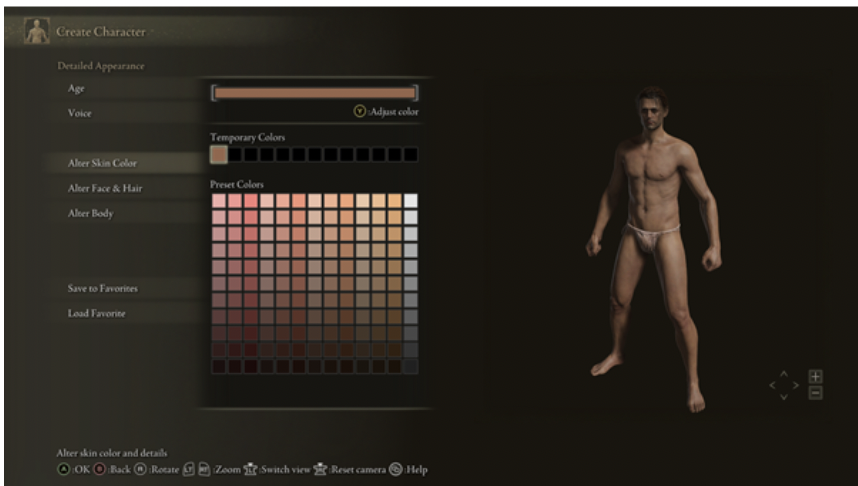
Next time I am faced with a product focused on behavior change, I will spend a lot of time focusing on who would actually use the product. Not only who I want to use the product but all of the people who would likely find themselves using it. I would then design for all of these users as best I could by allowing for personalization. Personally, I think that using personalization for Inclusive Design is the best practice (though it can raise the most barriers with extra settings). I honestly think this preference comes from videogames since the process of personalization is a very fun one that ensures as many players as possible feel comfortable playing a game (whether this comes in the form of avatar personalization orsetting their own controls). A lot about personalization from video games could probably be successfully adopted in other softwares to increase inclusivity.



