Team 4: Alea Ritchie, Anushka Godambe, Ava Lazar, Dawson Brej, Vinaya Sharma
Comparison Table
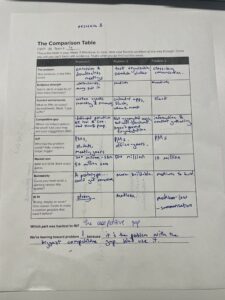
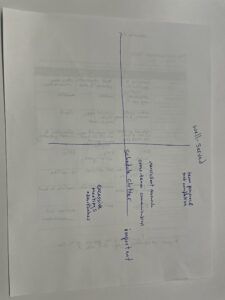
Which problem you’re leaning toward and why
We’re leaning toward problem 1 because excessive and directionless meetings have the biggest competitive gap. Based on our interviews, multiple PMs mentioned spending significant time in meetings that lack clear agendas, direction, or actionable outcomes. If a PM spends around 10 hours per week in meetings, reducing unproductive meeting time by 20% could save 2 hours per week. Existing tools like Slack, calendars, and AI meeting summarizers help with scheduling and documentation, but they don’t actively ensure meetings stay focused or prevent conversations from going off track. Our solution would combine an AI powered meeting planner with a live AI assistant that listens during meetings, tracks discussion against the agenda, flags when conversations go off topic, and surfaces key decisions and action items in real time. This creates an opportunity to move beyond simply documenting meetings to actively making them more productive. We also believe this problem has strong market potential because meetings are a universal part of knowledge work, and advances in AI make real-time meeting assistance increasingly feasible.
One idea from reading
We used a central idea from Rachitsky’s “How to identify your ideal customer profile”. He spoke about the advantage of getting “super-specific” and “super-narrow” with your ICP. When constructing our ICP, we started off rather broad and overarching. After many iterations, we were able to whittle our expansive ICP to an extremely narrow group that will allow us to target specific people: Product Managers at series D to public companies struggling with overwhelming meeting schedules. Over time, we plan to expand to a larger demographic when we feel ready, similar to how Gusto decided to expand in the reading.