
Part 1: Synthesis
Baseline study -> Raw data:
Our group is focusing on the challenges people face when trying to maintain quality long distance friendships (LDFs). As students trying to maintain our own LDFs and nearing the end of our college journey, this is a topic that is deeply important to us, and many of our social circles. Personally and across our social networks, we’ve seen that the maintenance of such friendships can often present many challenges that our group is hoping to mitigate or improve.
To begin, in our baseline study, we screened individuals from the ages of 18 to 28, and from that pool, most of our participants in our first portion of the study were college students with LDFs. Subsequent to this study, we collected all our quotes and insights on Miro, which helped us identify key insights.
From Miro we highlighted various key takeaways, below are a few of them:
- People often see intentional long distance communication as being key to a LDF, but that the energy needed for it can often be a barrier
- Many people find maintaining LDFs difficult
- Participants often feel guilt with these relationships
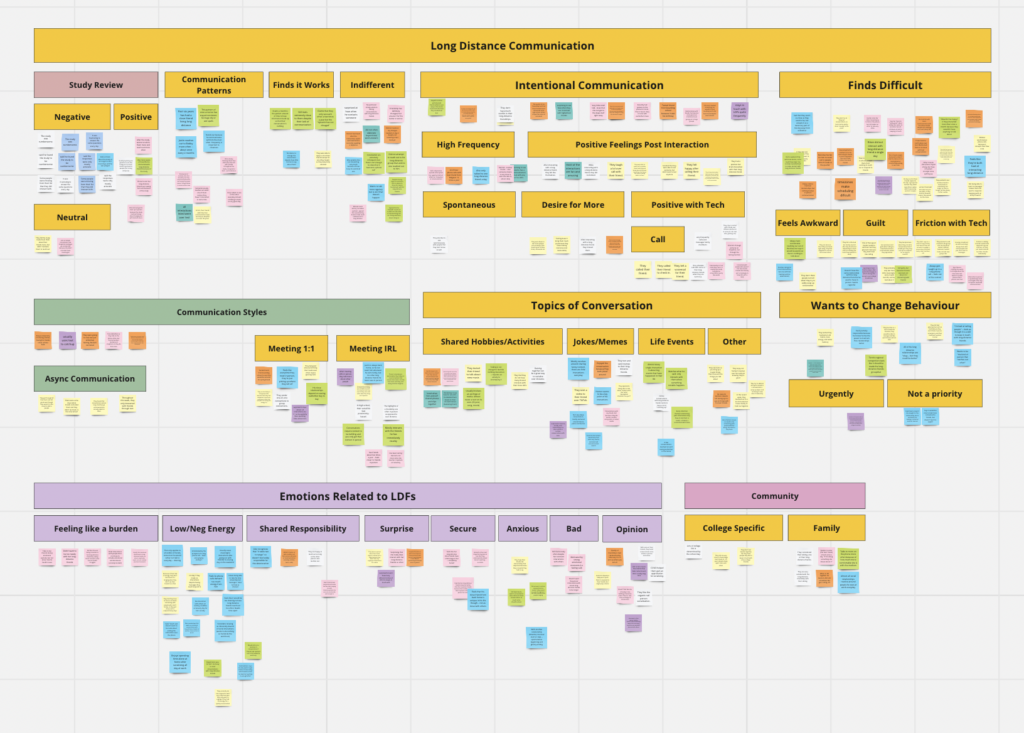
From these insights, we then moved to our grounded theory where we sought to understand some theories and questions that came from our baseline study.
Grounded Theory:
Our grounded theory process produced 5 different theories:
- Theory 1: People desire maintaining meaningful friendship with their long-distance friends, but don’t necessarily feel urgency to do so.
- Theory 2: People desire quality interactions with their long-distance friends, but have difficulty finding the energy to do so.
- Theory 3: People feel a sense of responsibility to stay in touch with their long-distance friends, and feel stressed when they fail to do so.
- Theory 4: People feel a sense of responsibility to stay in touch with their long-distance friends, but perceive a skill gap that hinders their ability to do so.
- Theory 5: People like having “excuses” to reach out to their long-distance friends
Our full document with questions, and explanations is linked here.
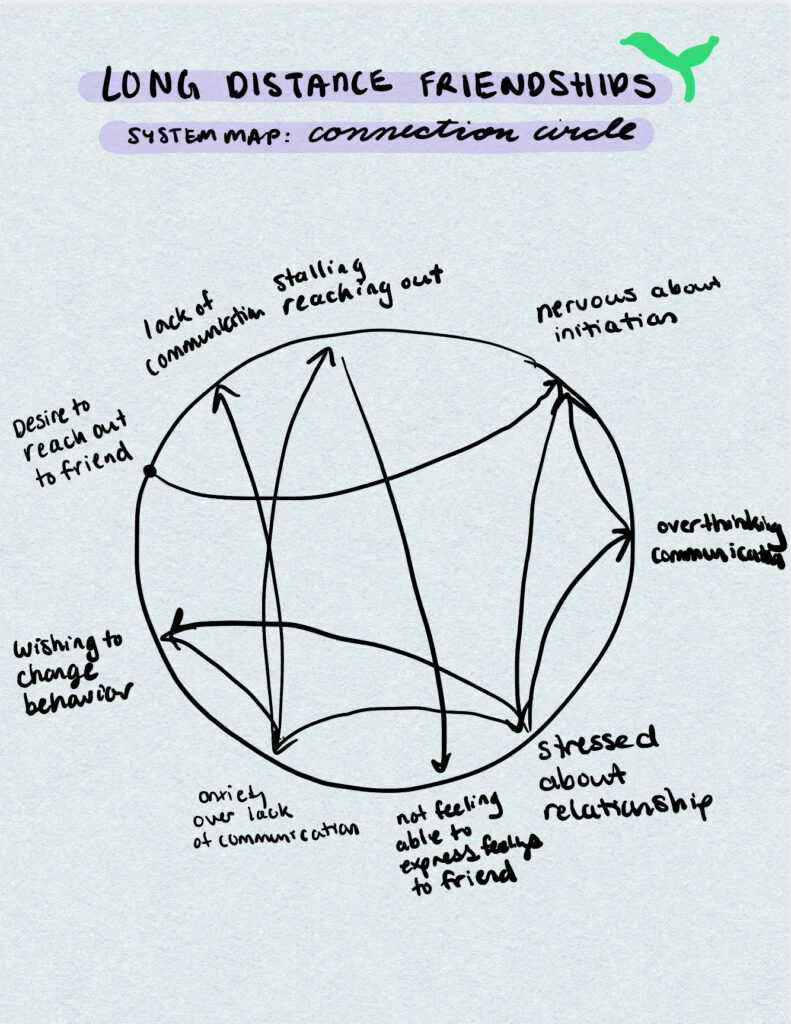
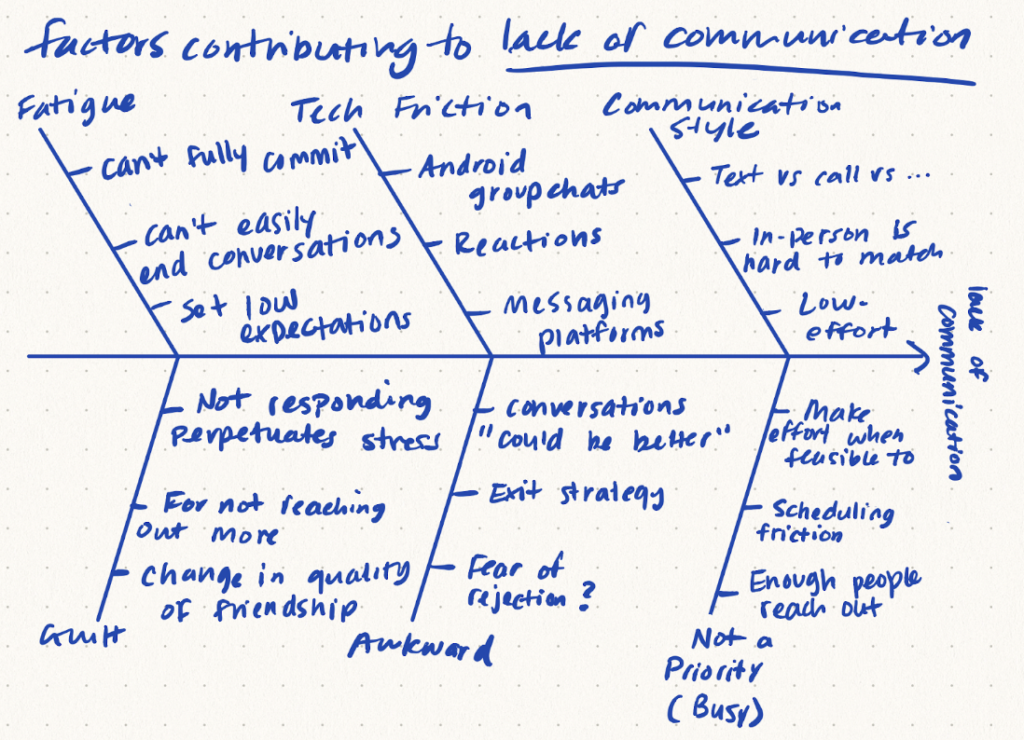
System Models:
Secondary Research:
In our literature review, we explored what long-distance relationships look like across the spectrum from friendships to romances. Some common threads started to appear as we moved through each academic work that pointed us in the general direction of long-distance friendship maintenance strategies. One of the key points that stood was the use of asynchronous communication as a good alternative to phone calls for relational maintenance (Kelpinski, 2019), but it falls short when it comes to growing the relationship, in which phone calls are more beneficial to the development of the connection (Shklovski, 2008). In either case, it’s important to note that technology (Loburri, 2012) and emotions are essential to the maintenance of any kind of relationship. Interestingly, however, there’s data that supports that notion that too much technology over computer mediated platforms can actually damage the relationship (Stamper, 2019), especially when the information contains too much day-to-day information (Octavia, 2017). Ultimately, our review of scholarly sources turns up conclusive findings that supported our initial intuition in some respects and surprised us in others. Individuals value their long-distance friendships, and maintaining them is vital to our social and mental well-being (Pearson, 2022), but overdoing it, or maintaining them inefficiently, can do more harm to the relationship than good. An important takeaway seems to be that individuals need a way to communicate their emotions between partners with low activation energy and this exchange should be in real time, even if it is not a verbal exchange.
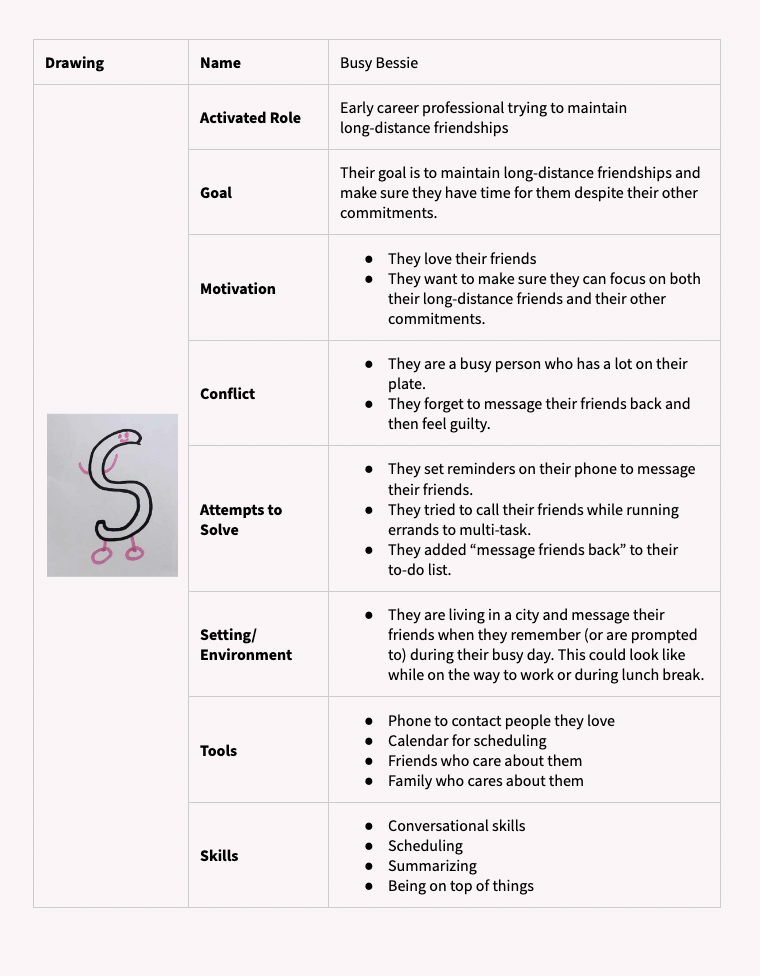
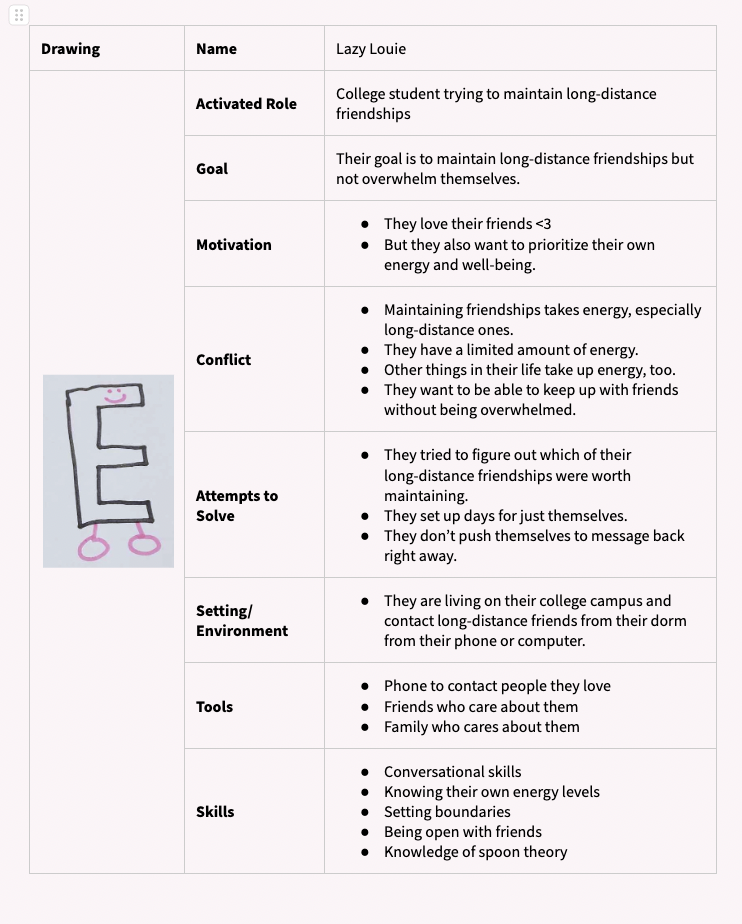
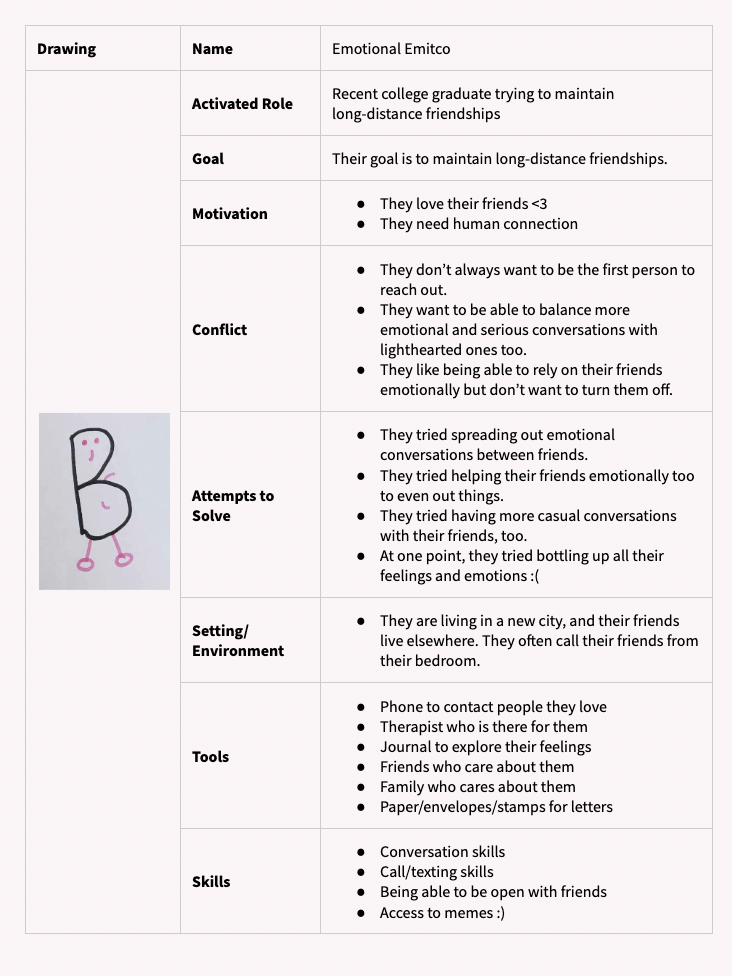
Proto-Personas:
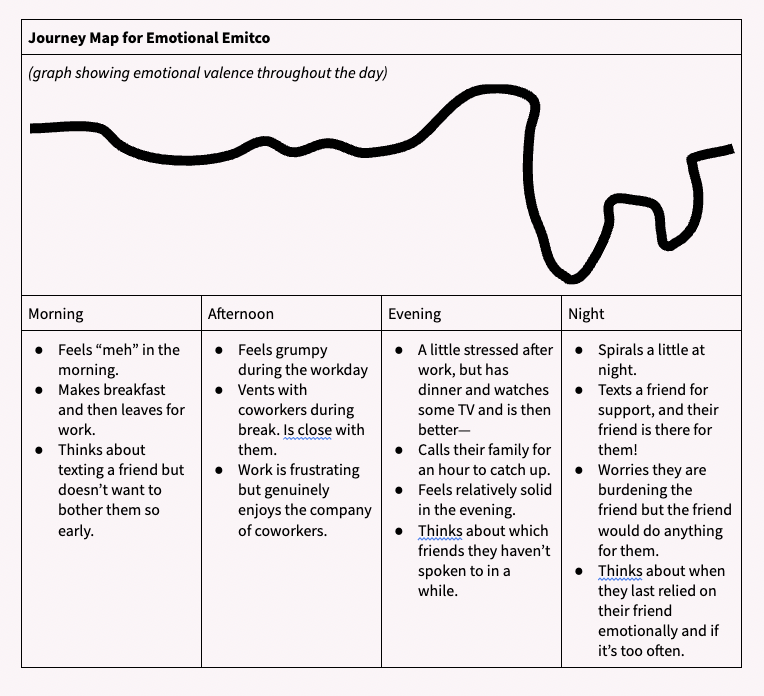
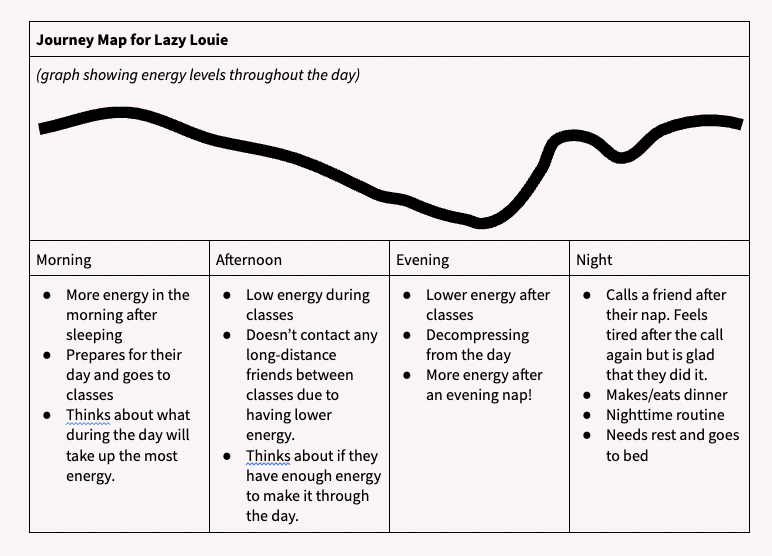
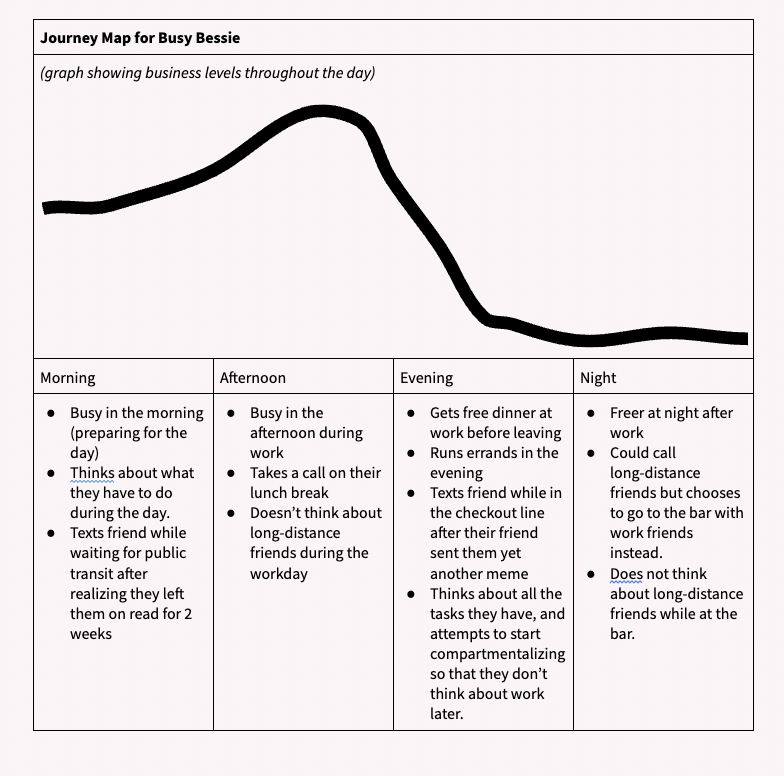
Journey Map:
Intervention Study:
For our intervention study, we did a brainstorm of our top and dark horse ideas in class, and through this brainstorming process, narrowed down our ideas to 4 top ones. In narrowing down our ideas, we tried to embrace different qualities we wanted to maximize based on lecture and class discussion (eg. optimize for feasibility, novelty, dark horse)
- Idea 1: Get people warmed up to interacting with friends with music!
- Idea 2: Pick a timespan where you can’t ignore!
- Idea 3: Consequence for rejecting
- Idea 4: Encourage nurturing through visual depiction of relationship
For each idea we walked what the intervention might look like and pros and cons of each (this work can be found here). Ultimately, through our own evaluation and feedback with our CA, we found that the most promising idea was Idea 4, where we could test motivating our participants with a visual depiction of their long distance friendship.
Once we decided on Idea 4, we dug deeper into how this idea might manifest in the intervention study. We did this my brainstorming various ways we could prompt our participant.
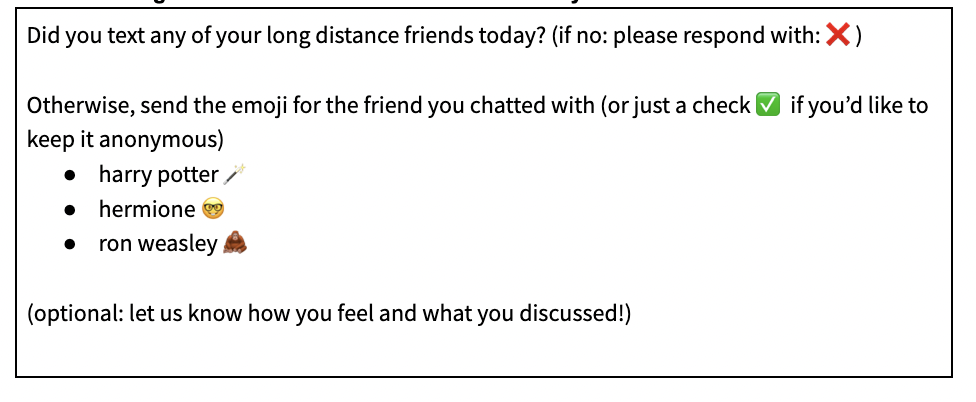
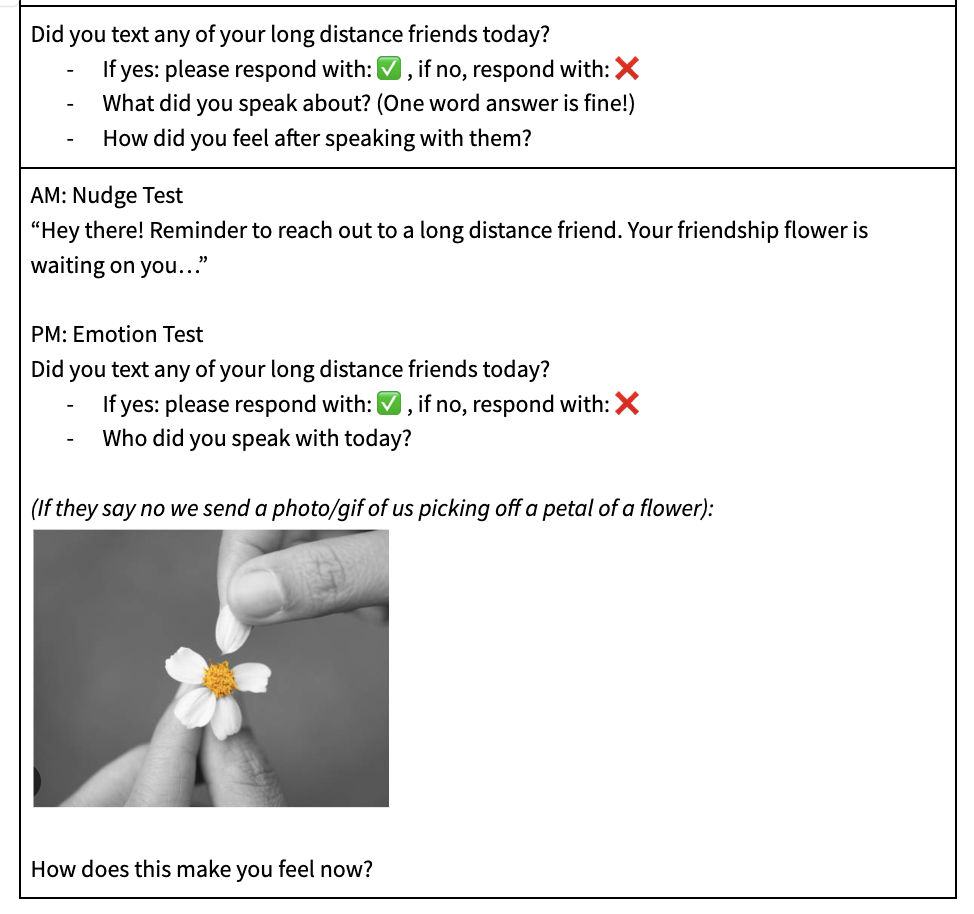
Some examples of our brainstorming can be seen below:
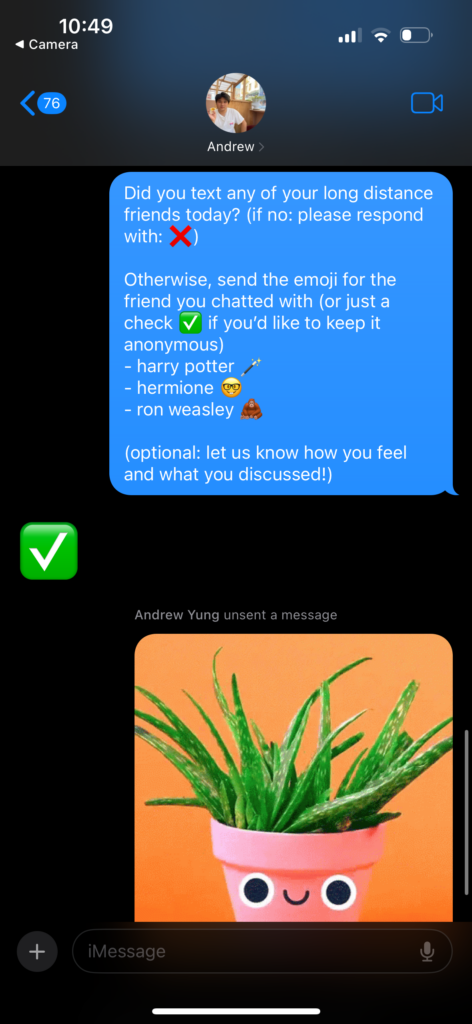
 An example we tested:
Below are some snippets of our intervention study plan (the full details of which can be found here in this document).
Who will participate and how will the study be conducted?
- participants are a mix of individuals from our baseline study and new participants
- the study will be conducted over the course of 5 days (with a group message text with our participant once in the morning and once in the evening – for a total of 2 messages per study day)
- the morning message will be a nudge to answer a prompt
- the evening message will be a check on whether they did the prompt with their LDF
Intro Message & Plan:
“Dear XXX,
Thank you for agreeing to participate in our study for CS247B, a class where our group is doing research on design and habits. Right now, we don’t have any product or design and are just trying to learn more about what people’s long distance friendships look like.
Each day over text we’ll be sending you a prompt in the morning, and checking in the evening for your response to the prompt. This will happen over the course of 5 days. If you have any questions, comments or concerns throughout the study, we welcome them at any time.
To prepare for the start of the study, here is a flower that represents your long distance friendship quality. Please give it a name and send it to us 😙.”
Key Questions Addressed by the Study
- how will people be impacted by the visual depiction of their long distance friendships?
- will people feel motivated by this depiction?



