
When I first enrolled in this class, I was still trying to decide whether I absolutely HATED or LOVED design at Stanford. CS147 was by far the most overwhelming class I have taken at Stanford. I felt like I was doing each assignment to get things done instead of trying to help my product evolve. As a result, I couldn’t see the importance of each step. However, in CS247G, I regained my joy for design because I realized the intricacies of gameplay. By immersing myself in various games, I realized that these tools not only allow users to escape their lives but to learn things every step of the way. My main takeaway from CS247G was the importance of playtesting, which allows you to find flaws, challenges, and successes in every prototype we made. However, I struggled to understand how I even came to a game choice/design. I felt like I came to a solution that I could iterate on very quickly, but lost sight of the journey getting there. I felt like I was reaching a very high fidelity product with very few steps between.
CS247B felt like the perfect balance between the two classes. I was able to see how each step not only brought me closer to our final product but allowed me to ask new questions or reframe our challenge. At each stage, our perspective going in was never the same as it was when leaving.
The Experience:
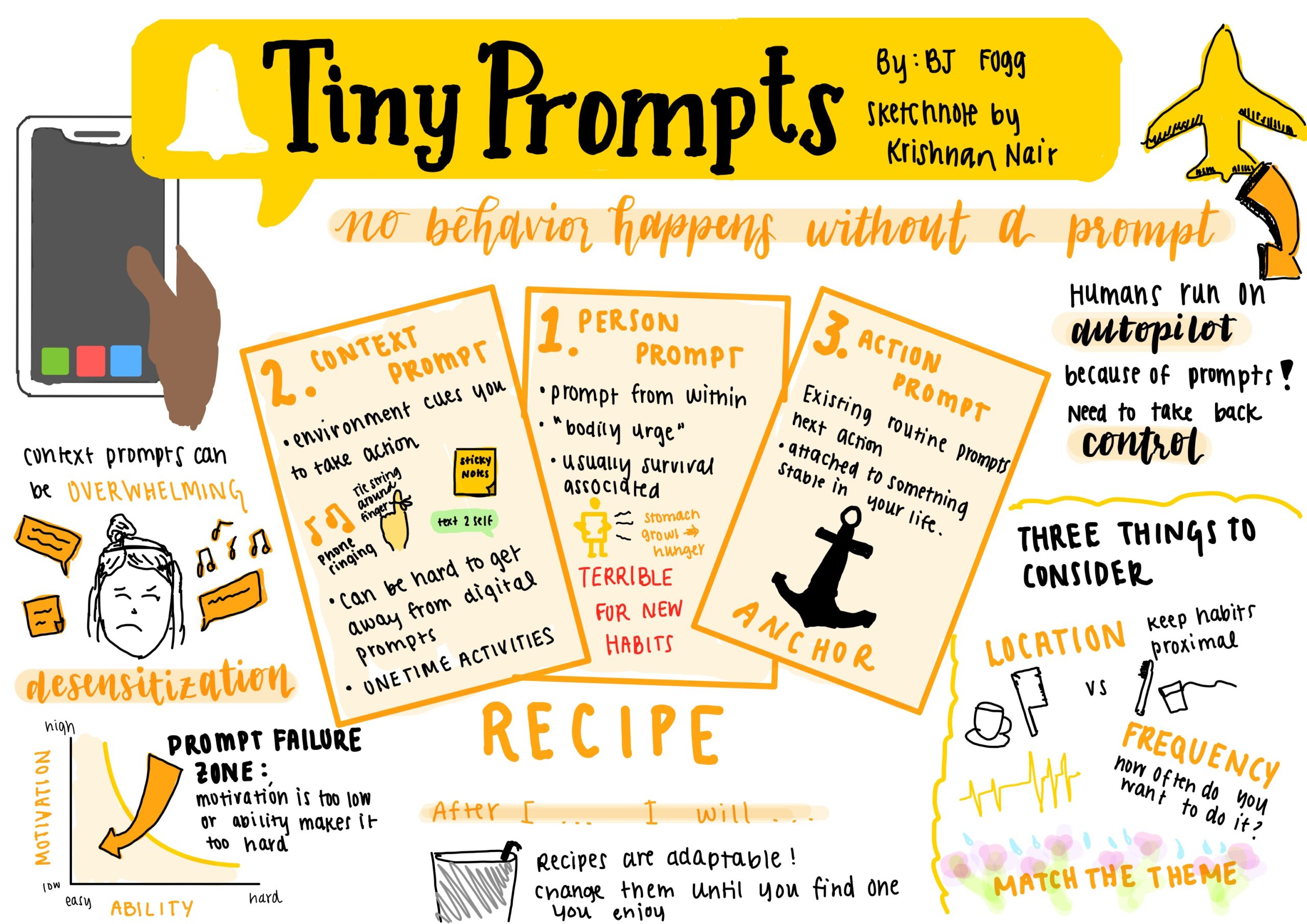
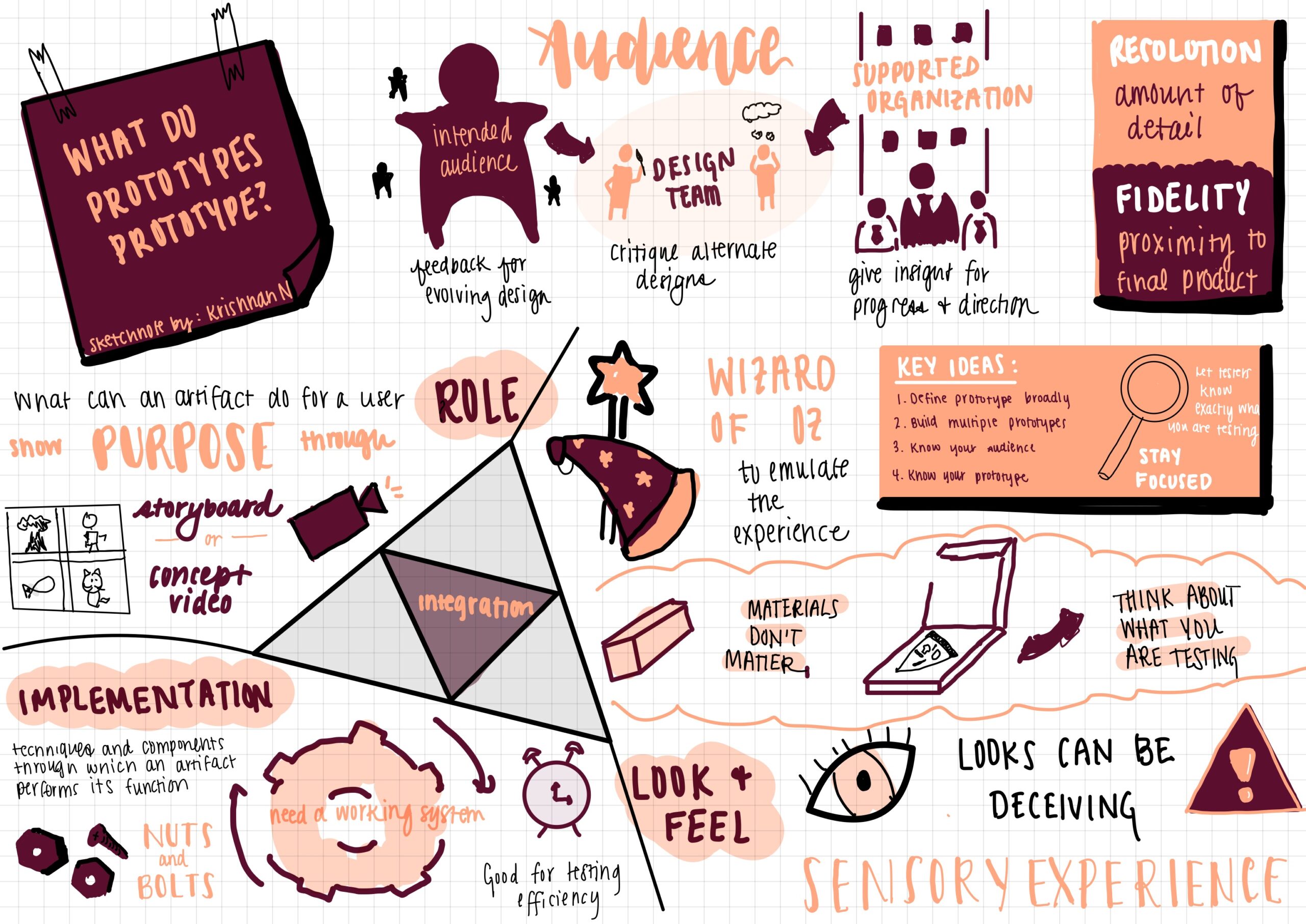
My true pride and joy of this class were my sketchnotes and the sketchy screens that we created for this class. Drawing has always given me a new way to organize my thought in a non-linear fashion. I felt like actually drawing things forced me to interpret the ideas from readings for myself rather than mindlessly copying things down. I also found this behavior translating into my design process. When creating user stories, wireflows, and storyboards, I used my visuals to tell myself and my group what I wanted to say. My lack of dependence on words felt liberating and far more expressive.
One thing I hated was the sticky notes mapping exercise we used to synthesize our information. Although it did allow us to quickly gather insights from three different sources (baseline study, literature review, comparator study), I felt like the lack of time spent on this activity made these conclusions feel rushed and poorly thought out. Furthermore, I felt like I didn’t have time to reflect on one arrangement of sticky notes before we had to move on to the next. I think this exercise would have been more ideal if we had fewer interviews and transcripts to work through, and if we limited ourselves in terms of the number of sticky notes that we started with.
One new thing that I learned in this class was the importance of a brand personality. I have done a style tile and moodboards before in CS147. However, this seemed very disconnected from user interviews. The branding felt like something that we just came up with to be consistent. This class brought brand development to another level. By starting with the brand personality worksheet, I found myself really trying to understand what I wanted the app to feel like for a new user. I wanted the app to be playful and inviting. I didn’t want users to feel stressed or obligated to do anything.

From this branding, we were able to make style tiles that seemed more grounded and meaningful. This style tile was inspired by images of adventure and tranquility. We wanted to give off nature, hiking vibes. Although this isn’t the final style tile that we went with, I feel like I could actually justify each color, font and widget choice based on our brand personality.

Ethics:
The ethical discussion I believe our group battled with the most was nudging. In our prototype, we allowed users to design nudges that catered to their unique schedules. By implementing their schedules, users would be able to receive notifications when they are least busy. Furthermore, each challenge allows users to set their notifications for that given day, providing optimal flexibility.
One nudge that we are still debating is the use of social nudges. In games like Wordle, users can share information about their completion of daily challenges (including how many tries it took to get the final answer). This incites a sense of competition, encouraging other users to quickly play the game and attempt to be better. However, our primary worry about this was the transference from intrinsic to extrinsic motivation. When it comes to an activity like gratitude, we wanted the users’ motivation behind completing a challenge to be for their growth. However, these social aspects could encourage users to simply complete challenges because other people are doing them. Rather than doing something because they want to feel good about their day, users add it as another thing to check off their to-do list. As a result, we decided to steer away from this social aspect of the game. However, we are curious to see how other social aspects could add or detract from our product. One suggestion we received from a playtested was the ability to directly challenge a friend with a truth or dare prompt. We believe that we would run into similar issues here, where people would simply complete challenges because they were challenged by someone that they know. However, these accountability partners are beneficial for making habits consistent.
Another issue that we tackled was privacy. We wanted to collect as little information as possible from our users while still providing an optimal experience. As a result, we had to make some broad generalizations of our target users. We assumed that our target users would be living on or commuting to a college campus, allowing them to interact with many people and explore a large environment. However, students living at home or taking online classes may not have these luxuries. Without knowing much about a user’s environment or living situation, we are not able to generate prompts that pertain to their specific situation. However, we found that the privacy of our users was worth far more than knowing their location to cater prompts to our users. We knew that we could generate prompts that were generic enough that they could be accomplished within a variety of environments. As a result, this sort of personalization truly wasn’t as important.
What do I think now?
After taking this class, I feel like my design skills have become much more intentional and driven by each previous step of the design process. The learning that I gained from step 1 translated into design choices that I made in step 4. I never felt like the knowledge that I gained was unused later in the process. This class taught me the importance of storytelling, whether it’s during my notetaking, storyboarding, or creating a brand for my app. Each story allowed me to create a narrative for my product that made it feel more real and alive.
Next time when faced with a similar situation, I think I will be far more prepared to tackle design challenges. In particular I think I have trained to “Move Fast without Breaking Things” unlike Mark Zuckerberg. At each stage, I know to think about the ethical consequences of the minor decisions that I make in design. I know to embrace the oddities of dark horse ideas (such as Truth or Dare). Finally, I know that my product will be imperfect at each stage. Rather than stressing about moving too quickly, I know that I will still have chances to iterate and continue making my product better.




It was a join to have you again Krishnan! Design is big and there many ways to make great work. Thank you for giving me not one but two chances to show you what a big playground it is… and how to keep that playground safe for everyone.
Hope to see you after graduation so you can tell me what you learn next in the world!