Measuring Behavior
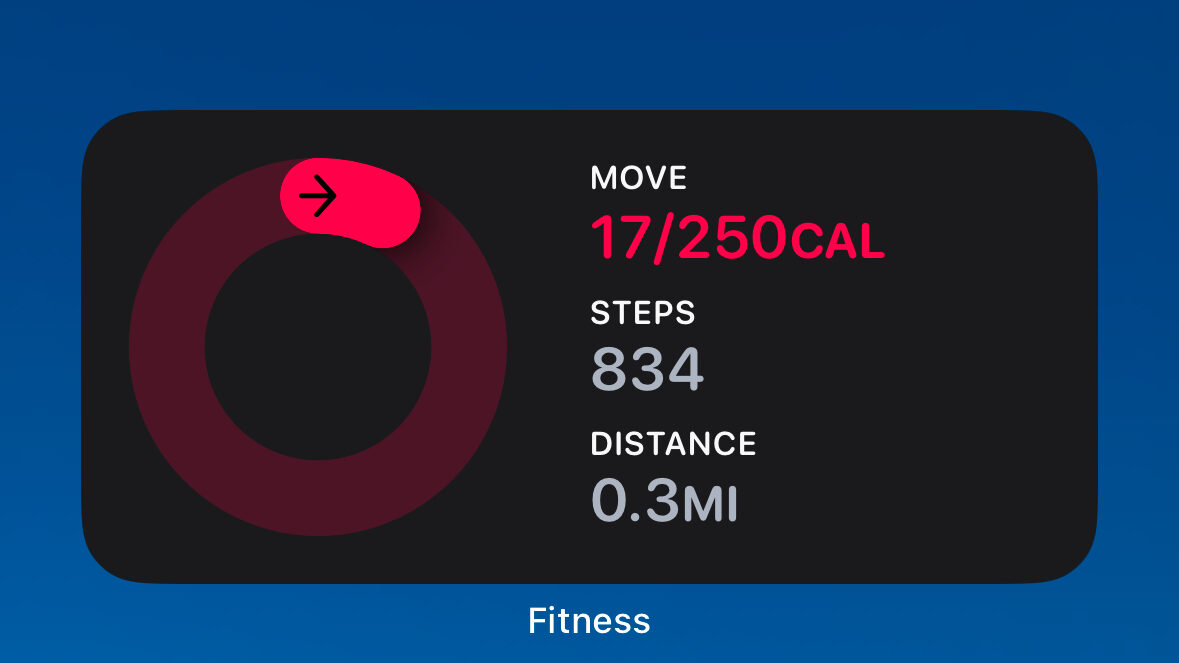
I tracked the amount of steps I take per day, aiming for 10,000 steps per day as my goal. The data was automatically logged in both my Apple Health app and my Oura Ring app. When the Oura Ring app notices an activity, it infers what the user was doing and asks the user to confirm. Therefore, logging for this activity was relatively simple, as I could log walks after they happened in the Oura app. Additionally, my the Apple Health widget on my phone screen shows me my step count throughout the day, giving me a clear idea of my progress. Using these tools, the measuring experience was simple and effective because it did not require manual data entry and the progress towards my goal was readily available in a place I look often.

Key Insights
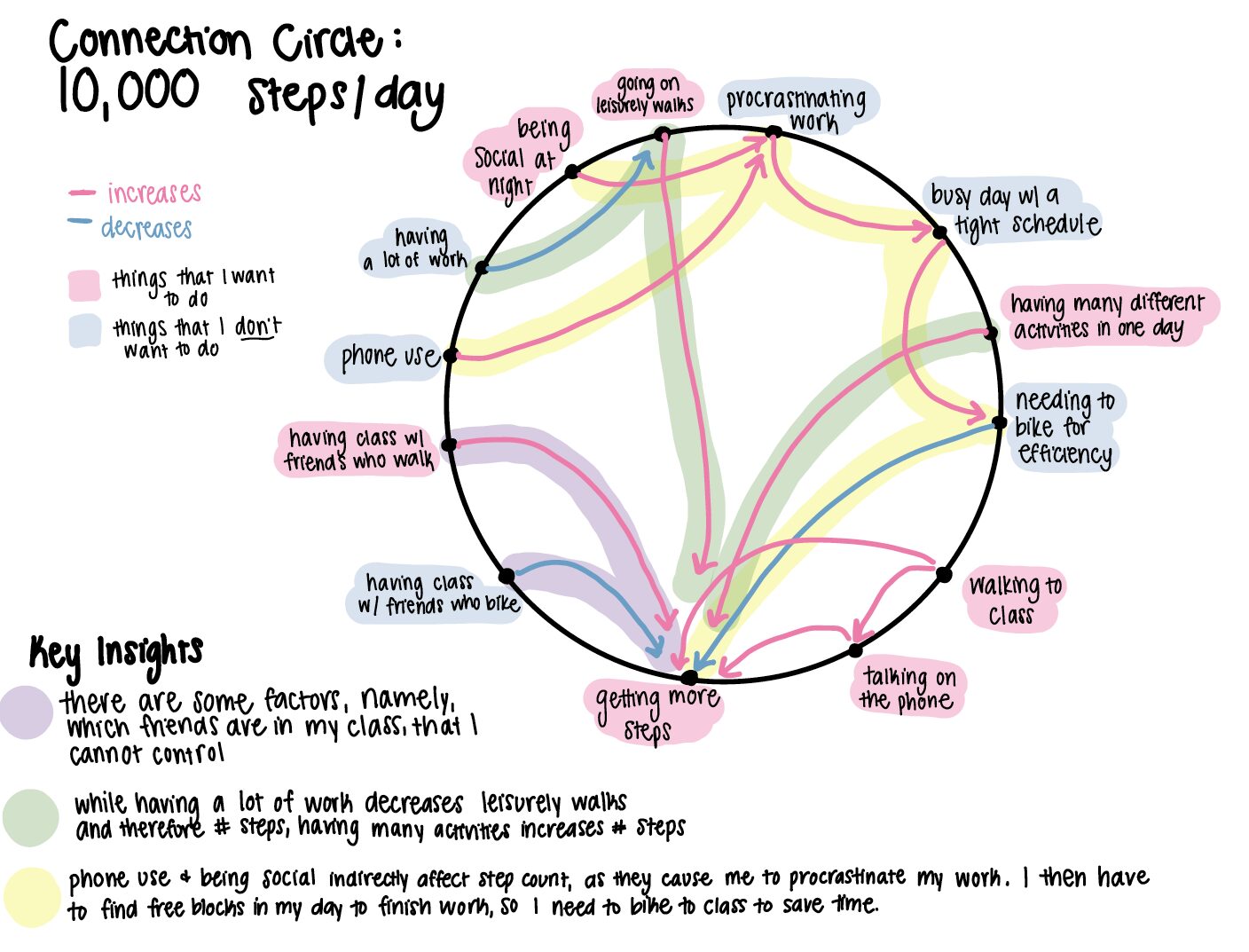
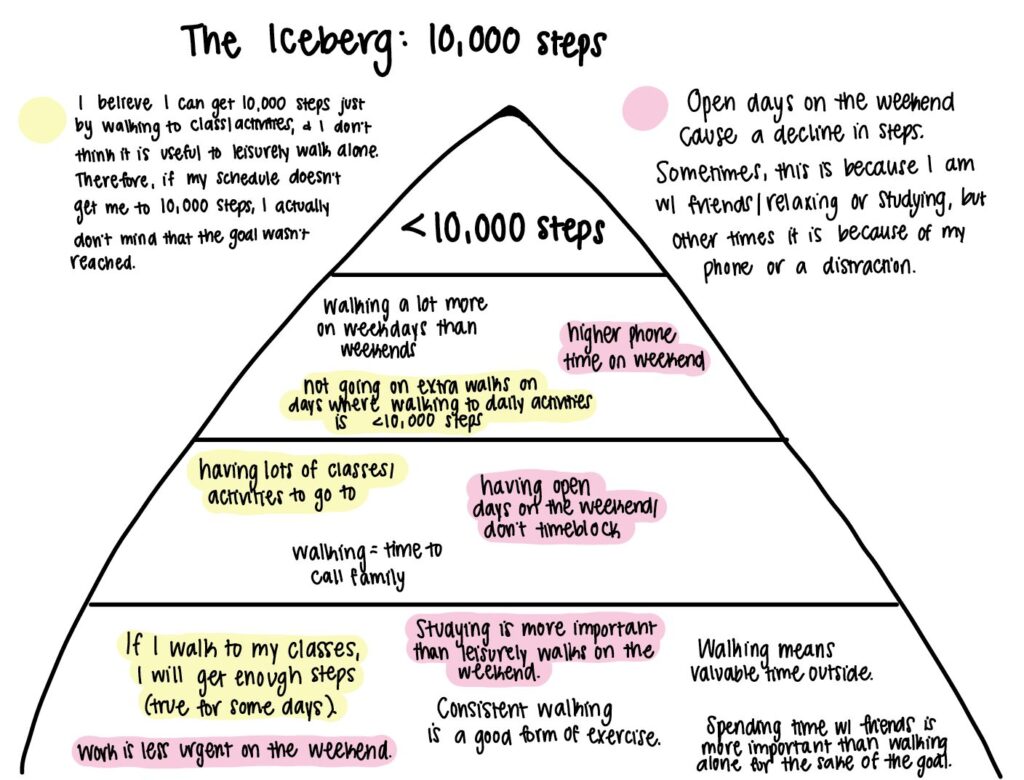
Using the Connection Circle and the Iceberg system maps, I identified the following key insights:
- There are some factors that affect my step count that I cannot control (i.e. if I’m walking versus biking to class with a friend)
- While having a lot of work decreases the number of leisurely walks I take and therefore step count, having many scheduled activities throughout the day increases step count.
- Phone use and being social indirectly affect step count, as they cause me to procrastinate my work at night. I then have to find free blocks in my day to finish work and need to bike to class to save time. Phone use is something that I don’t want to do for too long, but being social is something that I do want to do and I therefore don’t mind if it negatively affects step count.
- I believe I can get to 10,000 steps simply by walking (as opposed to biking) to class/activities every day, and I don’t think it is useful to go on leisurely walks alone when I could be doing work or socializing. Therefore, if my schedule doesn’t get me to 10,000 steps, I actually don’t mind that the goal wasn’t reached.
- Open days on the weekend lead to a decline in steps. Sometimes, this is because I am with friends/relaxing or studying, but other times it is because of my phone or a distraction.
Changes for Next Time:
- Measure progress in the same way!
- Plan activities throughout the day that I can walk to if possible. The biggest way I increase step count is walking to class/activities, not leisurely walks.
- Plan walks or hikes with friends on the weekend so that I can make progress towards my step goal while socializing.
- Modify the goal to be “walk instead of bike” or something more flexible with my schedule, rather than a strict step count.