Team Rhebok (Project Name: JACE)
Mood Boards:
Justin: The goal of JACE (our intervention) is to encourage others to be more thoughtful with LLMs. Thus, I decided to specifically use a theme of nature as it can cleanse your brain and allows you to be reflective, mindful, and thoughtful. I tried to generally highlight blues and greens in my moodboard as those are cool colors, which I myself perceive as more calming. The rightmost image (the lightbulb) represents a spark that may occur when a user is exploring with JACE that may have not occurred otherwise.

Jeongyeon: The moodboard centers on the phrase “Slow and Sharp” as our system, JACE, facilitates reshaping the moment before people use LLMs. The meditative figures highlight how JACE reinforces independent cognition. I tried to express the idea that slowing down is not about inefficiency, but about sharpening thought. The image of closed eyes conveys inward attention and mental reset, while the hourglass makes time visible. The typing hands represent habitual, immediate prompting, the behavior our system interrupts.

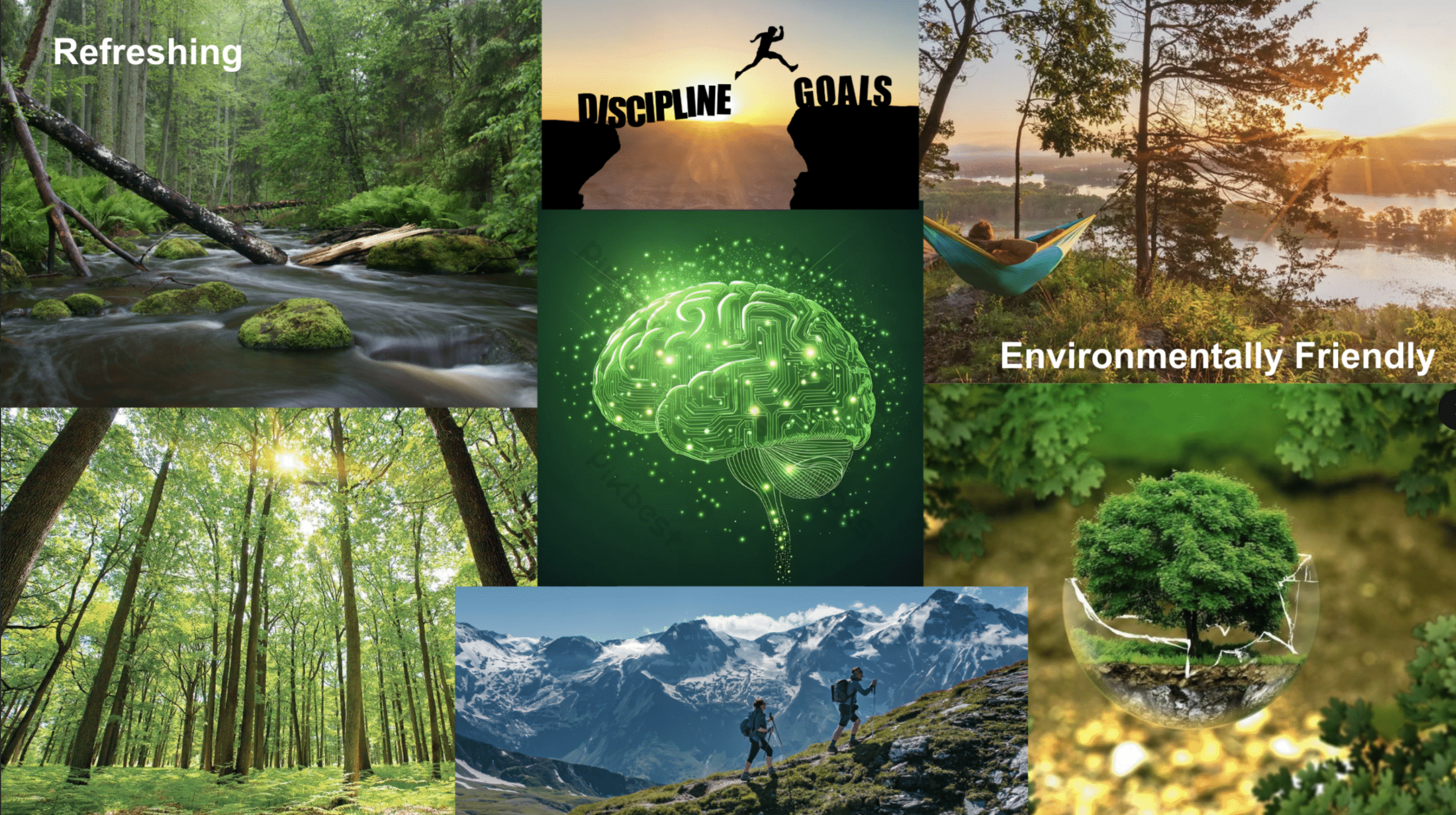
Jenny: Since our LLM blocker (JACE) aims to help people use AI more mindfully, I interpret our theme as refreshment. Using LLMs less (and more intentionally) can reduce their environmental impact, while also nudging users to rely more on their own judgment and practice more critical thinking, rather than defaulting to AI for every step.
Alex: I decided to pick lots of images related to curiosity and exploration because I believe that one of the main use cases of the tool is the ability to help people foster their own sense of understanding and learning and growth and figuring out things about the world that they otherwise would have automated away to real life. For example, I used two images of the moon against the dark sky to represent the continued maintenance of wanting to learn more and about higher up objects, and also did a lot of nature elements to show how JACE sort of helps users connect to their own nature of learning and thinking critically on their own rather than simply outsourcing everything to an LLM chatbot.

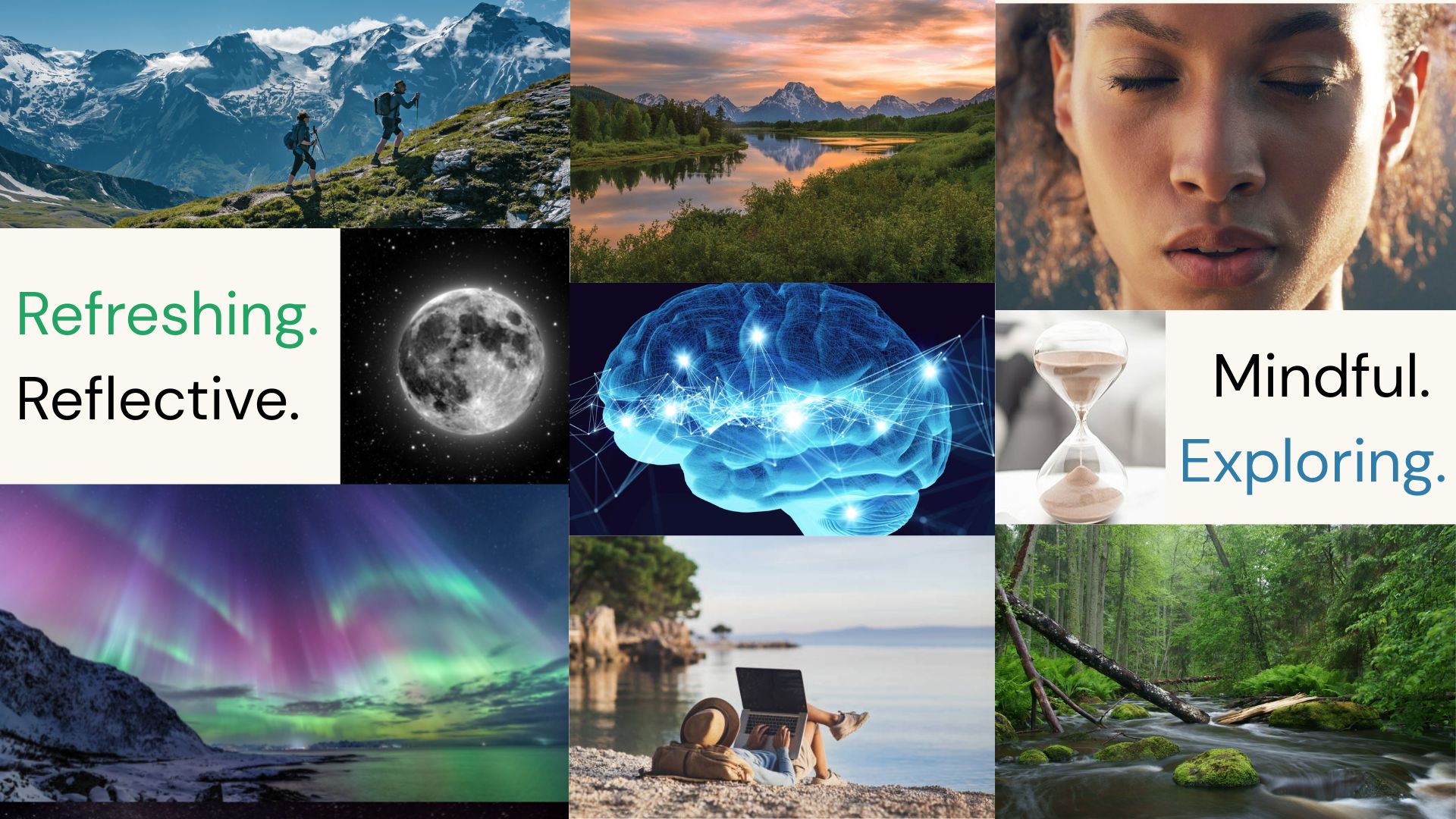
Group Moodboard Justification: We each selected 1-2 images from our individual moodboards for synthesis. We aimed to get images that:
- Fit our color scheme and theme from our style tile / moodboards (mostly greens, blues, and browns)
- Were not similar to one another
- Represented the four words from the group moodboard (one per piece of text on our individual moodboards, for instance, refreshing is from Jenny’s, reflective is from Justin’s, mindful is from Jeongyeon’s, and exploring is from Alex’s).
We also included a brain in the middle as multiple of our moodboards had that.
Style Tile I:
For the first style tile, we wanted calming colors / were originally also going to include brown from the moodboards, but designed to just use two different shades of green and blue to keep it clean. We also focused on simplicity, which is how our logo was designed. The logo looks like a switch that allows people to turn it on and off. Additionally, people may also interpret it as an upside-down toggle, which emphasizes JACE’s goal to help people use AI more mindfully.
Additionally, we have several brain emojis placed in our prototype extension, but in the final one, we’d want something that would fit our color brand better, so we made a green and blue brain icon. Regarding the numbered icons, these are essentially icons that represent the specific planning question on each round, so if there are three questions and two rounds, each round would have the 1, 2, and 3 icons for the respective questions.
The buttons we specifically made rounded due to their feeling more user-friendly / comforting. We also aimed for modern / simplistic looking fonts, as well as photos that fit our color scheme and four words representing our brand from our group moodboard.

Style Tile II:
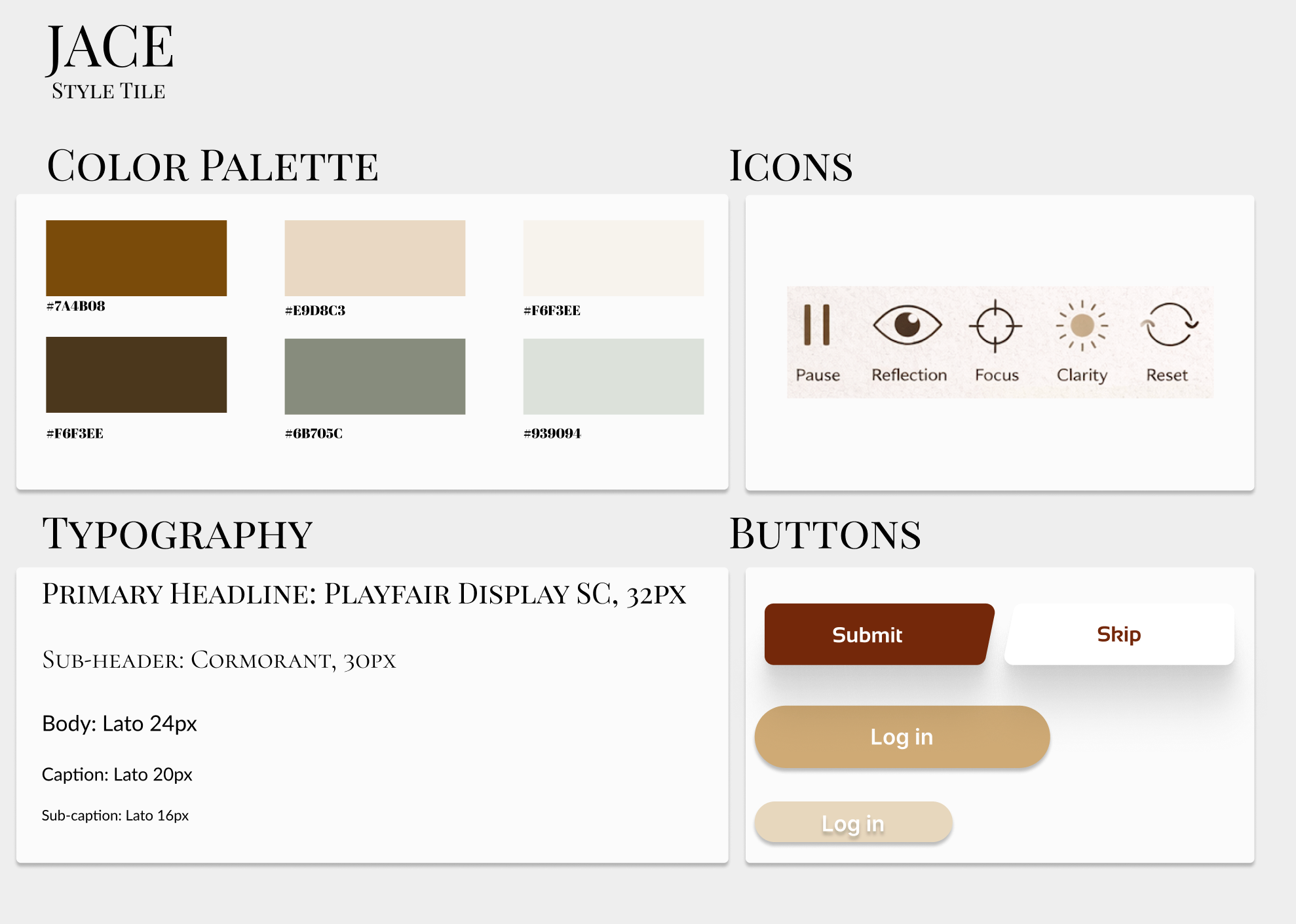
For the second style tile, with the color palette, we tried to communicate grounding and steadiness, trying to signal “slow down, stabilize.” With the typography, we intended to express deliberateness and intellectual weight. The icons encode the intervention flow, which includes pause, reflection, focus, clarify, and reset. The buttons reflect the users’ decisions: Submit: weighty, intentional action, Skip: visually lower commitment.
The entire style tile was designed to visually support a cognitive intervention before interacting with LLMs. Our system is built on the idea that interface design can modulate the cognitive model before AI interaction. The style tile operationalizes this hypothesis through: calming visual tone, editorial typography, and intentional action hierarchy.
This style tile was designed because it visually enforces the function of our system, JACE, to slow down prompt submission, increase reflection, and restore intentional human control before interacting with LLMs.