
Apps onboard users in different ways, depending on what they offer. This is how Instagram, Notion, and Venmo balance early questions with quick value.
Instagram
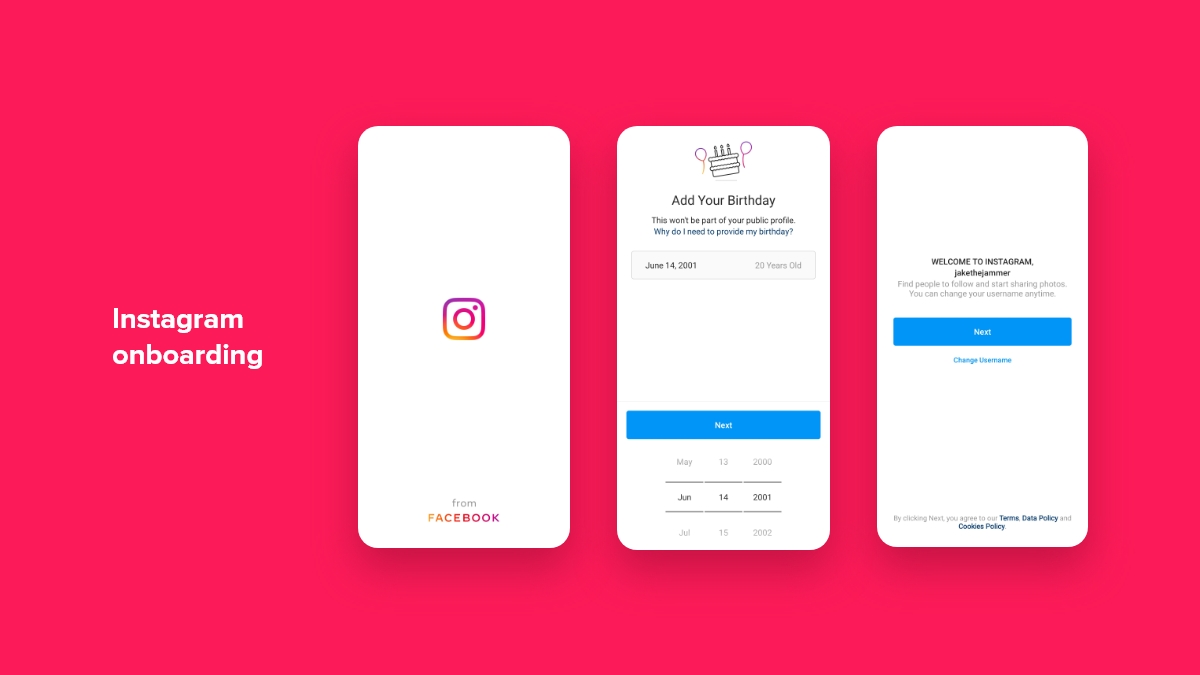
Instagram’s goal is to show users content right away. After a short sign-up, including birthday for age restrictions, it asks to sync your contacts or Facebook friends. This helps Instagram learn who you know to suggest accounts and fill your feed. The step is optional, so most users continue.
Notion
Notion focuses on fast setup. You can sign in with Google or email in less than a minute. It then asks how you plan to use it, such as personal, school, or work, to show useful templates. This helps Notion learn what you need. There is little friction, and users are guided into a ready-to-use workspace. Most people reach value quickly, with low drop-off.

Venmo
Venmo needs to verify users before they can send or receive money. After account setup, it asks for your bank information and sometimes identification. This is the biggest friction point, with up to 49% of users leaving at this stage. Venmo must learn if you can pay early, but it also tries to reduce friction by allowing users to explore parts of the app before linking a bank. (funny story, Venmo won’t let me sign up with my name Aryan)

Conclusion
Each app collects different user information early, based on what matters most to their product. Instagram focuses on social connections, Notion on user goals, and Venmo on financial access. Successful onboarding keeps friction low while still helping users experience real value quickly.



