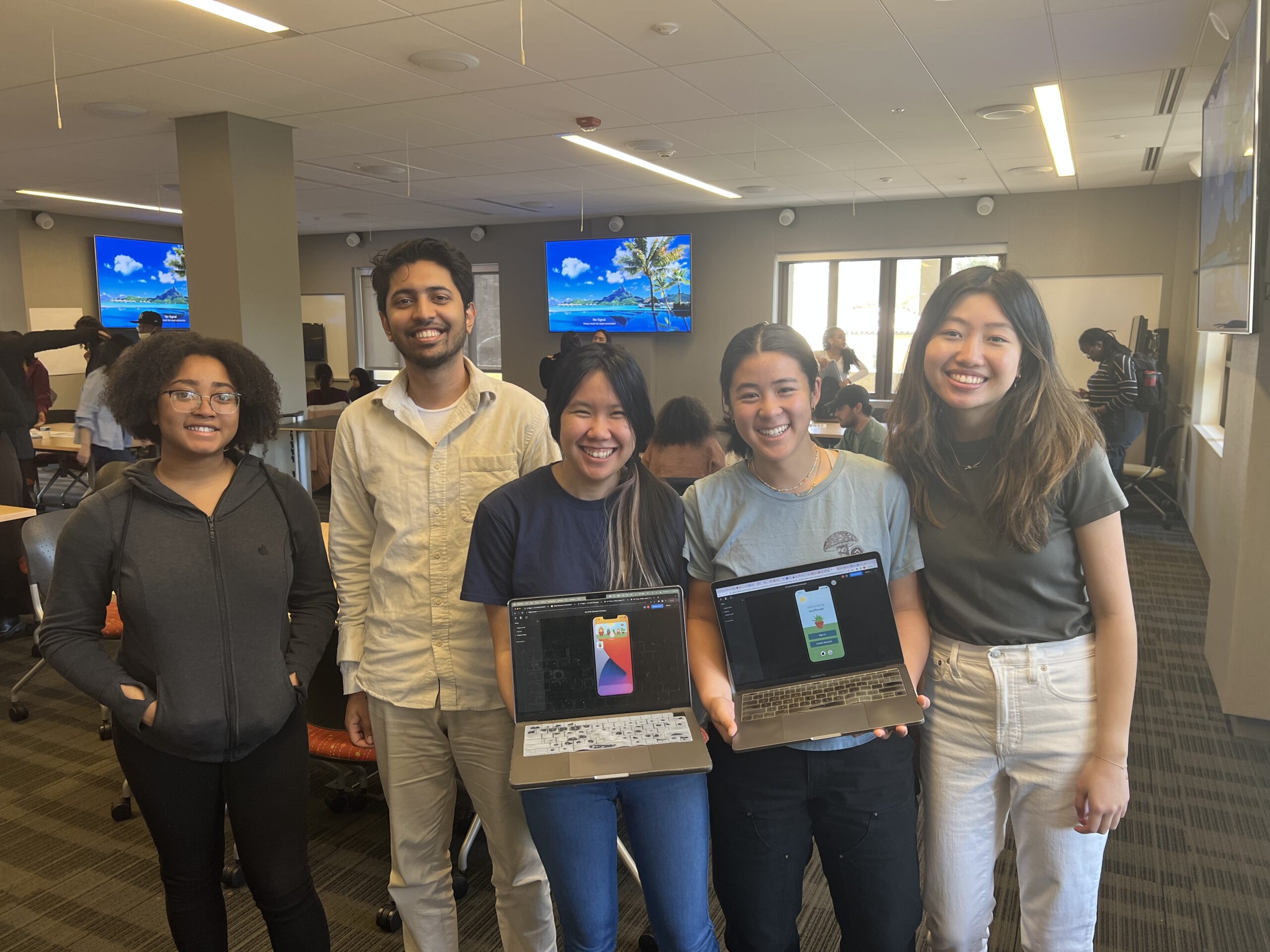
Before this class, I didn’t really know what to expect. This was my first actual HCI class at Stanford (I had taken an equivalent to CS147 in my undergrad). While I had an idea of what the design process generally looked like, I wasn’t quite sure how it would be applied to behavior change in particular, or how the class would be run.
I feel like the class was a lot slower paced than CS147, especially because we didn’t have to code up our final prototype. I did really like not having to rush to have to figure out how to code a full app in the span of like 2 weeks. However, I did feel like we didn’t really have time to pivot or go back to any aspects of our project– the pace of the class kept pressing forward and it felt hard to really iterate on anything. For example, we got feedback on one of our assumption tests that the assumption was a little broad, but we didn’t have time to go back and do anything about it necessarily, especially as things ramped up towards the end of the quarter for other classes as well. I’m not sure this would be feasible given the timeline of the quarter, but it would have been cool to be able to test our prototypes to see if they were actually effective at affecting behavior change. Although we’ve done intervention studies and assumption testing, I still feel like we haven’t really gotten to see how the product might function in the real world.
I did really enjoy learning in this class though– I think the conceptual models we covered, like the connection circle and fishtail circle could be used in multiple different applications.
As for the ethical considerations, I feel that our project relied really heavily on nudges to create changes in routines. We utilized visual reminders in the form of a widget, so that users would be reminded of our application every time they glanced at their home screen. We also utilized the plant as a metaphor for a user’s wellbeing, which takes advantage of the user’s tendency to get emotionally attached and prompt them to want to check on the plant (and the app, by extension). . Finally, we also utilized social pressure to have friends nudge each other when they noticed that one person might not be wearing sunscreen. However, I feel like this could be borderline manipulative if we try too hard to make users addicted to the application.
Additionally, our project respects user privacy in that none of our primary app functions rely on storing sensitive user data. Our main functionality really only needs to keep track of when the user logs that they wear sunscreen, Although we ask the user to allow the app access to their contacts, this isn’t an essential feature and can be refused. Though I could foresee a future where the user sunscreen data could be sold to advertisers, I think it could be avoided by making a business model that doesn’t need that as a source of income.
After taking this class, I feel like I have a good idea of how to approach a design problem, and a good understanding of the tools I can use and when. Next time, when faced with a similar situation, I have a better idea of where to start and how to progress towards a solution.
I’ve really enjoyed taking this class! Huge thank you to all of the wonderful course staff and of course my team <3