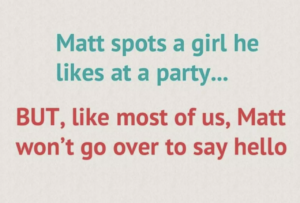
Most fascinating for me about the pitch deck of Tinder is the way in which it starts the presentation with a story rather than some statistics. Slides 2-4 describe Matt, a man who meets an attractive woman at a party, yet is too scared of the rejection to even try to approach her. This way the problem becomes immediately clear without any explanations.
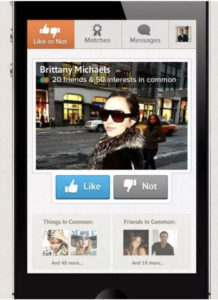
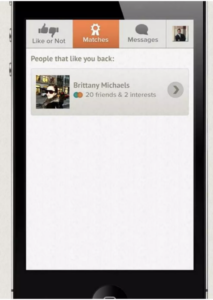
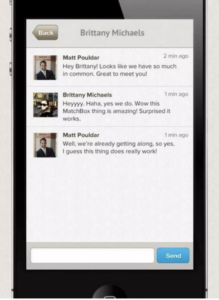
Further, slides 5-8 show the solution step-by-step: user likes someone, checks if this liking is mutual and sends a message. Slide 9 describes the technology itself (location, interests in common and common friends). However, while the problem becomes really tangible through the deck, there is absolutely no evidence of it in the form of user interviews, surveys, or data on usage.
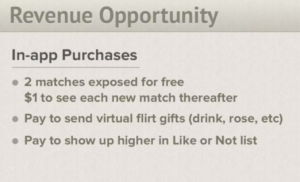
The biggest problem in my opinion is the absence of any market-sizing information: there is no TAM/SAM and no indication on how many people would be using Matchbox. Slide 10 shows possible sources of revenue, such as $1 for revealing more matches, yet there is no indication whether the users would be willing to pay for that.
If I was an investor, I would ask how Matchbox intends to reach sufficient number of users in each location, what percentage of matches leads to the conversation and whether the users would pay for these features.
In order to make our Sanity Check pitch deck work I would take the storytelling idea. Instead of introducing the features right away, I would begin with the user who is experiencing the problem, and only then show how the product solves this problem. Yet, I would back up the presentation with real customer interviews and market-sizing evidence.