
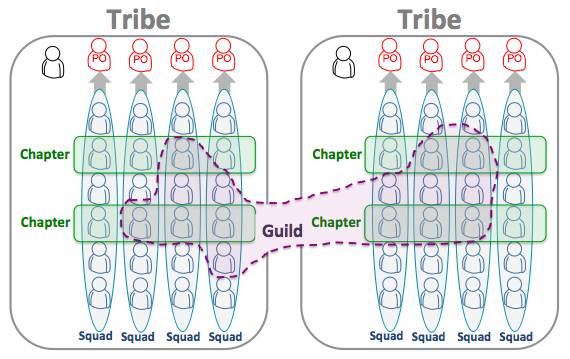
Spotify teams are structured as squads and tribes. Squads are teams of 6-12 people, including developers, designers, product managers, etc. Tribes are neighbourhoods of squads aligned around a similar overarching goal or business function (e.g., search). The Spotify model enables squads to move fast and ship software quickly with minimum pain and overhead.
Airbnb uses a flat hierarchy organisational structure. The teams are small teams (about 10 people), and there is non-overlapping ownership; discrete teams own specific parts of the user journey to build deep expertise in distinct user needs. Within Airbnb teams, designers sit at the head of the table alongside engineers – they have equal authority over how a feature works and what problem it solves. Designers/product managers start with the ideas of what a feature should do; once built, it is reviewed by CEO Brian Chesky.
Zappos uses a unique structure that they defined as Holacracy. Employees are organised into circles, where each circle is responsible for a specific function. Individuals may hold multiple roles across different circles, which enables dynamic contributions and accountability across teams. Decisions are made by individuals or circles best suited to the task, reducing bureaucracy.

I find the Spotify organisational structure the most attractive, specifically because of the authority over the product/feature direction without the need to focus on some other more CEO-like priorities like the P&L at Zappos, and without the authority to enact CEO actions like directing, hiring/firing employees. I also like Airbnb, but I’m hesitant about needing consistent CEO approval for product decisions. The PM role here seems to consist more of team management than product definition. However, I do like that the PMMs are involved with product development and product marketing.



