

Andreea:
Competitor 1: Forest
Forest is a productivity/focus app designed to help users stay off their phones and concentrate on tasks. The target audience includes students, professionals, and anyone looking to improve their time management. The app spiked in popularity during the pandemic, mainly in the ADHD community. The app approaches time management by using a gamified version of the Pomodoro method: users plant a virtual tree when they start a session, and if they leave the app before the session ends, the tree dies. This function is the default, but users can choose to turn it off in the settings and scroll through their phone without the tree dying. Over time, users collect trees and flowers and plants and grow their virtual forest as a visual representation of their productivity. Users can also buy new types of plants with virtual currency that they earn through focus sessions, thus the app further incentivizes the completion of sessions. The app also lets users connect with friends and compare forests. This feature does require a one-time $1.99 payment for the premium version of the app.
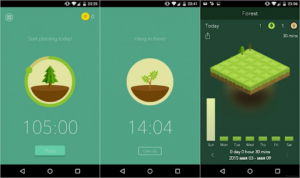
Screenshots via FactoryTwoFour
The strength of Forest lies in its effective use of gamification and its appeal to emotion. I have used the app many times before and I was definitely sad to kill a little mushroom. Forest has a minimalist UI and encourages a distraction-free experience by reducing its UI even more when a session is started. I would say Forest’s weakness is that its effectiveness relies on user commitment. Users with friends can have competitions on the app, but a sole user by themselves really needs to have intrinsic motivation to use the app. If users lack motivation or don’t care about growing their virtual trees, the app loses its appeal.
Competitor 2: Headway
Headway is a self-help/self-improvement app that provides small book summaries, helping users consume key insights from nonfiction books quickly. The target audience is busy professionals, people who like self-help books, and those who want to absorb knowledge efficiently but may not have time or desire to read full books. Headway lets users either read or listen to 15-minute summaries that distill the main takeaways from the nonfiction books it offers. The app also personalizes recommendations based on users’ interests and reading goals.
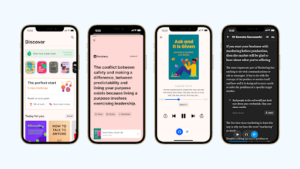
Screenshots via Edtech Digest
I think the convenience and accessibility of knowledge are Headway’s biggest strengths. The flexibility and choice provided to users between visual and audio is also a feature that I think keeps users engaged by providing some customization. The app also has a clean and somewhat minimalist UI and a gamified progress tracking system. One of the perhaps obvious weaknesses is that it distills complex books into oversimplified summaries, losing important context and depth. If a user’s goal in reading is to gain the information, Headway might be perfect. However, if the goal is something else, like pleasure or critical engagement, this app will probably not provide that.
Additionally, Headway operates on a subscription model, which may be a barrier for users unwilling to pay for book summaries when free alternatives exist. I have also found some less than ethical tactics in their app, such as default auto-subscription and an obstructed cancelation process.
Ingrid:
Competitor 1: Goodreads
Goodreads is a book tracking app with a social component where users can collect books they’ve read and want to read, share these lists with friends, and receive recommendations for new books based on their interests. The target audience is wide, representing young adults and older adults. A unique feature is the community-driven aspect of book reviews, as Goodreads has so many users that there are vast amounts of reviews compared to other book apps. The market need Goodread fulfills is that users need information about new books in order to decide to read them.
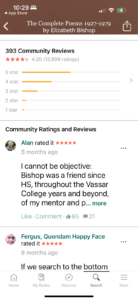
This is a screenshot of Goodreads’ reviews interface, showing the breadth and depth of its community reviews feature. The interface is simple but not minimalist and almost dated, showing how Goodreads tries to appeal to the widest range of users.
Goodreads’ strength is how many users it has, because this allows users to sift through a treasure trove of information when they read reviews – there will always be more reviews to read. Because so many people use Goodreads, this motivates new users to join as well. However, one of Goodreads’ weaknesses is that the interface feels quite dated. It seems like Goodreads has not kept up with the most recent UX/UI advances, and this could reduce the delight users feel while interacting with the platform. Another weakness is that there is so much information on the app, from reviews to friends’ reading statistics to recommendations. This could represent a potentially overwhelming experience for the user.
Competitor 2: Storygraph
Storygraph is also a book tracking app. It allows users to split books into to read, read, currently reading, and did not finish. Other features include statistics to give insight into how one’s reading changes over time, mood and topic based recommendations, filtering by mood, seeing what a user’s friends are currently reading, and reading challenges. The target audience is readers who care about seeing insights into their data and who choose books using their moods. Storygraph’s most unique feature is its mood filtering recommendation system. The market need Storygraph fulfills is how choosing a book can be overwhelming, so by narrowing the choice down to an emotion, Storygraph streamlines the selection process.

This is a screenshot of the mood filtering page, where readers can explore books based on their mood. It strikes a balance between allowing users agency with a variety of choices, and making sure the choice does not become too overwhelming.
Storygraph’s strength lies in its nuance, with the mood filtering as well as the specific insights into users’ changing reading habits over time. The analytics are powerful and visual, appealing to a wide audience. The UI is minimalist and modern, and the app is independent (unlike Goodreads, which is owned by Amazon). Its weaknesses include the limited size of the user base, which weakens the social aspect of the app. Additionally, there are some paid features that would not be accessible to all users.
Izzy:
Competitor 1: Blinkist
Blinkist is a book and podcast summary app that promises to deliver “more knowledge in less time.” As a knowledge centered app, it mainly focuses on nonfiction books, trying to boil down the entire book to a handful of “takeaways”. It is designed for people who are too busy to read but remain curious nonetheless and want to continue to be informed and knowledgeable. The app allows users to search by category and interest and will also provide book recommendations with its AI bot. Rather than encouraging reading, Blinkist suggests you forego the whole prospect all together and instead just focus on the core insights of the book.

The app, as seen above, allows users to digest these insights through either reading or listening to a quick summary. It has a very simplistic, minimalist design, which makes it simple to navigate and interact with. Such a design also makes it easier for users to focus their attention on the content of the app, i.e. the knowledge they are intaking.
The strength of this app is that it knows its purposes. In other words, it does one thing and that is to summarize nonfiction books and podcasts for eager people that want to be “the smartest people in the room.” A secondary use case would be to get book recommendations, but this is not the primary feature. Its design is also intuitive and accessible.
Its biggest weakness is the concept of the app itself, namely that reading is only beneficial because of the “facts” you can pull from it. This isn’t how most readers operate, and so I assume the user base to be on the smaller side. It’s also a very reductive view of reading and doesn’t encourage actual reading. If anything, it detracts from it.
Competitor 2: Strava
Strava is by no means a reading app, but I’m considering it a competitor because it motivates people through social engagement, which I think is worth exploring. Strava allows users to track various exercises (runs, hikes, bikes, swims) with various health indicators. It also is a social network where users can follow one another, see each others’ progress, and celebrate victories together (i.e. a ‘kudos’).
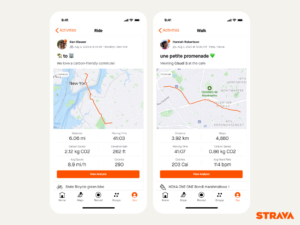
The app also has a very aesthetic, minimalist design, conveying data in an easily digestible manner. The app is somewhat customizable in what users can post, though it follows a pretty clear structure that feels familiar. It also leverages a smaller community in that it is designed for active individuals that want to motivate themselves and others.
The strengths of this app are, again, its approachable and intuitive interface. It also found a niche in combining physical activity completed in the real world with social engagement online. It provides detailed health metrics and GPS navigational tools.
Some weaknesses of the app are that it can inspire unhealthy competition through its motivating features. While the app is gamified to a certain extent, it is ultimately on users’ desires to be active to keep using the app rather than any innate qualities.
Jen:
Competitor 1: Opal
Opal is a screen time app meant to improve your focus, with features for app blocking, timed focus sessions, milestones to unlock, visualizations for your focus trends over time, and focus time sharing with friends. Its unique features lie in its personalization (demographic specifications and connection to Apple screen time) and allowing users to choose the specific habits they’d like to change, such as morning scrolling, phone during meals, constantly checking their phone, etc. Their target audiences are early-to-mid career professionals/students that value productivity but need external motivators to stay focused.
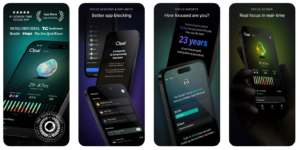
The strengths of this app lie in its colloquial language and straightforward design that puts numbers, often in bold, in the user’s face. The dark design seen above highlights the atmosphere that the app emulates for concentration and focus, and such a simple yet bold design reduces any cognitive overload on the average user, who may be distracted or hesitant to use a high-commitment app. The app feels engaging for the average user as well, who may be drawn to the gamification aspects or visualization features for tracking improvements in focus time.
Weaknesses may include pricing, which is set at $99.99 a year and may influence users to find other alternatives. Although the app excels in design, its features do not move the needle enough to encourage users to spend on the app, with app blocking and screen time tracking already available in Apple settings.
A reading focused app, then, could focus on maintaining the simplicity and ambience of Opal while including more reading-specific features for the user that are unique to the app. This is because reading is a mostly-offline activity that has many external factors that we could extract and input into the app. Aside from just tracking reading time and books, how about progress per book? Books fully completed rather than dropped half-way through? Read again factors? Those would be more tailored personalization features for the reader.
Competitor 2: Bookmory – reading tracker
Bookmory is a reading tracker app that allows users to track the books they’ve read, manage them within collections, take notes to better remember what you read, and overall build a longer lasting reading habit. Its target audience are those that value books for the knowledge they gain from them, who may also tend to be more active readers.
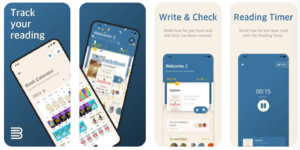
The strengths of this app lie in its multitude of features, such as a reading timer, reading notes, visualized statistics for how many books the user has read in a month, and book collection achievements. Thus, it would strongly appeal to a specific user segment that already enjoys reading and wants to keep track of their books in some way. Additionally, the app’s book calendar features (as seen above) show an understanding that reading may take place over a longer period of time or be read during certain weeks where the user is less busy.
Some weaknesses are increased user effort and features that lack urgency or formal encouragement for a user to read or even track which books they read. The achievements are based on collected books and there are few accountability measures, such as social accountability or “streaks”, that would be extrinsic motivators for the reader. Features like book notes or book collection achievements limit the target audience to those that may read more beneficial books (like self-help books that you could take notes on) or those that already read enough to want to build collections for them. In addition, several features would not be usable by all users. Writing how far you have read and what has been covered, for example, requires more user effort than just putting in a make-shift sticky note bookmark.
I see this as an opportunity to reduce the cognitive load this app brings by making a simpler, less-commitment tracker that instead, understands that the user’s goal is simply to read more consistently. Achievements would be more realistic, such as streaks rather than book calendars, and there should be some type of accountability factor implemented, like simultaneous reading with friends or time-spent-reading comparisons.
Riley:
Competitor 1: Bookly
Bookly is a reading tracker app designed for goal-oriented readers who want to build and maintain reading habits. Its target audience includes people who thrive on structure, measurable outcomes, and data-driven progress. Some of their key features include real-time reading tracking with a timer, analytics and progress reports, goal-setting capabilities, and personalized reading suggestions.
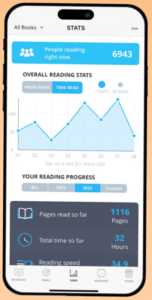
The strengths of the app involve the progress and tracking of how much a user is reading, which promotes consistent reading habits. There is also some gamification in the app that keeps users motivated and engaged. Lastly, it allows users to save quotes, including image quotes. A weakness of the app is that the free version restricts users to tracking up to 10 books, and the paid version is $30 per year, which may turn people away. Additionally, in order to do the real-time time tracker, you have to start and stop the timer on your phone, and you’re able to update your page number as you go. I personally wouldn’t want to do this and I would find it distracting, and I’d also forget to do this a lot.
Competitor 2: Literal
Literal is an app designed for making reading more engaging and accessible, largely for younger readers and those who struggle with traditional reading formats. Its target audience is students, mostly kids under 15. Some of Literal’s key features include transforming books into text message-style conversations, the ability do real-time progress tracking, and AI-powered learning and assessment tools for educators. In terms of the market need, Literal address the declining reading rates among younger generations by adapting books to a format familiar with digital natives, and its goal is to hopefully lead users back to traditional book formats.
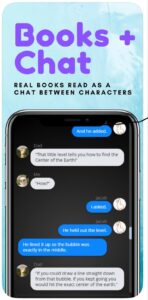
Some strengths of the app include that it is innovative and provides a new concept, and it also offers social features like book clubs and discussion groups. In addition, there are gamification elements to the app that help keep users engaged. I would not say that the text message-style format is a strength – I’d say it’s a weakness because it is difficult to keep more advanced readers engaged. I also think it takes away from what reading is all about. That is the only weakness I would say there is.
Link to 2×2 (we can eventually screenshot and put it at the end of this doc): https://www.figma.com/board/AVemX6P3ksiNCabsCYFVdv/247B-2×2?node-id=0-1&t=1IpKuSi9nu6CXHjj-1




Comments
Comments are closed.