
Spotify: Premium Conversion
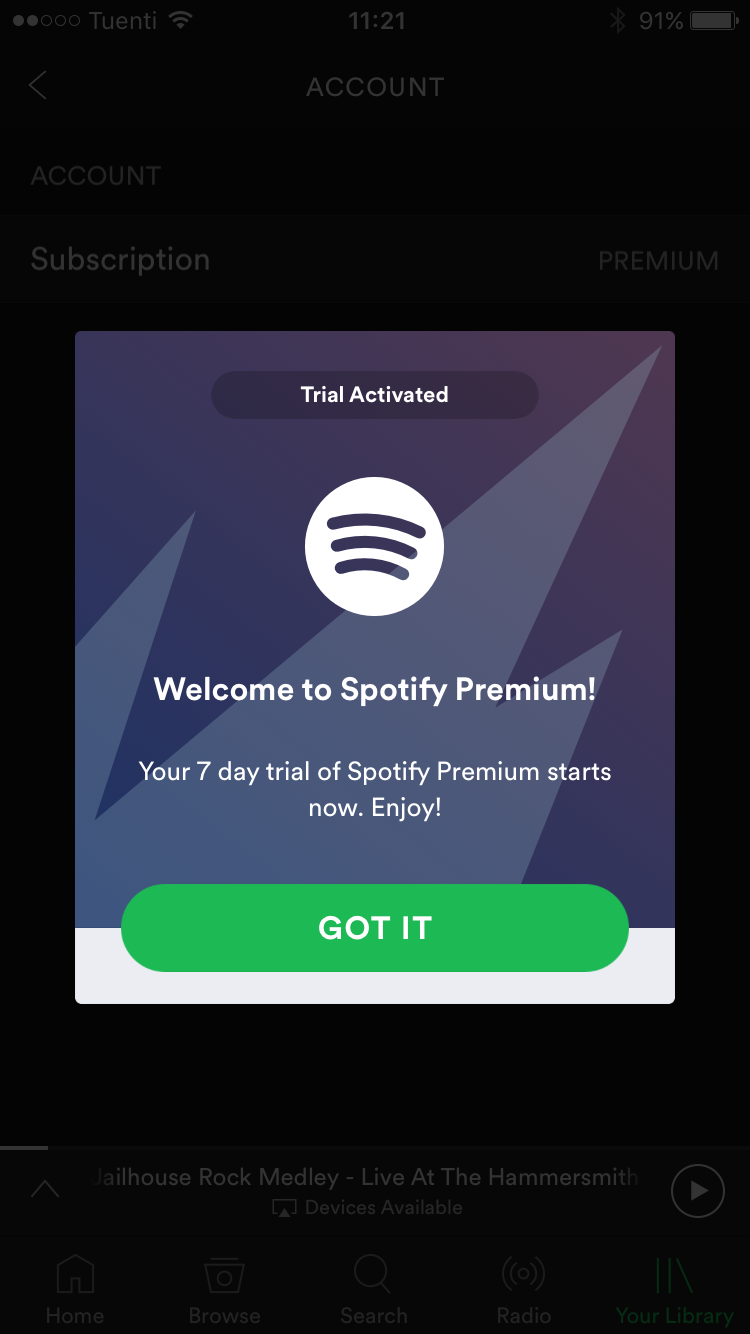
Thinking back to life before I upgraded to Spotify Premium, I remember the ads and limited skips that finally drove me to make the change. Spotify’s strategy is to provide music discovery and the flexibility to access millions of songs—but add enough frustration to the free experience to push users to upgrade. Spotify prioritizes lifetime value over immediate ARPU, accepting lower revenue from family and student plans. According to “Reverse Engineering Spotify’s SaaS Metrics,” their calculated risk is paying off: 70% of churned subscribers return within 45 days, making the royalties paid on the 54% of users who never convert worthwhile.
Figma: Team Expansion
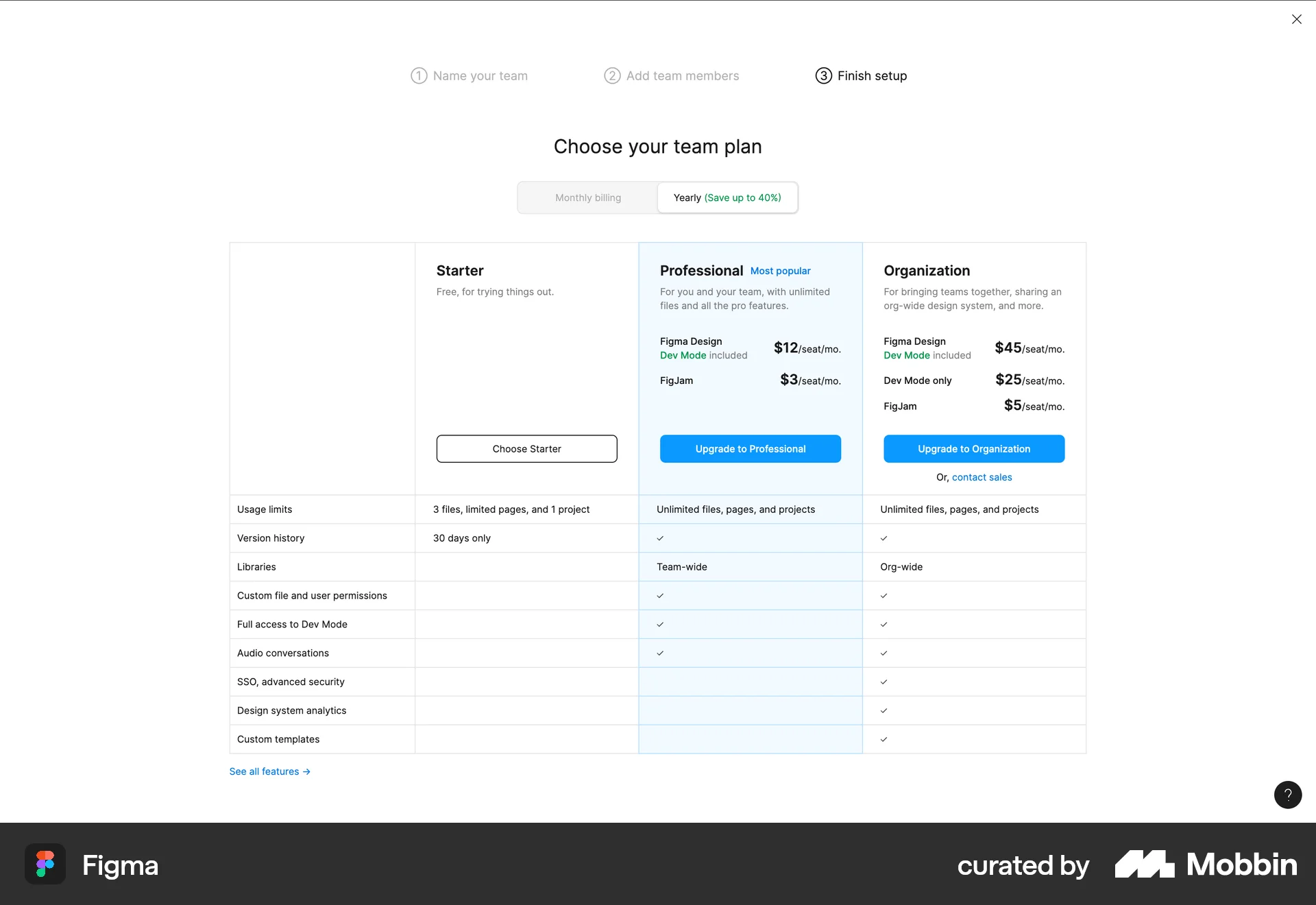
Unlike Spotify, Figma’s free version is essentially the premium version—unlimited viewers, core design tools, instant browser access. The reason is that they’re betting organizational needs, not feature limitations, will trigger upgrades. Figma took a risk by offering their core product for free, but recognized that many users would be working within organizations and need to collaborate. Their strategy has paid off, as for many users, upgrading to the Team plan to collaborate and work with others becomes inevitable.
New York Times: Subscriber Value
The New York Times is well known for its quality news articles, Wordle, Connections, NYTimes recipes, and more—a unique experience that many cannot get enough of. By keeping most content behind paywalls, such as requiring a subscription to view articles, the Times allows users to opt in and gain access to otherwise exclusive content. The risk is that this sacrifices broader accessibility and reach, as without paywalls, their content would likely be much more prolific. However, they’re betting that habit formation through quality journalism and exclusive subscriber content will eventually convert casual readers into loyal subscribers with higher long-term value than those pushed through aggressive paywalls.



